
Arizona Subcontractor Default Insurance
See How We're Different:
or Call Us:(480) 526-3222
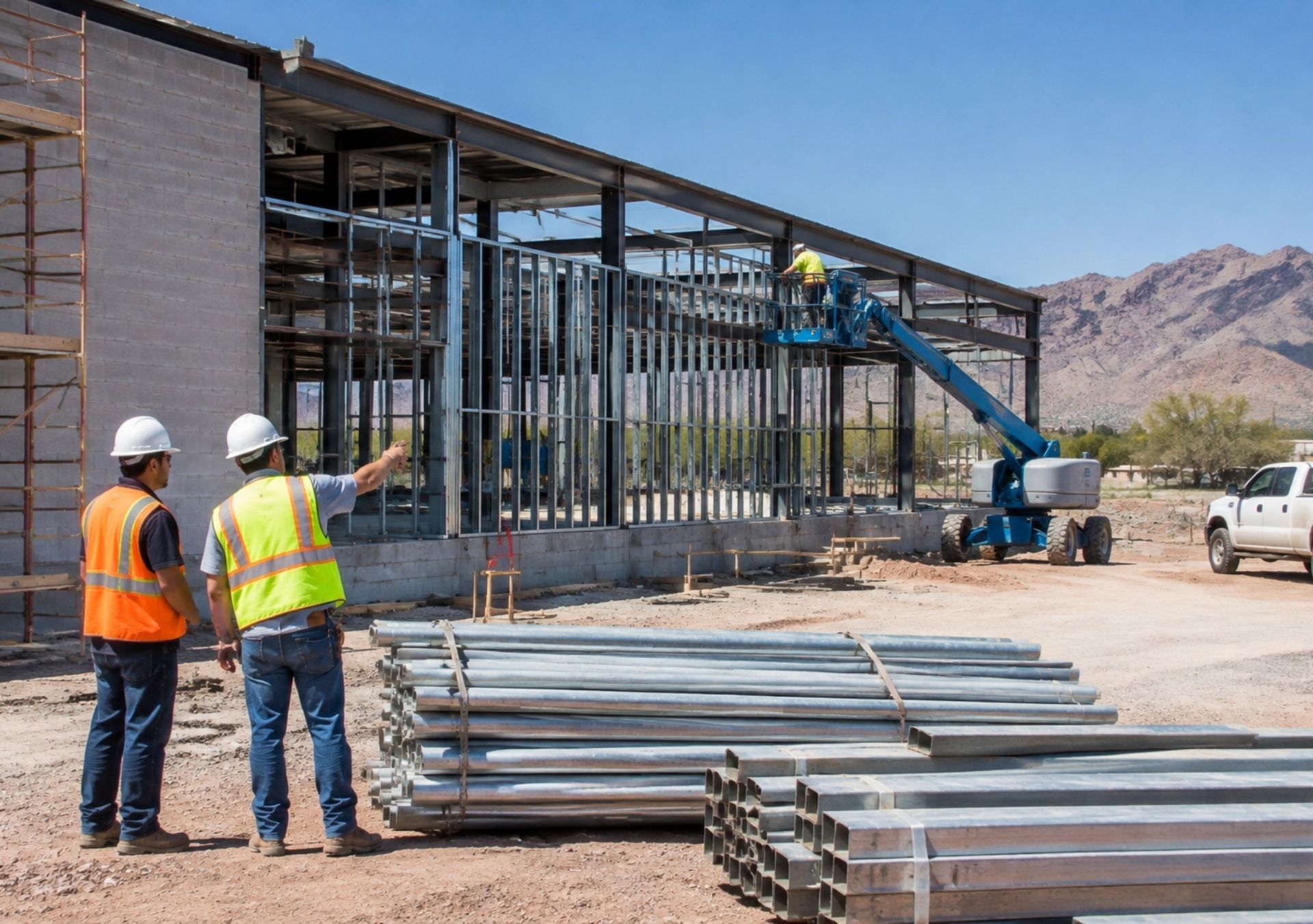
Most general contractors don't think about subcontractor failure until a drywall sub walks off a Scottsdale medical office job three weeks before inspection. By then, the schedule is slipping, the replacement crew wants a premium, and the owner is asking who pays for the delay. That's the exact gap subcontractor default insurance was built to fill.
For Arizona GCs running large commercial portfolios, the choice between SDI and traditional surety bonds isn't academic. It affects how you vet trade partners, how much risk sits on your balance sheet, how quickly you can respond to a default, and what your projects actually cost. The legal stakes are real too: in June 2026, the Arizona Court of Appeals affirmed a default judgment against a contractor who failed to complete work, a reminder that non-performance carries consequences well beyond a bad week on site.
This guide covers prequalification, enrollment, deductibles, co-payments, claims handling, and costs for Arizona subcontractor default insurance. It's written for
contractors deciding whether SDI fits their book of work or whether bonding still makes more sense.
Understanding Subcontractor Default Insurance in Arizona's Market
Subcontractor default insurance is a first-party policy bought by the general contractor. It reimburses you for direct and indirect costs when an enrolled subcontractor fails to perform under its contract. That covers things like hiring a replacement crew, fixing defective work, and absorbing schedule-related expenses.
The key word is first-party. Unlike a surety bond, where a third party guarantees the sub's performance, SDI puts you in the driver's seat. You decide when a sub is in default, you manage the fix, and you file the claim with your carrier.
Arizona's market makes this worth a closer look. Phoenix and Tucson have seen sustained commercial, industrial, and data center activity, and the trade base has been stretched thin across concrete, electrical, and mechanical scopes. When qualified subs are scarce, GCs often end up hiring smaller or newer firms that can't easily obtain bonds. SDI lets you bring those firms on without forcing them through a surety's underwriting.
Cost pressure matters as well. Arizona construction costs
rose 1.28% in Q3 2026, compared to 4.45% year-over-year escalation nationally. Milder local escalation helps, but replacement labor on a defaulted scope still rarely comes in at the original bid price.
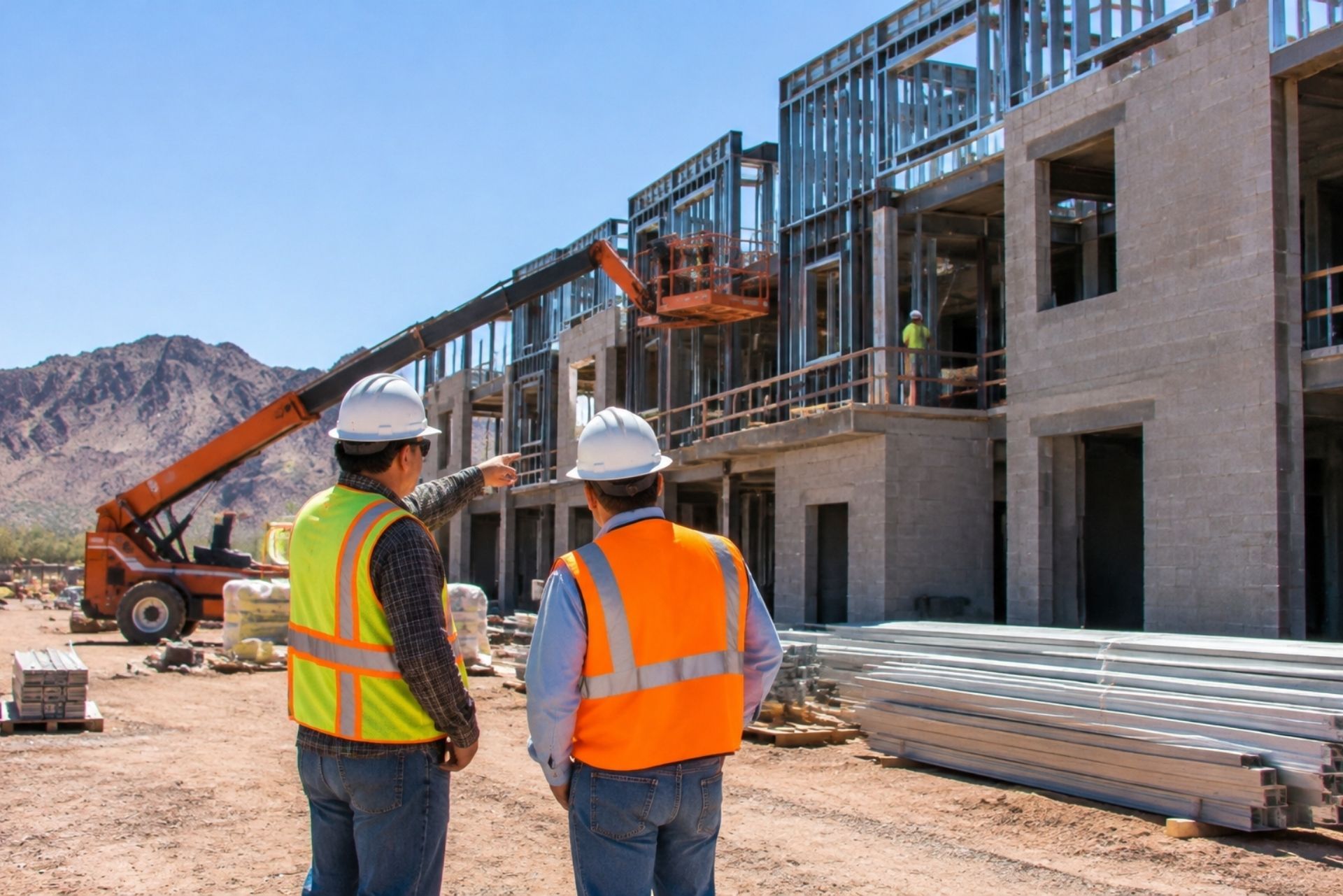
The Prequalification and Enrollment Process for General Contractors
TSDI carriers don't underwrite your subs. They underwrite you, specifically your ability to vet subs. That means the carrier will scrutinize your prequalification program before issuing a policy, and you'll be expected to follow it on every enrolled subcontract.
Here's what the process typically looks like:
- Carrier review of your program. Expect questions about your written prequal procedures, who approves subs, your historical default experience, and annual subcontract volume. Most carriers want to see a contractor with substantial yearly subcontract spend and a documented track record.
- Subcontractor prequalification. For each sub, you gather financial statements, backlog, safety records (EMR and OSHA logs), references, licensing status with the Arizona Registrar of Contractors, and insurance certificates.
- Approval and limits. You assign each sub an approved single-job and aggregate limit based on what you found.
- Enrollment. Approved subcontracts get enrolled in the program and reported to the carrier, usually through monthly or quarterly bordereaux.
- Ongoing monitoring. You track performance, payment history, and financial changes during the job.
The common mistake I see: GCs treat prequal as a paperwork exercise at bid time and never revisit it. If a framing sub's backlog doubles mid-year and you don't update its file, your carrier may question the enrollment after a loss. Document everything, including the subs you rejected and why.. Contractor-Controlled Programs
Managing Financial Risk: Deductibles, Co-Payments, and Limits
SDI is not a full-transfer product. You keep a meaningful slice of every loss, and that retention is what keeps premiums lower than bonding. Understanding the three layers of your financial exposure is essential before you sign.
The deductible comes first. For large-scale Arizona projects in 2026, typical SDI deductibles range from $500,000 to $2,000,000 per loss. That's a serious number. If a curtain wall sub defaults on a Tempe office tower and the cost to complete runs $1.2 million above the original contract, a $1 million deductible means the carrier covers only the remaining $200,000, before co-payment.
Next comes the co-payment, sometimes called co-insurance. Above the deductible, you share a percentage of the loss with the carrier up to a set cap. The exact split and cap depend on your policy, so read that section line by line.
Then there are the limits:
- Per-loss limit: the most the carrier pays for a single sub's default
- Aggregate limit: the total available across all losses in the policy term
- Indirect cost sublimits: caps on items like extended general conditions or liquidated damages
The catch is that a bad year with two or three defaults can burn through deductibles fast. Before buying, model a realistic worst case against your working capital and bank covenants.
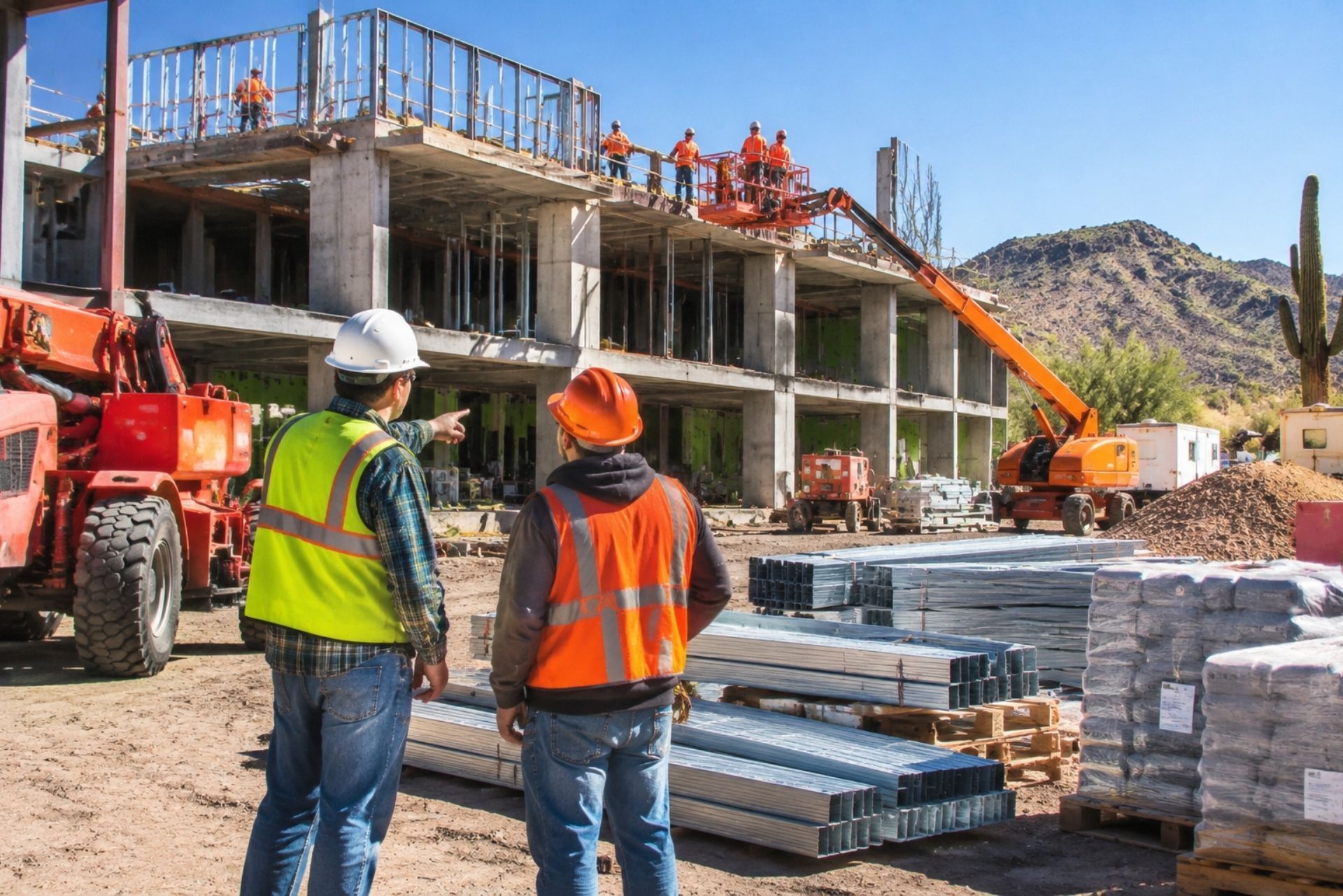
SDI vs. Traditional Surety Bonds: A Side-by-Side Comparison
Surety bonds and SDI both respond to subcontractor failure, but they work from opposite directions. A bond is a three-party guarantee: the sub (principal) buys it, the surety guarantees performance, and you (the obligee) can make a claim. SDI is a two-party contract between you and your insurer.
That structural difference drives almost everything else. Under a bond, the sub's credit gets underwritten and the surety has rights against the sub's assets through indemnity agreements. Under SDI, the carrier is betting on your judgment, and you absorb the first dollars of any loss.
Neither is universally better. Bonds can make sense for a GC with modest subcontract volume, thin working capital, or a few high-risk trades. SDI tends to suit larger contractors with mature prequal departments and enough balance sheet to carry significant retentions. Keep in mind that owners on Arizona public work generally require the prime contractor to post payment and performance bonds, and SDI doesn't replace those obligations. Many GCs run a hybrid, enrolling most subs in SDI while bonding select scopes.
Comparison Table: Control, Cost, and Claims Handling
| Factor | Subcontractor Default Insurance | Surety Bond |
|---|---|---|
| Who buys it | General contractor | Subcontractor (cost passed into bid) |
| Who controls the claim | GC manages internally | Surety investigates |
| Speed of response | Faster: GC acts on its own timeline | Slower: surety must review and may defend sub |
| Typical cost | 1.0% to 1.5% of enrolled subcontract value | Varies by sub's credit and job size |
| Your retention | Large deductible plus co-pay | Little to none |
| Indirect costs covered | Often included, subject to sublimits | Usually limited to bond penalty |
| Best fit | High-volume GCs with strong prequal | Smaller GCs or high-risk scopes |
Claims Procedures and Cost Drivers for Arizona Projects
Claims handling is where SDI earns its keep or falls apart. With a surety bond, the third-party surety runs the default investigation and may defend the subcontractor, which can stall things for weeks. With SDI, you manage the claim internally, so you can bring in a replacement crew right away.
That speed only helps if your paperwork is tight. A typical SDI claim follows this sequence:
Notice to the carrier as soon as you see signs of default, such as missed payroll, unpaid suppliers, or crews not showing
Formal default declaration under your subcontract's terms, with cure notices served correctly
Mitigation by hiring a completion contractor or supplementing the existing sub
Cost documentation, including invoices, change orders, schedule impacts, and extended general conditions
Proof of loss submitted after the scope is complete or costs are reasonably known
Here's what that means for you: a sloppy default notice can sink recovery. If your subcontract requires 48-hour written cure notice and your superintendent just sent a text, expect pushback. Train field staff on notice requirements before you ever need them.
How Premiums and Indirect Costs are Calculated
In late 2026, SDI premiums generally run between 1.0% and 1.5% of total enrolled subcontract value. On $80 million of enrolled subcontracts, that's roughly $800,000 to $1.2 million. Your rate depends on loss history, prequal quality, trade mix, and the retention you choose. Higher deductibles usually buy lower rates.
Indirect costs are the expenses that pile up around a default: extended site supervision, acceleration overtime for other trades, liquidated damages owed to the owner, and added design or engineering fees. Most policies cover these within sublimits, so check whether your form caps them at a percentage of the direct loss. Many GCs also bill a portion of the SDI premium back into project costs, which owners should spell out in the prime contract.
Common Questions About Arizona Subcontractor Default Insurance
Can a small Arizona general contractor buy SDI? Usually not. Carriers look for substantial annual subcontract volume and an established prequalification program, so smaller firms typically stick with bonds.
Does SDI replace the bonds required on public projects? No. If an owner requires payment and performance bonds from you as the prime contractor, you still need them, regardless of your SDI program.
Who pays the deductible when a sub defaults? You do, as the general contractor. You can still pursue the defaulted sub for recovery, but collection often depends on whether that company has any assets left.
Is SDI cheaper than bonding every sub? Often, on a premium basis. Once you factor in deductibles and co-payments, the real comparison depends on your loss history and how often subs fail.
Does SDI cover a sub's unpaid suppliers? Coverage for supplier and lower-tier payment issues varies by policy form. Ask your broker exactly how the form treats lien claims and pass-through payment obligations.
How fast can I hire a replacement sub under SDI?
Right away, as long as you follow your notice requirements and keep the carrier informed. That speed is one of SDI's biggest advantages over a bond claim.
Making the Right Choice for Your Project Portfolio
SDI shifts control and responsibility onto you. If your company has a disciplined prequal team, enough capital to carry a seven-figure retention, and steady subcontract volume across Phoenix, Tucson, or statewide work, it can lower total costs and get troubled scopes back on track faster than a surety claim ever will. If any of those pieces are shaky, bonds still offer a cleaner transfer of risk.
Before you commit, do three things:
- Pull five years of default history and price what those losses would have cost under a $500,000 versus $2,000,000 deductible
- Audit your prequal files for gaps a carrier would flag, especially stale financials and missing Registrar of Contractors license checks
- Review your subcontract default and notice clauses with counsel so they line up with policy requirements
The right answer for many Arizona GCs is a blend: SDI for the bulk of the program and bonds for the scopes where one failure could sink a job. Get a broker who handles both products to run the numbers side by side, and make the decision based on your actual loss data, not a carrier pitch.
About The Author:
Taylor Whatcott
As President of Wilde Wealth Insurance Services, I’m committed to providing trusted protection for both families and businesses across Arizona. Our independent team works with top-rated carriers to deliver tailored, comprehensive coverage—making insurance simple, accessible, and hassle-free.
Contact Us
Commercial Coverage Solutions
Protect Your Business with the Right Insurance
We offer customized insurance solutions to safeguard your business from financial risks. Our policies provide protection for property, employees, and liability concerns.
Commercial Property Insurance
Safeguards buildings, equipment, and inventory from damage or loss.
Professional Liability Insurance
Covers claims of negligence, errors, or omissions in services.
Cyber Liability Insurance
Protects against data breaches, cyberattacks, and online threats.
Who We Protect
Insurance Solutions for Your Industry
We specialize in providing tailored coverage for businesses in key industries. Our policies are designed to meet industry-specific risks and ensure complete protection.




Protection for Your Home & Assets
Reliable Coverage for Life’s Unexpected Moments
We provide personal insurance solutions designed to safeguard your home, vehicle, and financial well-being. Our policies ensure you and your loved ones are protected.







What Our Clients Say
Real Feedback. Real Confidence.
FAQs
Answers to Common Insurance Questions
How do I know which insurance coverage is right for me?
Choosing the right insurance depends on your personal or business needs. Our team evaluates your risks and recommends tailored coverage to protect what matters most.
We work with multiple carriers to provide different policy options. This allows you to compare benefits, limits, and pricing to make an informed choice.
If you’re unsure, we’ll walk you through the options step by step, ensuring you understand your coverage and feel confident in your decision.
Why should I choose an independent insurance agency like Wilde Wealth?
As an independent agency, we are not tied to a single insurance provider. This means we can compare multiple policies to find the best coverage at the best price.
Our goal is to advocate for you, ensuring you receive personalized service and expert advice tailored to your situation.
Unlike direct insurers, we offer ongoing support, helping you with claims, policy changes, and future coverage needs.
Can I bundle multiple insurance policies to save money?
Yes! Bundling policies like home and auto can lead to significant savings. Many carriers offer discounts for combining multiple coverages.
Bundling also simplifies policy management, with a single point of contact and streamlined renewals.
We help you explore bundling options to ensure you get the best value while maintaining the protection you need.
What factors affect my insurance rates?
Insurance rates are influenced by factors such as coverage limits, location, claims history, and risk exposure. Personal insurance may consider credit scores, driving history, and home value.
For businesses, factors like industry type, employee count, and annual revenue can impact pricing. Each carrier evaluates risk differently.
We shop multiple providers to find the best balance of coverage and cost, ensuring you don’t overpay while staying fully protected.
How does Wilde Wealth Insurance Services help business owners?
We provide customized business insurance solutions to protect against liability, property damage, employee-related risks, and cyber threats.
Our team works with a range of industries, including contractors, restaurants, and real estate professionals, to offer tailored policies.
From small startups to established enterprises, we help business owners minimize risks and keep operations running smoothly.
What happens if I need to file a claim?
Filing a claim is simple with our support. Contact us first, and we’ll guide you through the process, ensuring all necessary information is submitted correctly.
We work directly with your insurance carrier to expedite the claim, keeping you informed at every step.
Our team is here to advocate for you, making sure you receive a fair and timely resolution.
Latest Articles & Insights
Stay Informed with Expert Insurance Advice
We provide valuable insights to help you make informed insurance decisions. Explore our latest articles on coverage options, industry trends, and risk management tips.


Contact Us