
Arizona Asbestos Abatement Contractor Insurance
See How We're Different:
or Call Us:(480) 526-3222
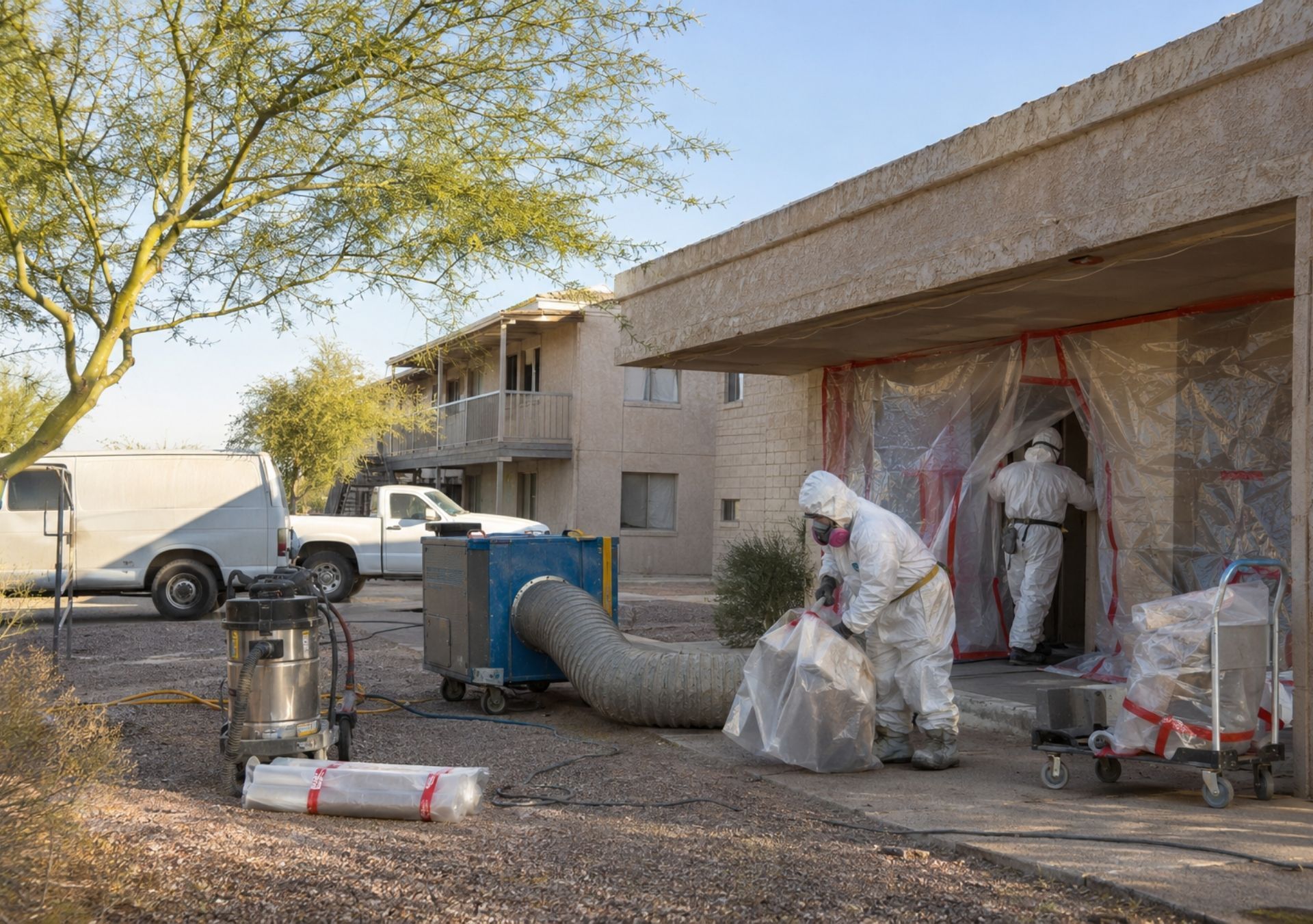
Most asbestos abatement contractors in Arizona find out about their coverage gaps the hard way: a general contractor rejects their certificate two days before mobilization, or a former client's tenant files a claim three years after the job closed. Abatement is one of the few trades where the standard contractor insurance package simply doesn't fit, because the main hazard you're paid to handle is the same one most policies exclude.
This guide covers Arizona asbestos abatement contractor insurance from the ground up. It explains general liability, pollution liability, completed operations, and workers' compensation, along with certificate requirements and what drives your costs in 2026. You'll also see where state rules, such as Registrar of Contractors (ROC) monitoring and Arizona's construction defect timelines, change the math for your business.
If you run a crew in Phoenix, Tucson, Flagstaff, or anywhere in between, the details below will help you buy coverage that holds up when a claim lands. That matters more than buying the cheapest policy that happens to satisfy a bid package.
Risk Management for Arizona Asbestos Abatement Professionals
Insurance is the backstop, not the plan. Carriers that write abatement work want to see a contractor who controls risk before the policy ever responds. That control starts with regulatory compliance, because a missed notification or an uncertified supervisor can void the defense you thought you had.
In Maricopa County, contractors must file notifications at least 10 business days before starting regulated asbestos renovation or demolition projects. Skip that step and you're facing more than a fine. You're also handing an underwriter or claims adjuster a reason to question everything else about your operation.
Federal rules add another layer. On-site AHERA-certified professionals, including a Building Inspector and a Contractor/Supervisor, are required for abatement activities in NESHAP-regulated facilities. Keep those certifications current and on file, because underwriters ask for them and claims investigators do too.
Licensing ties directly into insurance as well. The Arizona ROC now uses an electronic notification system linked to insurance carriers, so a policy lapse can trigger automatic license suspension before anyone calls you. A missed premium payment in March could mean you're unlicensed on a school job in April.
A practical risk management checklist for Arizona abatement firms:
- Do keep a written notification log with filing dates for every regulated project
- Do document air monitoring results, clearance testing, and waste manifests for each job
- Do set autopay or calendar reminders for every policy renewal
- Don't let a supervisor's AHERA refresher lapse, even by a week
- Don't start work on verbal approval when the paperwork hasn't cleared
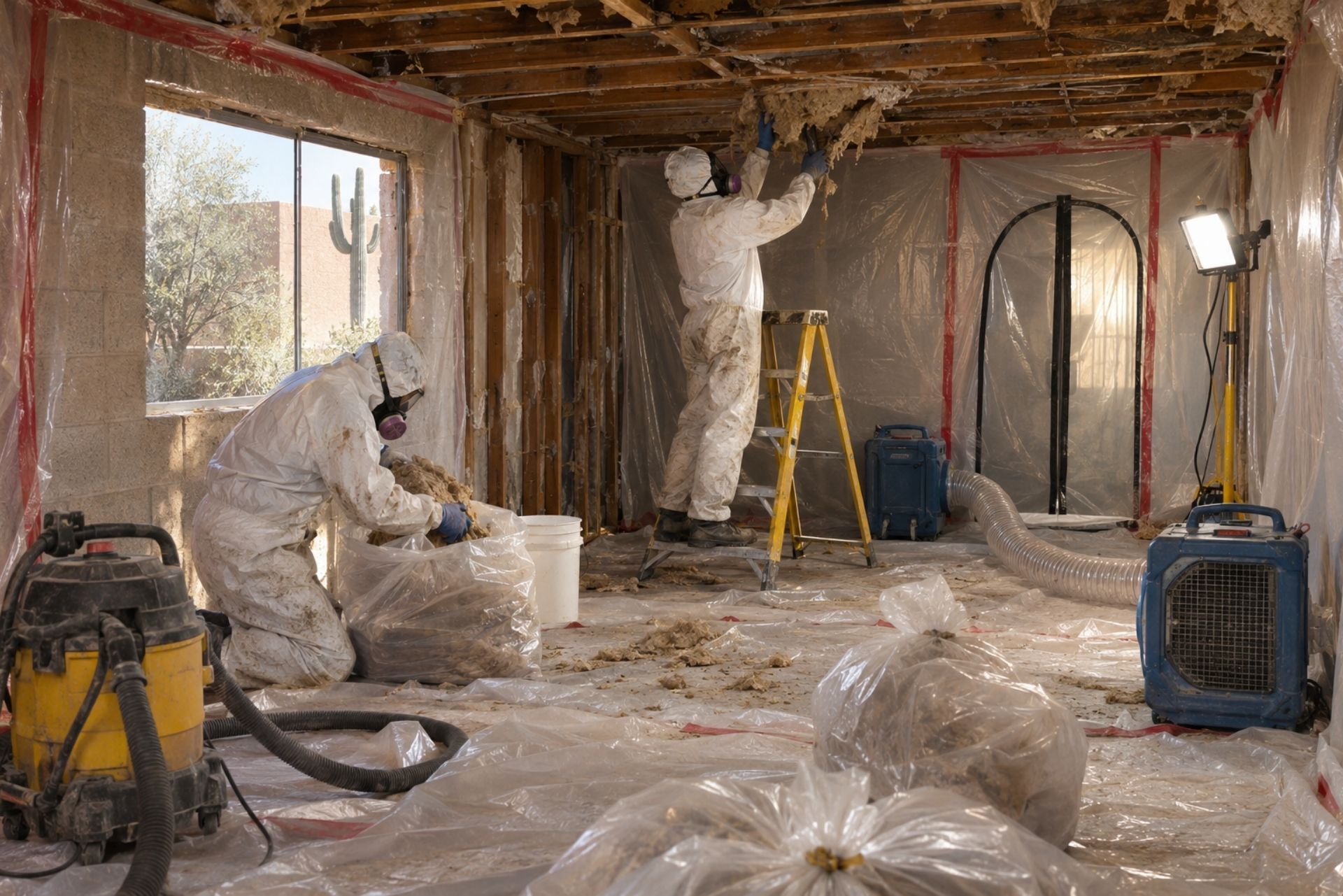
Core Coverage: General Liability vs. Pollution Liability
Here's the part that trips up new abatement firms and even some insurance agents. General liability and pollution liability cover different things, and for your trade, the line between them decides whether a claim gets paid.
General liability handles the ordinary contractor exposures. Think of a worker knocking over a property owner's display case, a client slipping on your floor sheeting, or damage to a ceiling grid outside your work area. Those claims happen, and you need the coverage.
Pollution liability, usually written as Contractors Pollution Liability (CPL), responds when a release of a pollutant causes injury or damage. For you, that means asbestos fibers escaping containment, contaminated debris tracked into an occupied hallway, or an HVAC system spreading fibers through a building. Those are your biggest-dollar exposures, and they belong on the pollution side.
Why Standard GL Policies Exclude Asbestos
Nearly every standard commercial general liability form carries a pollution exclusion, and many add a specific asbestos exclusion on top of it. Carriers spent decades paying asbestos bodily injury claims, and the industry's response was to carve that exposure out of GL permanently.
The catch is that many contractors read "general liability" on their declarations page and assume they're protected. They aren't. If an occupant of a renovated office building claims fiber exposure, your GL carrier will almost certainly deny it under the exclusion, and you'll be paying defense attorneys out of pocket.
Some abatement-focused programs bundle GL and CPL on a single combined form. That can close gaps, but read whether the limits are shared or separate. A shared $1 million limit across both coverages goes fast in an occupied-building claim.
Comparison Chart: General Liability vs. Contractors Pollution Liability
| Feature | General Liability | Contractors Pollution Liability |
|---|---|---|
| Covers asbestos fiber release | No (excluded) | Yes |
| Slip-and-fall at jobsite | Yes | Usually no |
| Accidental property damage (non-pollution) | Yes | No |
| Cleanup costs after a release | No | Yes, typically |
| Third-party bodily injury from exposure | No | Yes |
| Required by most GC contracts | Yes | Yes, for abatement trades |
| Policy trigger | Usually occurrence | Occurrence or claims-made |
That last row matters. A claims-made CPL policy only responds if the policy is active when the claim is filed, so switching carriers without securing prior acts coverage can leave years of past jobs exposed.
The Role of Completed Operations in Environmental Work
Completed operations coverage protects you after the job is finished and you've left the site. In abatement, that's when many problems surface: a tenant moves in, notices debris above a drop ceiling, and a lab finds asbestos in it.
Arizona makes this coverage especially important. The state enforces an 8-year statute of repose for construction defects under A.R.S. § 12-552, which means claims tied to your work can follow you for years after final clearance. A job you closed out in 2026 could still produce a lawsuit in 2033.
Here's what that means for you. Your completed operations coverage needs to exist on both your GL and your pollution policy, and it needs to stay in force. A GL policy with products-completed operations coverage won't help with a fiber release claim, because the asbestos exclusion still applies.
Watch for these common gaps:
- Short tail on claims-made CPL: If you retire, sell, or switch carriers, you'll need an extended reporting period to cover past jobs
- Project-specific policies that expire: Some owners require dedicated project pollution coverage, but if it ends at completion, your exposure doesn't
- Contract requirements for extended coverage: Many GC contracts require you to keep completed operations coverage and additional insured status for a set number of years after completion
One mistake comes up constantly. A contractor closes the business, cancels everything, and gets sued two years later over a 2024 school renovation. Without tail coverage, there's nothing to respond.
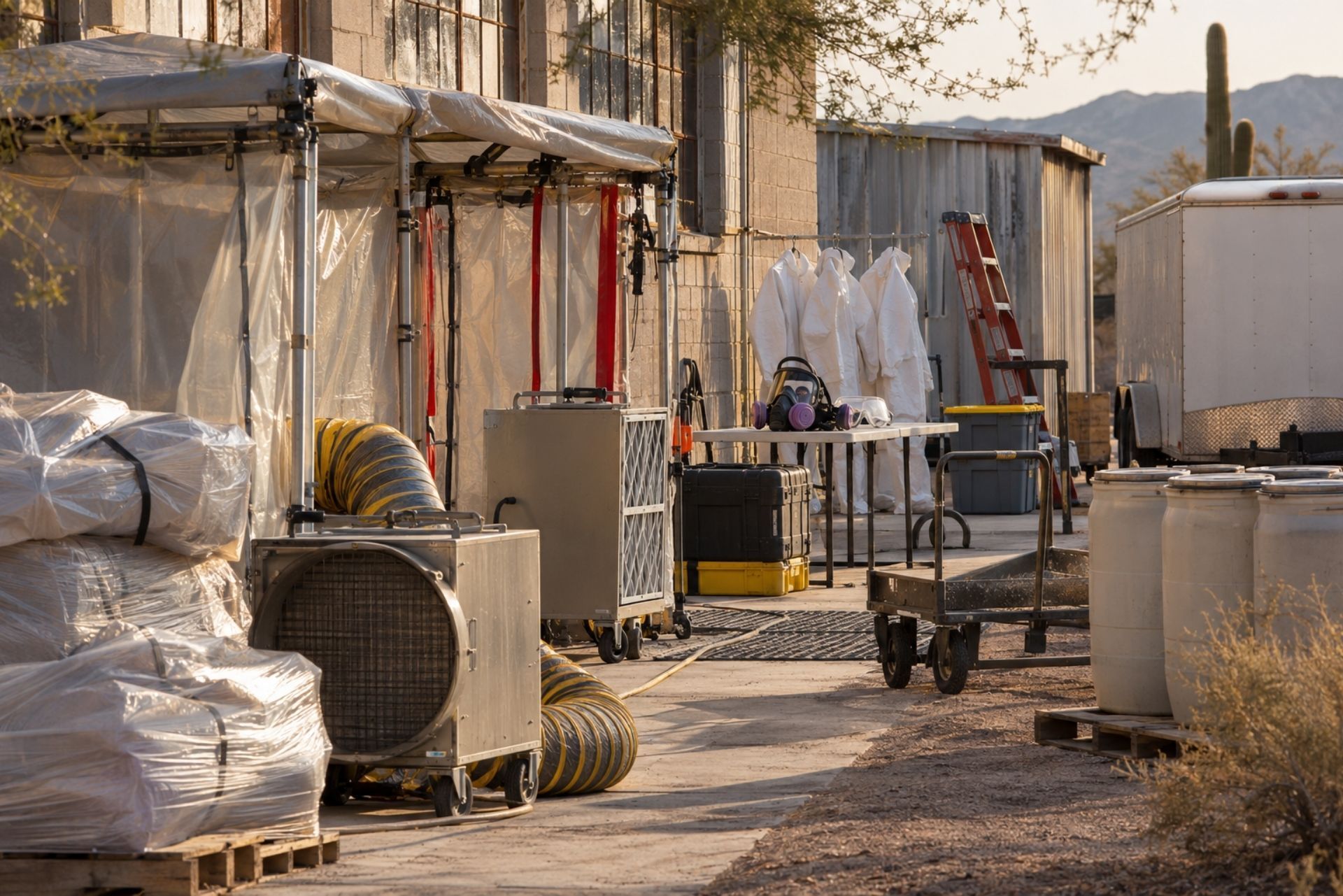
Arizona Workers' Compensation and Industrial Commission Standards
Arizona requires employers to carry workers' compensation, and abatement firms sit in one of the more scrutinized risk categories. The Industrial Commission of Arizona (ICA) oversees the system, sets fee schedules, and collects assessments that flow into your premium.
There's good news on rates this year. Arizona workers' compensation voluntary loss costs dropped 6.7% effective January 1, 2026, which marks the 12th straight year of decreases. Loss costs are only one piece of your rate, but the trend works in your favor.
On the flip side, assessments still apply. The ICA set the 2026 Administrative Fund assessment rate at 2.25% under A.R.S. § 23-961(G). That cost gets built into what carriers charge, so it shows up on your bill whether or not you notice it.
For abatement employers, the bigger issue is underwriting appetite. Plenty of standard carriers won't write asbestos removal at all, which pushes many firms into specialty markets or the state's residual options. Shop early, because a renewal that gets declined 15 days out leaves you scrambling.
Class Codes and Occupational Disease Exposure
Your class code drives your workers' comp rate more than almost anything else. Abatement work generally falls under specific asbestos or hazardous material removal classifications, and misclassifying employees is one of the fastest ways to get hit with an audit bill.
Here's a common mistake. A firm puts its abatement technicians under a general construction or insulation code because it's cheaper, then the carrier's premium audit reclassifies them and bills the difference back for the full policy year. That bill can run tens of thousands of dollars for a mid-size crew.
Occupational disease is the long-tail worry. Asbestos-related diseases can take decades to appear, and your workers' comp policy covers occupational disease claims tied to employment. Respiratory protection programs, medical surveillance, and fit testing records all help demonstrate you're controlling that exposure.
Managing Certificates of Insurance (COI) for Arizona Projects
A certificate of insurance is just a snapshot. It proves coverage existed on the day it was issued, and it doesn't change your policy terms. Yet in practice, a COI is the document that gets you on site or keeps you off it.
General contractors, property managers, school districts, and hospital facilities teams will all ask for a COI before your crew mobilizes. For abatement work, they'll specifically look for pollution liability on the certificate. If it's missing, expect a rejection, even if your GL limits are high.
Build a COI routine so you're not sending frantic emails the morning of a job:
- Request the contract's insurance exhibit at bid stage, not after award
- Send it to your agent and confirm your policies can meet each requirement
- Ask for endorsements to be added before the certificate is issued
- Keep a master spreadsheet of every active certificate holder and expiration date
- Request updated certificates automatically at each renewal
That fourth step pays off. When you renew, every GC and owner on your list needs a fresh certificate, and missing one can hold up payment applications for weeks.
Common Additional Insured and Waiver Requirements
Most Arizona contracts will require more than a basic certificate. Expect some combination of these:
- Additional insured status on GL and pollution policies, often for ongoing and completed operations
- Primary and non-contributory wording, meaning your policy pays before the GC's or owner's
- Waiver of subrogation on GL, auto, and workers' comp, preventing your carrier from pursuing the client after a claim
- Notice of cancellation provisions, though many carriers only commit to notifying the named insured
- Specific limits, frequently $1 million per occurrence and $2 million aggregate, with higher pollution limits on larger commercial or public projects
The catch is that a certificate listing "additional insured" means nothing without the actual endorsement on the policy. GCs who've been burned now ask for copies of the endorsements themselves. Have them ready.
Pricing for abatement coverage varies more than most trades, and there's no reliable flat number to quote. Your premium depends on the mix of coverages, your limits, your work type, and how carriers view your track record.
The biggest variables include:
- Scope of work: Residential flooring removal prices very differently than commercial demolition or school and hospital projects
- Limits and deductibles: Moving from $1 million to $5 million in pollution limits raises cost, though not proportionally
- Policy form: Occurrence-based pollution coverage often costs more than claims-made, but it reduces tail headaches
- Geography and project type: Occupied buildings and public facilities carry more third-party exposure
Licensing adds fixed costs on top of insurance. In 2026, Arizona ROC license bonds range from $2,500 to $100,000, and Dual licenses require the combined amount for both residential and commercial classifications. Residential and Dual contractors also pay a $370 fee into the Residential Contractors Recovery Fund for new licenses.
Claims History and Loss Control Measures
Underwriters care about your loss runs more than your sales pitch. A firm with five clean years and documented procedures will get better terms than a newer competitor with one fiber release claim on record.
Your written programs matter: respiratory protection, containment procedures, air monitoring, waste disposal manifests, and supervisor certifications. Submit them with your application. Carriers that write this class know what good documentation looks like, and they price accordingly.
Revenue Volume and Subcontractor Ratios
Many abatement policies are rated on gross receipts or payroll, so growth raises premiums even without claims. Estimate revenue honestly, since an audit will catch underreporting and bill the difference.
Subcontracting changes the picture too. If you sub out demolition or hauling, carriers will want proof those subs carry their own pollution and workers' comp coverage. Uninsured subs get counted as your exposure, and the audit will add their costs to your rating base.
Frequently Asked Questions About Asbestos Insurance
Does my general liability policy cover asbestos claims? Almost never. Standard GL policies exclude pollution and often asbestos specifically, so you need separate contractors pollution liability.
Do I need workers' comp if I only have a few employees? Arizona requires most employers with employees to carry workers' compensation. Abatement's health risks make going without it a serious financial gamble even before penalties.
What happens if my policy lapses in Arizona? Because the ROC receives electronic notice from carriers, a lapse can lead to automatic license suspension. Keep renewals on autopay or calendar alerts.
How long should I keep completed operations coverage? Arizona's 8-year statute of repose means claims can arise long after a project ends. Plan to keep coverage active, or buy tail coverage if you close the business.
Is claims-made or occurrence pollution coverage better? Occurrence coverage responds to incidents during the policy period regardless of when the claim is filed. Claims-made can cost less upfront but requires continuous coverage or an extended reporting period.
Why did my certificate get rejected? The most common reasons are missing pollution liability, missing additional insured endorsements, or limits below contract requirements. Ask for the insurance exhibit before you bid.
Making the Right Choice for Your Business
The right abatement insurance program isn't the one with the lowest premium. It's the one that responds when fibers escape containment, when a former client's tenant files suit years later, or when a technician develops a respiratory illness. That means pollution liability with real limits, completed operations that outlast Arizona's repose period, and workers' comp under the correct class code.
Start by pulling your current policies and checking three things: whether your pollution coverage is occurrence or claims-made, whether your limits are shared, and whether your additional insured endorsements actually exist on paper. Then compare those findings against the contracts you're bidding in 2026.
Work with an agent who writes environmental contractors regularly and can explain each exclusion in plain language. If they can't tell you how your asbestos exclusion reads, keep looking. A policy you understand is worth far more than one that simply looks complete on a certificate.
About The Author:
Taylor Whatcott
As President of Wilde Wealth Insurance Services, I’m committed to providing trusted protection for both families and businesses across Arizona. Our independent team works with top-rated carriers to deliver tailored, comprehensive coverage—making insurance simple, accessible, and hassle-free.
Contact Us
Commercial Coverage Solutions
Protect Your Business with the Right Insurance
We offer customized insurance solutions to safeguard your business from financial risks. Our policies provide protection for property, employees, and liability concerns.
Commercial Property Insurance
Safeguards buildings, equipment, and inventory from damage or loss.
Professional Liability Insurance
Covers claims of negligence, errors, or omissions in services.
Cyber Liability Insurance
Protects against data breaches, cyberattacks, and online threats.
Who We Protect
Insurance Solutions for Your Industry
We specialize in providing tailored coverage for businesses in key industries. Our policies are designed to meet industry-specific risks and ensure complete protection.


Protection for Your Home & Assets
Reliable Coverage for Life’s Unexpected Moments
We provide personal insurance solutions designed to safeguard your home, vehicle, and financial well-being. Our policies ensure you and your loved ones are protected.







What Our Clients Say
Real Feedback. Real Confidence.
FAQs
Answers to Common Insurance Questions
How do I know which insurance coverage is right for me?
Choosing the right insurance depends on your personal or business needs. Our team evaluates your risks and recommends tailored coverage to protect what matters most.
We work with multiple carriers to provide different policy options. This allows you to compare benefits, limits, and pricing to make an informed choice.
If you’re unsure, we’ll walk you through the options step by step, ensuring you understand your coverage and feel confident in your decision.
Why should I choose an independent insurance agency like Wilde Wealth?
As an independent agency, we are not tied to a single insurance provider. This means we can compare multiple policies to find the best coverage at the best price.
Our goal is to advocate for you, ensuring you receive personalized service and expert advice tailored to your situation.
Unlike direct insurers, we offer ongoing support, helping you with claims, policy changes, and future coverage needs.
Can I bundle multiple insurance policies to save money?
Yes! Bundling policies like home and auto can lead to significant savings. Many carriers offer discounts for combining multiple coverages.
Bundling also simplifies policy management, with a single point of contact and streamlined renewals.
We help you explore bundling options to ensure you get the best value while maintaining the protection you need.
What factors affect my insurance rates?
Insurance rates are influenced by factors such as coverage limits, location, claims history, and risk exposure. Personal insurance may consider credit scores, driving history, and home value.
For businesses, factors like industry type, employee count, and annual revenue can impact pricing. Each carrier evaluates risk differently.
We shop multiple providers to find the best balance of coverage and cost, ensuring you don’t overpay while staying fully protected.
How does Wilde Wealth Insurance Services help business owners?
We provide customized business insurance solutions to protect against liability, property damage, employee-related risks, and cyber threats.
Our team works with a range of industries, including contractors, restaurants, and real estate professionals, to offer tailored policies.
From small startups to established enterprises, we help business owners minimize risks and keep operations running smoothly.
What happens if I need to file a claim?
Filing a claim is simple with our support. Contact us first, and we’ll guide you through the process, ensuring all necessary information is submitted correctly.
We work directly with your insurance carrier to expedite the claim, keeping you informed at every step.
Our team is here to advocate for you, making sure you receive a fair and timely resolution.
Latest Articles & Insights
Stay Informed with Expert Insurance Advice
We provide valuable insights to help you make informed insurance decisions. Explore our latest articles on coverage options, industry trends, and risk management tips.
Contact Us