
Arizona Commercial Flood Insurance
See How We're Different:
or Call Us:(480) 526-3222
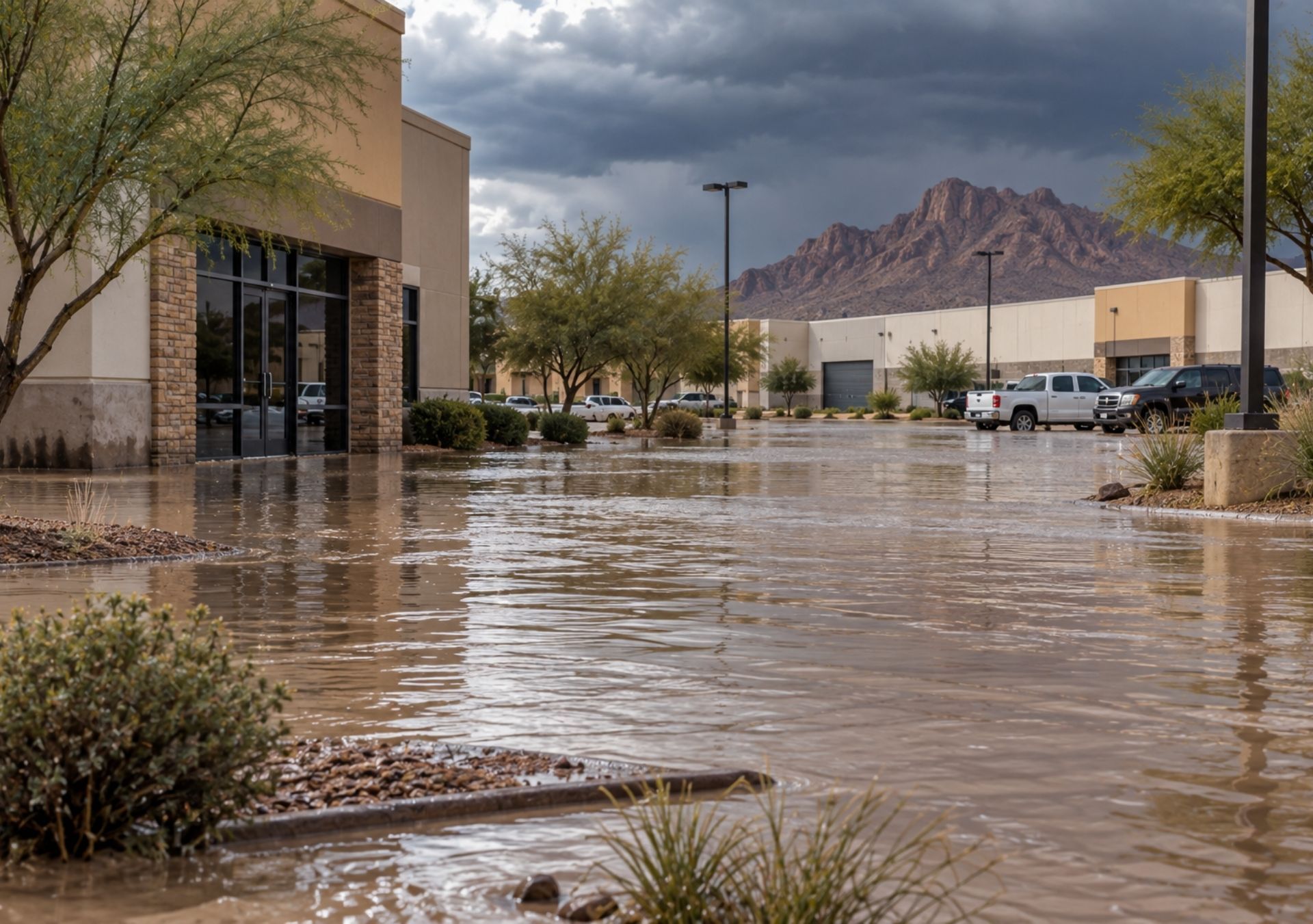
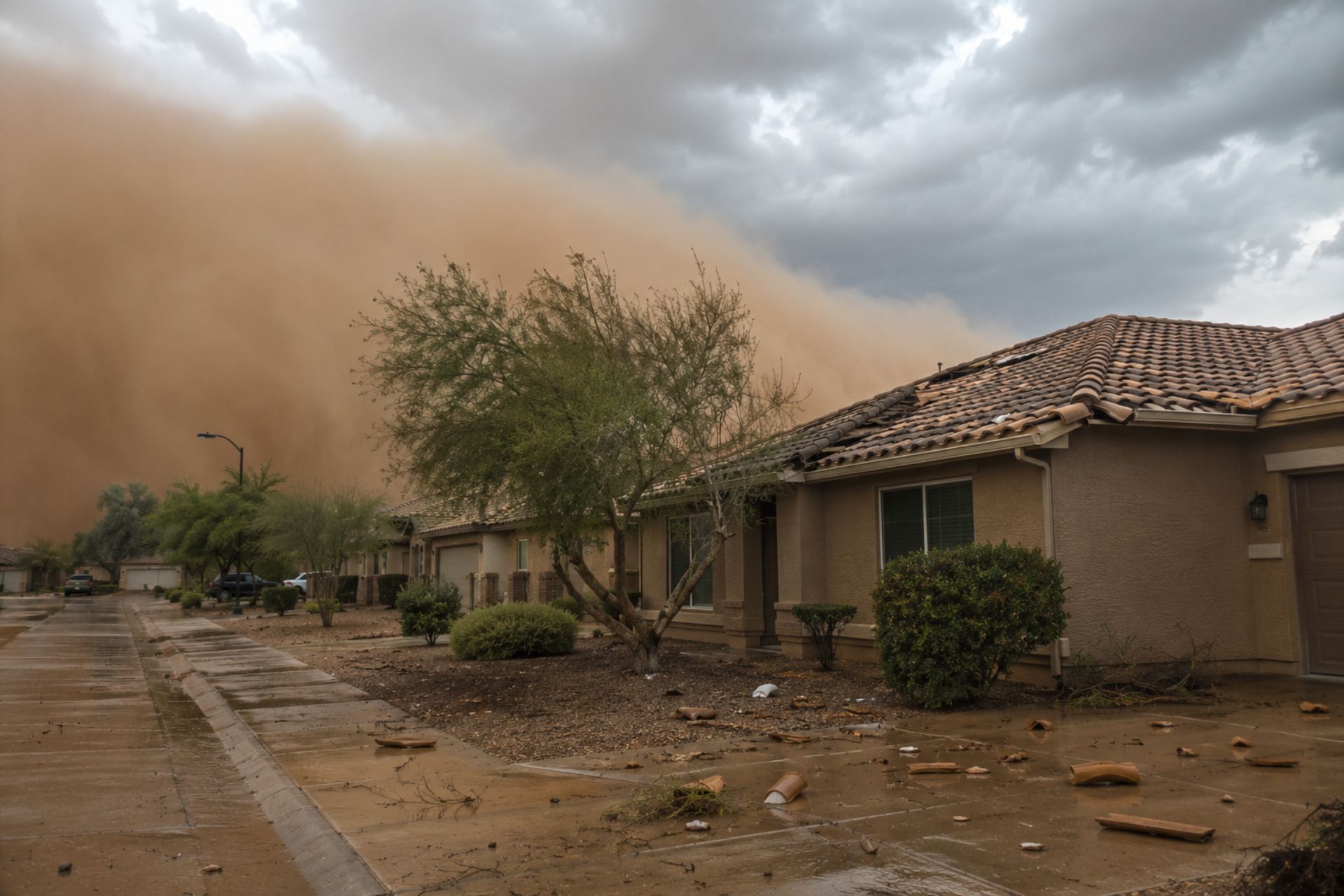
Arizona's desert climate gives many business owners a false sense of security about flooding. The reality is starkly different. Between June and September, monsoon storms dump enormous volumes of rain in short bursts, and the hard-packed desert terrain sends that water racing through washes, parking lots, and storefronts with startling speed. Even a single inch of floodwater inside a commercial building can cause more than $25,000 in damage, wiping out inventory, equipment, and critical infrastructure in minutes.
If you own or lease commercial property anywhere in the state, understanding
flood insurance options isn't optional: it's a financial necessity. Standard
commercial property policies exclude flood damage entirely, which means a single monsoon event could leave you covering six figures in losses out of pocket. Arizona businesses face a specific set of flood risks that differ from coastal states, and the insurance products available to address those risks have changed significantly in recent years. Whether you're comparing the National Flood Insurance Program to private carriers, trying to understand coverage limits, or just wondering what a policy will cost, the details matter. Getting them right can mean the difference between a temporary setback and a permanent closure.
Understanding Arizona's Unique Flood Risks: Monsoons and Flash Floods
Arizona doesn't flood the way Florida or Louisiana does. There are no sustained hurricanes or days-long rainfall events. Instead, the state's flood risk concentrates into violent, fast-moving events that strike with little warning and recede almost as quickly. This pattern creates challenges for both property owners and insurers.
The Impact of Monsoon Season on Commercial Properties
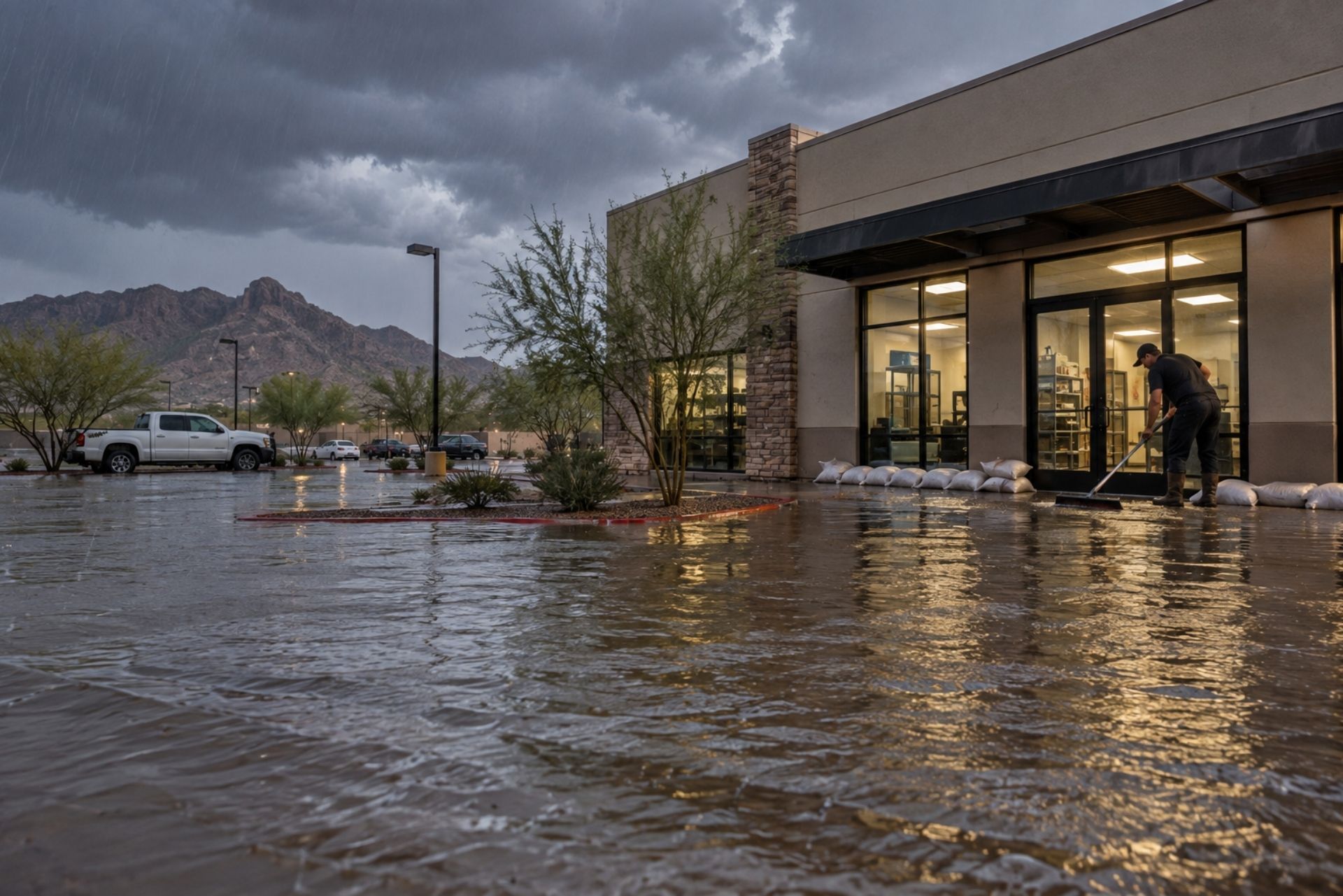
The North American Monsoon typically runs from mid-June through September, bringing moisture from the Gulf of California into the state. Thunderstorms can drop two to three inches of rain in under an hour over a localized area. For commercial properties, the danger isn't just the rain itself: it's the volume of water that flows overland and through drainage channels that were dry 30 minutes earlier.
Businesses in low-lying areas, near washes, or downstream from hillsides are especially vulnerable. Retail strip malls, warehouses near industrial corridors, and restaurants with ground-level entries frequently sustain damage during monsoon season. Roof drainage systems designed for typical conditions can't handle the intensity, leading to interior flooding from above even as water pushes in from ground level.
Why Desert Soil Increases Flash Flood Velocity
Caliche, the calcium carbonate layer found beneath much of Arizona's topsoil, acts almost like concrete. Water can't percolate through it the way it does through loamy or sandy soils in other regions. The result is that rainfall runs off almost immediately, gathering speed and volume as it moves downhill.
This is why a storm miles away can flood your property even under clear skies. Water travels through washes and drainage channels at speeds that can exceed 20 miles per hour, carrying debris that compounds the damage. Urbanization has made this worse: every new parking lot, road, and building pad adds impervious surface that accelerates runoff. A property that was safe from flooding 10 years ago may now sit in the path of concentrated stormwater flow.
Post-Wildfire Flood Hazards (Burn Scars)
Arizona's wildfire seasons have grown more intense, and the connection between wildfires and flooding is direct. When a fire strips vegetation from a hillside, the exposed soil becomes hydrophobic: it repels water rather than absorbing it. For two to five years after a significant burn, even moderate rainfall can trigger debris flows and flash flooding in areas well downstream from the fire perimeter.
The 2021 Telegraph Fire and 2022 Pipeline Fire both created burn scars that increased flood risk for communities and commercial corridors miles away. If your business sits downstream from forest or
brush land, post-fire flooding is a risk that FEMA flood maps may not yet reflect. Insurance carriers are increasingly factoring burn scar proximity into underwriting decisions.
Comparing NFIP vs. Private Commercial Flood Insurance
Two primary paths exist for commercial flood coverage in Arizona: the federal NFIP program and private flood insurance carriers. Each has distinct strengths and limitations, and many businesses benefit from understanding both before committing.
The NFIP is backed by FEMA and provides standardized coverage available in any community that participates in the program. Nearly every Arizona municipality participates. Private carriers, on the other hand, set their own terms, pricing, and coverage structures, which can work in your favor or against you depending on your property's risk profile.
Comparison Table: Government vs. Private Carrier Features
| Feature | NFIP | Private Carriers |
|---|---|---|
| Max Building Coverage | $500,000 | $1M to $50M+ |
| Max Contents Coverage | $500,000 | Varies widely; often $10M+ |
| Business Interruption | Not available | Available on most policies |
| Replacement Cost | Limited; depreciation applies to contents | Full replacement cost common |
| Wait Period | 30 days | 10-15 days typical; sometimes none for closings |
| Pricing Model | Risk Rating 2.0 (standardized) | Individual underwriting |
| Basement/Below-Grade Coverage | Very limited | Often broader |
| Claims Process | Federal adjuster network | Carrier-specific; often faster |
For smaller commercial properties with values under $500,000, the NFIP can be a straightforward and reliable option. But most mid-size and larger businesses will find the NFIP's coverage caps too restrictive. A single commercial building in the Phoenix metro area can easily be valued at $1 million or more, leaving a significant gap.
Wait Periods and Effective Dates for Arizona Business Owners
One detail that catches business owners off guard is the waiting period. NFIP policies don't take effect for 30 days after purchase, which means you can't buy coverage when you see a storm on the forecast. Private carriers typically impose a 10- to 15-day wait, though some waive it entirely for new property purchases or loan closings.
The catch is that monsoon season arrives on a predictable schedule. If you're buying flood insurance in late May or early June, you're cutting it close. Smart business owners secure coverage well before monsoon season begins, ideally during the first quarter of the year when there's no urgency and you can compare options carefully.
Coverage Limits and Structuring Your Deductibles
Getting the right amount of coverage matters as much as having a policy at all. Underinsurance is one of the most common mistakes I see with commercial flood policies, and it usually stems from confusion about how building and contents limits work.
Building vs. Business Personal Property (BPP) Limits
Your flood policy splits coverage into two categories. Building coverage protects the structure itself: walls, floors, electrical systems, plumbing, HVAC equipment, and permanently installed fixtures. Business personal property covers everything inside that isn't part of the building: inventory, furniture, computers, specialized equipment, and supplies.
Under the NFIP, each category caps at $500,000. A restaurant owner with a $400,000 building and $200,000 in kitchen equipment, furniture, and inventory would be adequately covered on the building side but might need supplemental private coverage for contents. Private carriers allow you to set limits based on actual values, which is especially important for businesses with expensive equipment or large inventories.
Deductibles for commercial flood policies typically range from $1,000 to $50,000. Higher deductibles reduce your premium but increase your out-of-pocket exposure. A $10,000 deductible might save you 15-20% on annual premium compared to a $5,000 deductible: whether that tradeoff makes sense depends on your cash reserves and risk tolerance.
The Role of Business Interruption Coverage in Private Policies
This is where private flood insurance pulls ahead of the NFIP in a meaningful way. The NFIP does not offer business interruption coverage at all. If floodwater shuts your business down for three weeks while you clean up, repair, and restock, the NFIP pays for physical damage but nothing for lost revenue, ongoing payroll obligations, or temporary relocation costs.
Private carriers routinely include or offer business interruption as an add-on. For a retail store or restaurant that depends on daily foot traffic, three weeks of closure could mean $50,000 to $150,000 in lost income on top of property damage. Business interruption coverage fills that gap, and for many Arizona businesses, it's the single strongest argument for choosing a private policy over the NFIP.
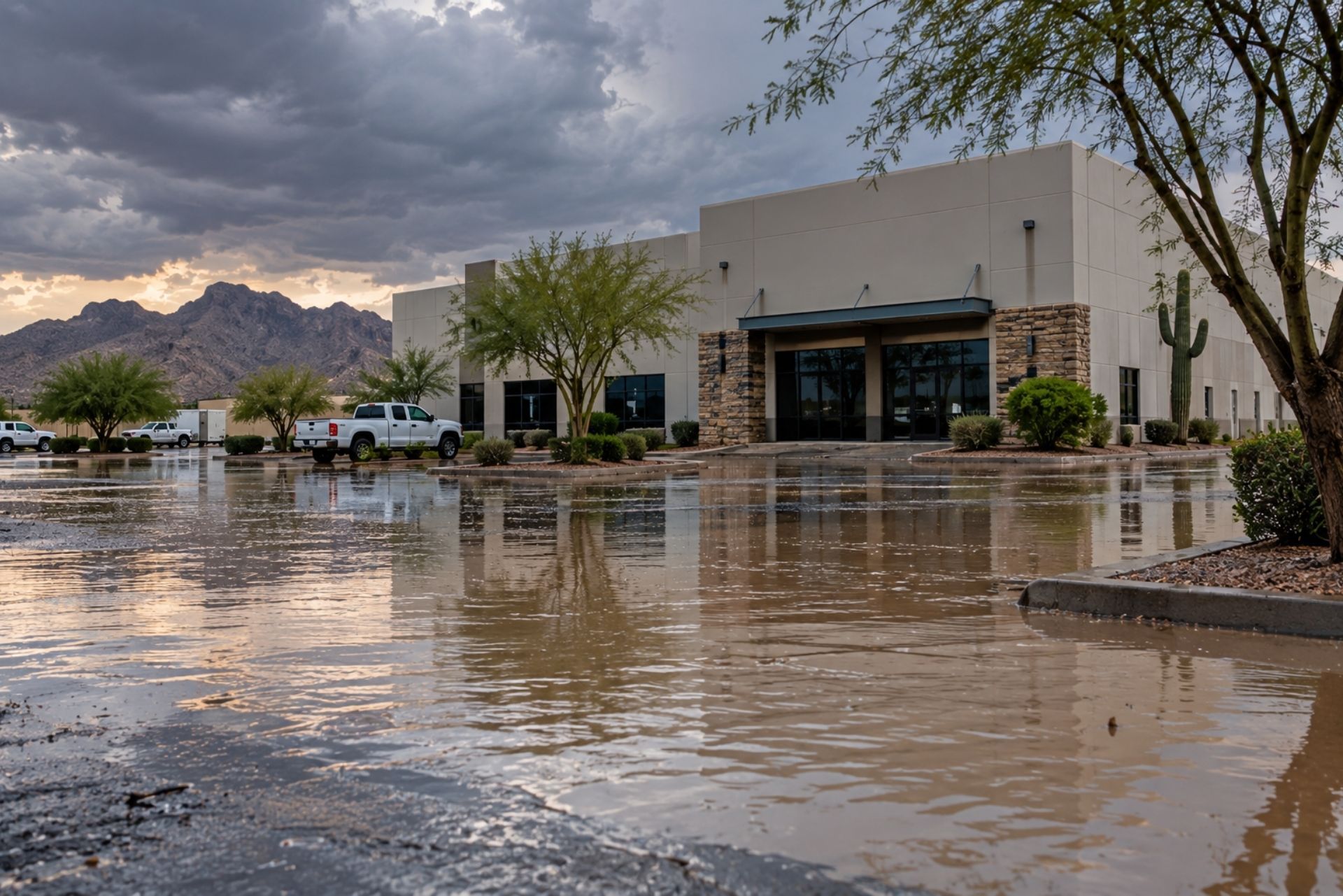
Pricing for commercial flood insurance in Arizona varies enormously. Two businesses on the same street can pay vastly different premiums based on a handful of factors that are worth understanding before you shop.
Elevation Certificates and FEMA Flood Zone Classifications
Your property's FEMA flood zone designation is the starting point for any premium calculation. Properties in Special Flood Hazard Areas (zones starting with A or V) pay significantly more than those in moderate-risk zones (B and X). Here's what that means for you: if your property sits in a Zone AE or AO designation, flood insurance may be required by your lender, and premiums will reflect the higher risk.
An elevation certificate, prepared by a licensed surveyor, documents your building's elevation relative to the base flood elevation. If your building sits above the base flood level, this certificate can substantially reduce your premium: sometimes by 30-50%. The survey costs $500 to $2,000, but the annual premium savings often pay for it within a single year.
FEMA's Risk Rating 2.0 methodology, which now applies to all NFIP policies, factors in distance to water sources, flood frequency, and multiple flood types rather than relying solely on zone maps. This has shifted costs for many Arizona properties, sometimes up and sometimes down.
Mitigation Strategies to Lower Annual Insurance Costs
Physical improvements to your property can reduce both your risk and your premium. Flood vents in foundation walls, elevated mechanical systems, and proper grading around the building perimeter all signal lower risk to underwriters.
Some cost-effective steps include:
- Installing backflow valves on sewer lines to prevent sewage backup during floods
- Raising HVAC units, electrical panels, and water heaters above anticipated flood levels
- Maintaining clear drainage channels and retention basins on your property
- Applying waterproof coatings to exterior foundation walls
Private carriers are often more responsive to mitigation efforts than the NFIP when calculating discounts. If you've invested in flood-proofing measures, make sure your agent documents them thoroughly during the application process.
Frequently Asked Questions About Arizona Flood Insurance
Do I need flood insurance if my property isn't in a FEMA flood zone? Over 20% of all NFIP claims come from properties outside high-risk flood zones. Arizona's flash flood patterns don't always follow FEMA maps, so coverage is worth considering regardless of your zone designation.
Can I get flood insurance for a leased commercial space? Yes. As a tenant, you can purchase a contents-only flood policy to protect your business personal property and inventory. Your landlord's policy covers the building structure but not your belongings.
How long does it take to get a flood claim paid? NFIP claims typically take 60-90 days. Private carriers often process claims in 30-45 days, though complex commercial losses can take longer with either option.
Is flood insurance tax-deductible for my business? Flood insurance premiums are generally deductible as a business expense. Consult your accountant for specifics related to your entity structure.
What's the average cost of commercial flood insurance in Arizona? Premiums range widely: from $1,500 to $15,000 or more annually depending on location, building value, flood zone, and coverage limits. Properties in high-risk zones with higher coverage needs will be at the upper end.
Does my commercial property policy already include any flood coverage? No. Standard commercial property policies explicitly exclude flood damage. You need a separate flood policy, either through the NFIP or a private carrier.
Making the Right Choice for Your Business Assets
Flood risk in Arizona is real, concentrated, and often underestimated. The combination of monsoon intensity, impermeable desert soils, and expanding urban development means more commercial properties face exposure than ever before. Whether you choose NFIP coverage for its reliability or a private carrier for higher limits and business interruption protection, the worst decision is no decision at all.
Start by getting an elevation certificate if you don't have one. Review your property's FEMA flood zone designation and understand what it means for your premium. Talk to an agent who handles commercial flood policies specifically: not all insurance professionals have deep experience with flood coverage, and the differences between NFIP and private options require someone who knows both programs well.
Don't wait until June to think about this. Monsoon season doesn't negotiate, and neither do 30-day waiting periods. Secure your coverage early, structure your deductibles based on your cash position, and make sure your limits actually reflect what it would cost to rebuild and restock. Your business is worth protecting before the next storm hits.
About The Author:
Taylor Whatcott
As President of Wilde Wealth Insurance Services, I’m committed to providing trusted protection for both families and businesses across Arizona. Our independent team works with top-rated carriers to deliver tailored, comprehensive coverage—making insurance simple, accessible, and hassle-free.
Contact Us
Commercial Coverage Solutions
Protect Your Business with the Right Insurance
We offer customized insurance solutions to safeguard your business from financial risks. Our policies provide protection for property, employees, and liability concerns.
Commercial Property Insurance
Safeguards buildings, equipment, and inventory from damage or loss.
Professional Liability Insurance
Covers claims of negligence, errors, or omissions in services.
Cyber Liability Insurance
Protects against data breaches, cyberattacks, and online threats.
Who We Protect
Insurance Solutions for Your Industry
We specialize in providing tailored coverage for businesses in key industries. Our policies are designed to meet industry-specific risks and ensure complete protection.




Protection for Your Home & Assets
Reliable Coverage for Life’s Unexpected Moments
We provide personal insurance solutions designed to safeguard your home, vehicle, and financial well-being. Our policies ensure you and your loved ones are protected.






What Our Clients Say
Real Feedback. Real Confidence.
FAQs
Answers to Common Insurance Questions
How do I know which insurance coverage is right for me?
Choosing the right insurance depends on your personal or business needs. Our team evaluates your risks and recommends tailored coverage to protect what matters most.
We work with multiple carriers to provide different policy options. This allows you to compare benefits, limits, and pricing to make an informed choice.
If you’re unsure, we’ll walk you through the options step by step, ensuring you understand your coverage and feel confident in your decision.
Why should I choose an independent insurance agency like Wilde Wealth?
As an independent agency, we are not tied to a single insurance provider. This means we can compare multiple policies to find the best coverage at the best price.
Our goal is to advocate for you, ensuring you receive personalized service and expert advice tailored to your situation.
Unlike direct insurers, we offer ongoing support, helping you with claims, policy changes, and future coverage needs.
Can I bundle multiple insurance policies to save money?
Yes! Bundling policies like home and auto can lead to significant savings. Many carriers offer discounts for combining multiple coverages.
Bundling also simplifies policy management, with a single point of contact and streamlined renewals.
We help you explore bundling options to ensure you get the best value while maintaining the protection you need.
What factors affect my insurance rates?
Insurance rates are influenced by factors such as coverage limits, location, claims history, and risk exposure. Personal insurance may consider credit scores, driving history, and home value.
For businesses, factors like industry type, employee count, and annual revenue can impact pricing. Each carrier evaluates risk differently.
We shop multiple providers to find the best balance of coverage and cost, ensuring you don’t overpay while staying fully protected.
How does Wilde Wealth Insurance Services help business owners?
We provide customized business insurance solutions to protect against liability, property damage, employee-related risks, and cyber threats.
Our team works with a range of industries, including contractors, restaurants, and real estate professionals, to offer tailored policies.
From small startups to established enterprises, we help business owners minimize risks and keep operations running smoothly.
What happens if I need to file a claim?
Filing a claim is simple with our support. Contact us first, and we’ll guide you through the process, ensuring all necessary information is submitted correctly.
We work directly with your insurance carrier to expedite the claim, keeping you informed at every step.
Our team is here to advocate for you, making sure you receive a fair and timely resolution.
Latest Articles & Insights
Stay Informed with Expert Insurance Advice
We provide valuable insights to help you make informed insurance decisions. Explore our latest articles on coverage options, industry trends, and risk management tips.


Contact Us