
Arizona Steel Erection Contractor Insurance
See How We're Different:
or Call Us:(480) 526-3222
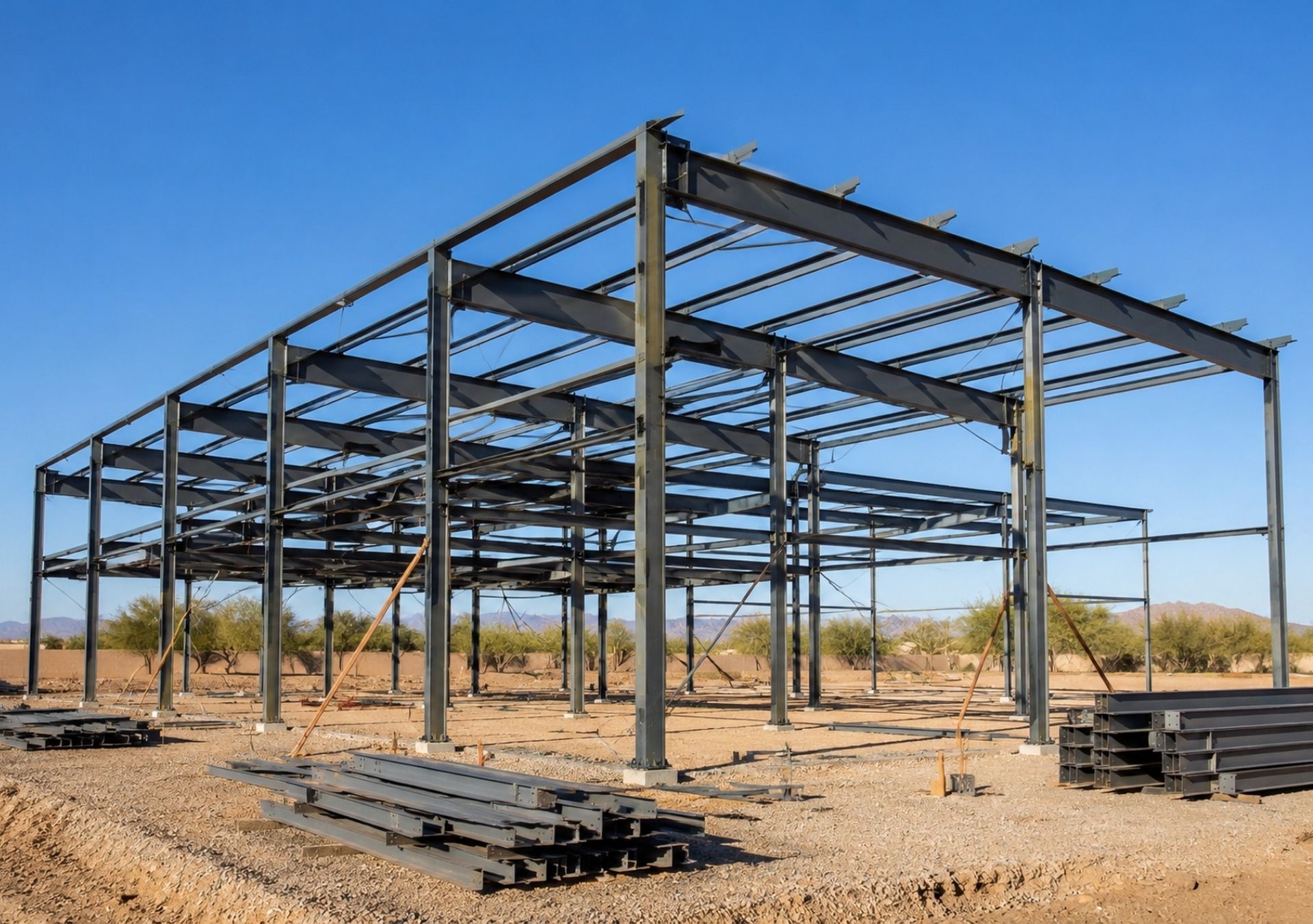
Steel erection and fabrication work in Arizona carries some of the highest injury rates in the construction industry. Between crane operations, elevated ironwork, and heavy material handling, a single incident can generate claims that threaten your entire business. If you own or operate a steel contracting company in the state, understanding your insurance obligations isn't optional: it's the difference between surviving a bad day on the jobsite and closing your doors. This guide for Arizona steel erection and fabrication contractor business owners breaks down the specific coverages you need, the state requirements you must meet, and the risk exposures that catch too many contractors off guard.
Arizona's construction sector continues to grow, with Phoenix-area construction costs trending upward through the first quarter of 2026. That growth means more projects, more competition, and more pressure from general contractors and project owners demanding proof of adequate insurance before you set foot on a site. Getting your coverage right protects your contracts just as much as it protects your crew.
The stakes are real. A dropped beam, a rigging failure, or a worker fall from height can easily produce a seven-figure claim. Your insurance program needs to reflect the actual risks you face, not just the minimum the state requires.
Essential Insurance Coverages for Arizona Steel Erectors
Steel contractors face a unique combination of property damage exposure, bodily injury risk, and equipment loss potential. No single policy covers everything. You need a layered approach that addresses each category of risk separately while working together as a coordinated program.
Most general contractors and project owners will require you to carry specific coverages and minimum limits before they'll award a subcontract. Falling short on any of these can cost you a bid, even if your price and capabilities are competitive.
General Liability for Structural Work
Commercial general liability (CGL) insurance is the foundation of your coverage program. It responds to third-party bodily injury and property damage claims arising from your operations. For steel erectors, this includes scenarios like a beam falling onto an adjacent property, a passerby injured by falling debris, or damage to an existing structure during erection.
Standard CGL policies for steel contractors in Arizona typically cost between $2,000 and $6,000 annually for small to mid-size operations, though your actual premium depends on payroll, revenue, and claims history. Most GCs require $1 million per occurrence and $2 million aggregate as minimums, but larger commercial and industrial projects often demand $5 million or more through umbrella or excess policies.
One common mistake: assuming your CGL covers completed operations automatically. Make sure your policy includes products-completed operations coverage, because structural failures discovered after you've left the jobsite are exactly the claims that generate the largest payouts.
Workers' Compensation and Arizona State Mandates
Arizona law requires every employer to carry workers' compensation insurance, with no exceptions for small crews. Even a single employee triggers the mandate. Arizona's workers' compensation assessment rates for 2026 are set at a 2.25% Administrative Fund tax, which factors into your overall premium costs.
Steel erection carries some of the highest class codes in the workers' comp system. Expect to pay significantly more per $100 of payroll than a general contractor doing ground-level work. Your experience modification rate (EMR) plays a huge role here: a mod rate above 1.0 signals poor loss history, and some GCs won't hire subs with a mod over 1.2.
Investing in a formal safety program, documented toolbox talks, and consistent fall protection enforcement can bring your mod rate down over time. That translates directly to lower premiums and more contract opportunities.
Inland Marine and Equipment Floaters
Your cranes, welding rigs, forklifts, and specialty tools represent hundreds of thousands of dollars in assets that move from site to site. Standard commercial property insurance doesn't cover equipment in transit or at temporary job locations. That's where inland marine coverage and equipment floaters come in.
An equipment floater covers owned machinery against theft, vandalism, and accidental damage wherever it's located. Inland marine extends to materials in transit and goods stored at jobsites before installation. If you've ever had a load of structural steel stolen from an unsecured staging area, you understand why this coverage matters.
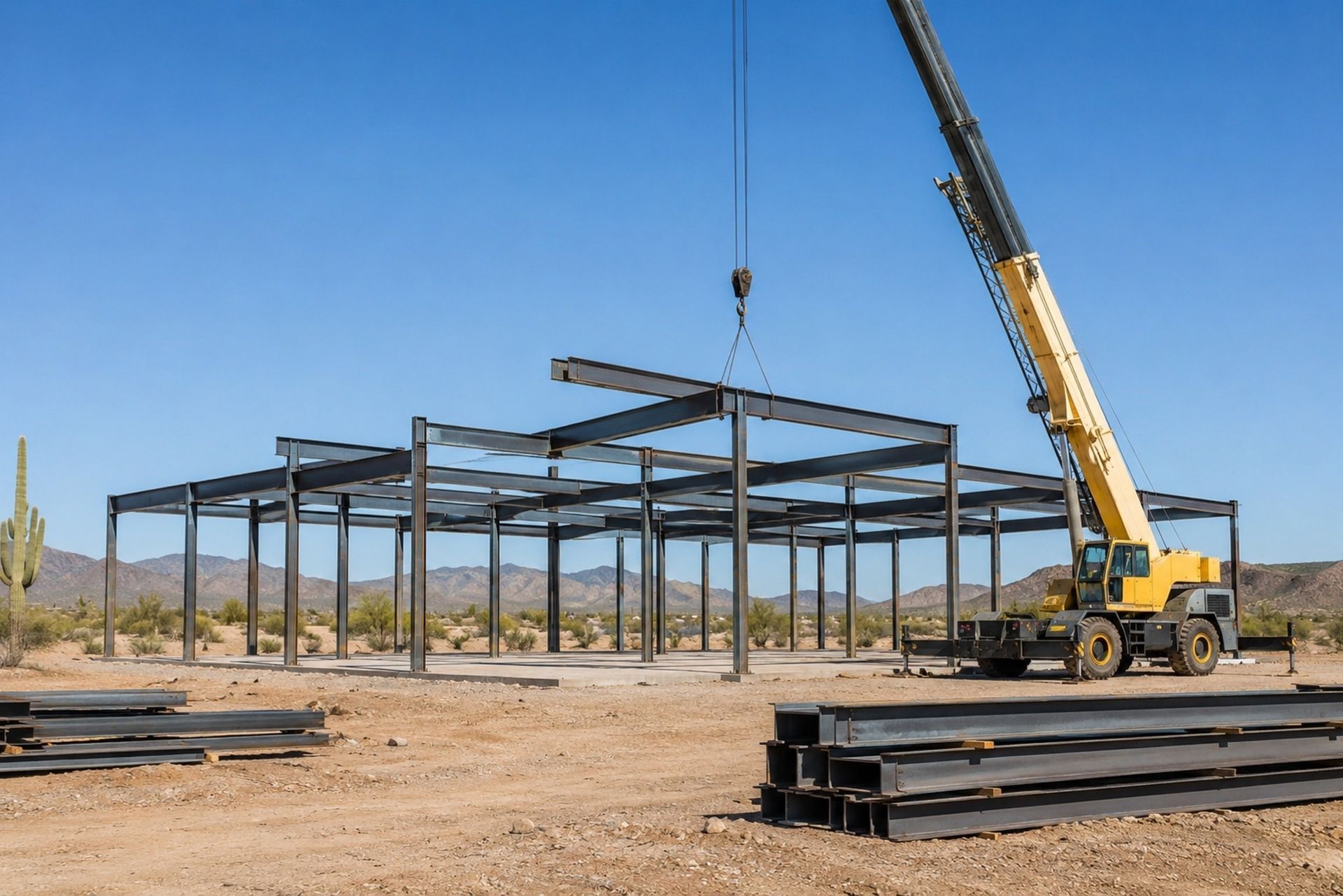
Comparing Coverage Needs: General Liability vs. Professional Liability
Steel fabrication contractors who also provide design, engineering input, or shop drawing services face an additional exposure that pure erectors don't: professional liability. If your fabrication drawings contain an error that leads to a structural failure, your CGL policy won't respond. That's a professional services claim, and it requires a separate policy.
Many steel contractors blur the line between fabrication and design. If you stamp drawings, provide
engineering calculations, or offer design-build services, you need professional liability coverage. If you strictly erect steel fabricated by others using their engineered drawings, you may not, but check your subcontracts carefully. Some require it regardless.
Table: Coverage Comparison for Steel Contractors
| Feature | General Liability (CGL) | Professional Liability (E&O) |
|---|---|---|
| Covers | Third-party bodily injury, property damage | Errors in design, engineering, or professional services |
| Trigger | Physical injury or damage from operations | Financial loss from professional mistakes |
| Typical Limit | $1M per occurrence / $2M aggregate | $1M per claim / $1M aggregate |
| Required By | Nearly all GCs and project owners | GCs on design-build or design-assist projects |
| Claims-Made vs. Occurrence | Occurrence-based | Usually claims-made (tail coverage needed) |
| Cost Range (Annual) | $2,000 - $6,000+ | $3,000 - $10,000+ |
The key distinction: CGL covers what your work physically does to others, while professional liability covers what your professional advice or design work gets wrong. Many contractors need both.
Managing High-Risk Exposures in Steel Construction
Steel erection consistently ranks among the most dangerous construction activities. OSHA's steel erection standard (29 CFR 1926, Subpart R) exists specifically because the fatality and serious injury rates in this trade demand extra attention. Your insurance program and your safety program need to reflect these realities.
Crane and Rigging Liability
Crane operations create enormous exposure. A single crane accident can cause multiple fatalities, destroy surrounding structures, and shut down a project for months. Your CGL policy covers some of this, but you should also confirm that your policy doesn't exclude crane operations or impose sublimits that would leave you underinsured.
If you hire crane operators as subcontractors, verify their insurance certificates carefully. You want to see their own CGL, workers' comp, and ideally a crane-specific liability policy. If their coverage is inadequate and something goes wrong, the claim rolls uphill to you.
Rigging failures: broken slings, improper choking, overloaded connections: account for a significant share of steel erection injuries. Document your rigging inspection protocols and train your crew on load calculations. Insurers look at these practices when pricing your policy.
Height-Related Risks and Fall Protection
Falls remain the leading cause of death in construction, and steel erectors work at height more than almost any other trade. OSHA requires fall protection at six feet in construction, but steel erection has specific provisions allowing connectors to work up to certain heights with alternative protection measures during initial connection activities.
Your workers' comp premiums directly reflect your fall injury history. A single serious fall claim can spike your EMR for three years. Investing in proper fall protection equipment, training, and enforcement pays for itself many times over in reduced insurance costs alone, not to mention the human cost.
Carriers that specialize in construction risks will often audit your fall protection program before quoting. Having a written fall protection plan, documented training records, and rescue procedures in place signals that you're a better risk.
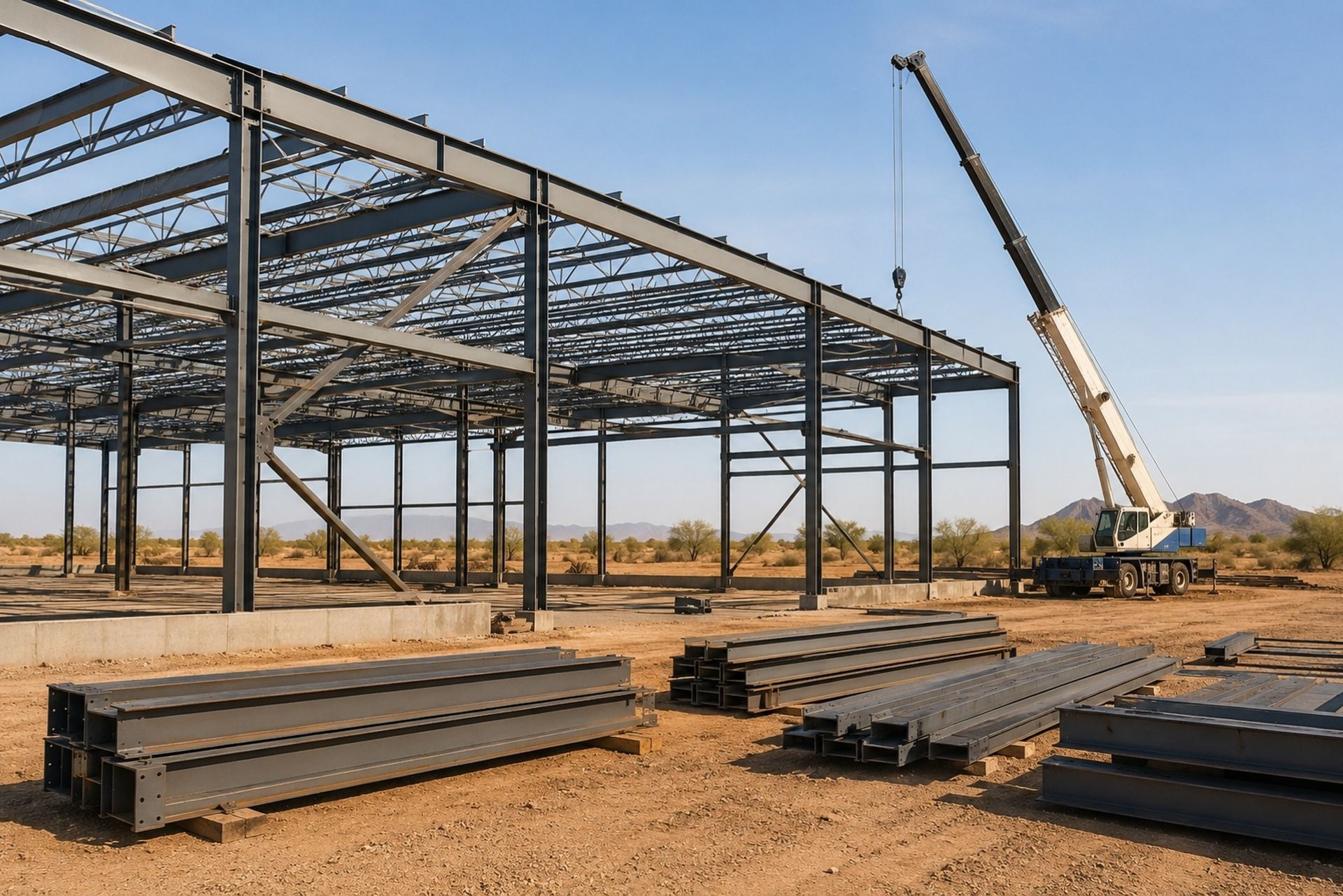
Arizona Licensing and Bonding Requirements
Operating as a steel erection or fabrication contractor in Arizona requires proper licensing through the Arizona Registrar of Contractors (ROC). Working without a license exposes you to fines, project shutdowns, and an inability to enforce contracts or file liens.
ROC Compliance and Surety Bonds
Arizona requires commercial contractors to hold an active ROC license in the appropriate classification. Steel erectors typically fall under the CR-31 (Steel, Aluminum, etc.) classification. The application process includes demonstrating trade experience, passing examinations, and providing proof of insurance.
Surety bonds are a separate requirement from insurance. Arizona mandates contractor license bonds based on the dollar volume of work you perform. These bonds protect the public and project owners: they don't protect you. If a claim is paid against your bond, the surety company comes after you for reimbursement.
Bond amounts range from $2,500 to $15,000 or more depending on your license class and volume. Keep your bond current: a lapsed bond means a suspended license, which means you can't legally work. Arizona's construction market has seen
faster response times from specialized insurance providers handling contractor licensing and bonding needs in 2026, making compliance easier to maintain.
Frequently Asked Questions About Steel Erection Insurance
How much does workers' comp cost for steel erectors in Arizona? Steel erection class codes carry some of the highest rates. Expect to pay roughly $8 to $15 per $100 of payroll, though your EMR and carrier-specific rate deviations can push that number significantly higher or lower.
Do I need a separate policy for each jobsite? No. Your CGL and workers' comp policies follow your operations to each jobsite. You may need to add specific project locations or additional insureds to satisfy GC requirements, but that's typically done through endorsements, not separate policies.
What's an additional insured endorsement, and why do GCs require it? It extends your CGL coverage to include the GC as a protected party under your policy. If someone sues the GC for something your crew caused, your policy responds. Nearly every subcontract requires this.
Can I self-insure workers' comp in Arizona? Yes, but only if you meet the Industrial Commission's financial requirements, which are substantial. Most small and mid-size contractors use commercial carriers or state fund options.
What happens if I operate without workers' comp in Arizona? The Industrial Commission can issue stop-work orders, and you face penalties of $1,000 per employee for each day of noncompliance. It's one of the fastest ways to shut down your business.
Does my insurance cover OSHA fines?
Standard CGL and workers' comp policies do not cover regulatory fines or penalties. Some specialty policies offer OSHA citation defense coverage, which pays for legal representation during OSHA proceedings but not the fines themselves.
The Bottom Line for Your Steel Business
Running a steel erection or fabrication company in Arizona means accepting elevated risk and managing it deliberately. Your insurance program should include CGL with adequate limits and completed operations coverage, workers' comp that reflects your actual payroll and class codes, equipment floaters for your mobile assets, and professional liability if you touch anything related to design.
Don't treat insurance as a box to check for your next bid. Treat it as a financial safety net that keeps your company intact when something goes wrong on a jobsite. Work with a broker who understands construction risks specifically: generalist agents often miss critical coverage gaps in steel erection programs.
Review your policies annually, track your EMR, invest in safety, and make sure your ROC license and bonds stay current. The contractors who survive long-term in this industry aren't just the best ironworkers: they're the ones who protect their businesses as carefully as they protect their crews.
About The Author:
Taylor Whatcott
As President of Wilde Wealth Insurance Services, I’m committed to providing trusted protection for both families and businesses across Arizona. Our independent team works with top-rated carriers to deliver tailored, comprehensive coverage—making insurance simple, accessible, and hassle-free.
Contact Us
Commercial Coverage Solutions
Protect Your Business with the Right Insurance
We offer customized insurance solutions to safeguard your business from financial risks. Our policies provide protection for property, employees, and liability concerns.
Commercial Property Insurance
Safeguards buildings, equipment, and inventory from damage or loss.
Professional Liability Insurance
Covers claims of negligence, errors, or omissions in services.
Cyber Liability Insurance
Protects against data breaches, cyberattacks, and online threats.
Who We Protect
Insurance Solutions for Your Industry
We specialize in providing tailored coverage for businesses in key industries. Our policies are designed to meet industry-specific risks and ensure complete protection.

Protection for Your Home & Assets
Reliable Coverage for Life’s Unexpected Moments
We provide personal insurance solutions designed to safeguard your home, vehicle, and financial well-being. Our policies ensure you and your loved ones are protected.







What Our Clients Say
Real Feedback. Real Confidence.
FAQs
Answers to Common Insurance Questions
How do I know which insurance coverage is right for me?
Choosing the right insurance depends on your personal or business needs. Our team evaluates your risks and recommends tailored coverage to protect what matters most.
We work with multiple carriers to provide different policy options. This allows you to compare benefits, limits, and pricing to make an informed choice.
If you’re unsure, we’ll walk you through the options step by step, ensuring you understand your coverage and feel confident in your decision.
Why should I choose an independent insurance agency like Wilde Wealth?
As an independent agency, we are not tied to a single insurance provider. This means we can compare multiple policies to find the best coverage at the best price.
Our goal is to advocate for you, ensuring you receive personalized service and expert advice tailored to your situation.
Unlike direct insurers, we offer ongoing support, helping you with claims, policy changes, and future coverage needs.
Can I bundle multiple insurance policies to save money?
Yes! Bundling policies like home and auto can lead to significant savings. Many carriers offer discounts for combining multiple coverages.
Bundling also simplifies policy management, with a single point of contact and streamlined renewals.
We help you explore bundling options to ensure you get the best value while maintaining the protection you need.
What factors affect my insurance rates?
Insurance rates are influenced by factors such as coverage limits, location, claims history, and risk exposure. Personal insurance may consider credit scores, driving history, and home value.
For businesses, factors like industry type, employee count, and annual revenue can impact pricing. Each carrier evaluates risk differently.
We shop multiple providers to find the best balance of coverage and cost, ensuring you don’t overpay while staying fully protected.
How does Wilde Wealth Insurance Services help business owners?
We provide customized business insurance solutions to protect against liability, property damage, employee-related risks, and cyber threats.
Our team works with a range of industries, including contractors, restaurants, and real estate professionals, to offer tailored policies.
From small startups to established enterprises, we help business owners minimize risks and keep operations running smoothly.
What happens if I need to file a claim?
Filing a claim is simple with our support. Contact us first, and we’ll guide you through the process, ensuring all necessary information is submitted correctly.
We work directly with your insurance carrier to expedite the claim, keeping you informed at every step.
Our team is here to advocate for you, making sure you receive a fair and timely resolution.
Latest Articles & Insights
Stay Informed with Expert Insurance Advice
We provide valuable insights to help you make informed insurance decisions. Explore our latest articles on coverage options, industry trends, and risk management tips.


Contact Us