
Phoenix, AZ Commercial Property Insurance
See How We're Different:
or Call Us:(480) 526-3222
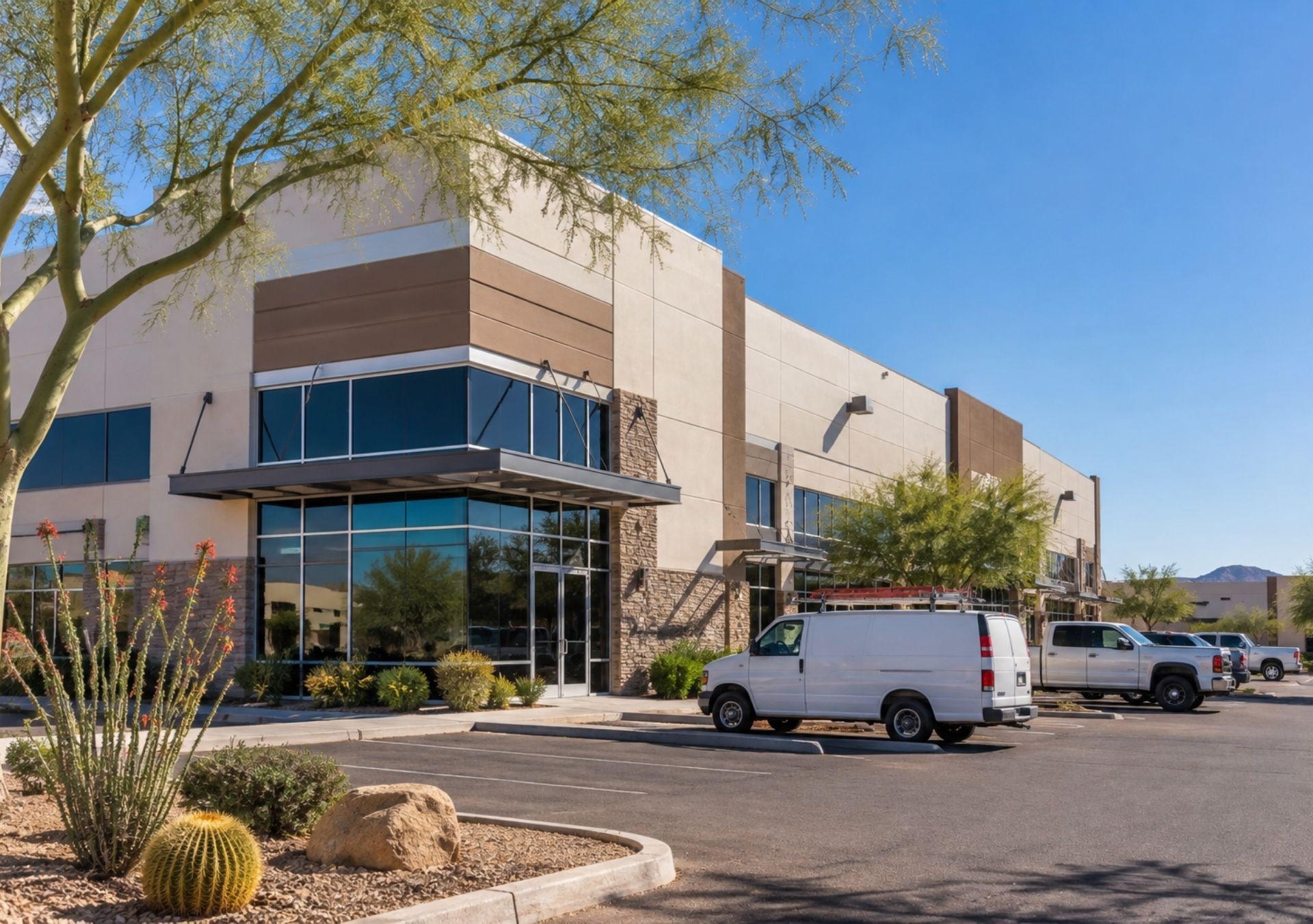
Owning or leasing commercial property in Phoenix comes with a unique set of risks that most other U.S. cities simply don't share. Between triple-digit summer temperatures, sudden monsoon storms, and a fast-growing metro area that keeps pushing property values higher, the stakes for business owners are real. A single uninsured loss can wipe out years of profit, and yet many Phoenix businesses carry policies that don't actually match their exposure. Whether you're running a warehouse near Sky Harbor, a retail strip in Scottsdale, or a medical office in Tempe, understanding how commercial property insurance works in this market is the difference between recovering from a disaster and closing your doors.
The good news? The pricing environment is shifting in your favor. Commercial property insurance rates
fell by 13% in Q2 2026, marking the first broad premium decrease in nearly nine years. That makes right now an ideal time to evaluate your coverage, shop for better terms, or lock in a policy if you've been going without.
Understanding Phoenix AZ Commercial Property Insurance
Commercial property insurance protects the physical assets your business depends on: the building itself (if you own it), equipment, inventory, furniture, signage, and sometimes even landscaping or fencing. In Arizona, these policies also typically cover damage to improvements you've made to a leased space, which matters if you've invested heavily in a buildout.
What sets Phoenix apart from most markets is the combination of climate risk and rapid development. The city's commercial real estate sector has been expanding steadily, and insurance carriers are paying close attention to how that growth intersects with weather exposure. Your policy isn't just a piece of paper; it's the financial backstop that keeps your business operational after the unexpected hits.
What Commercial Property Insurance Covers in Arizona
A standard commercial property policy in Arizona covers damage from fire, lightning, windstorm, hail, explosion, smoke, vandalism, and certain types of water damage. It also typically includes coverage for business personal property: think computers, machinery, tools, and stock. If you own the building, structural components like the roof, walls, HVAC systems, and plumbing are covered too.
What trips up a lot of business owners is what's excluded. Flood damage requires a separate policy, and earthquake coverage is usually an endorsement you add on. General wear and tear, pest damage, and losses from government action aren't covered either. Reading the exclusions section of your policy is just as important as reading the coverage section.
Protection Against Extreme Heat and Monsoons
Phoenix summers routinely push past 115°F, and that kind of heat does real damage to commercial buildings. HVAC systems fail, roofing materials deteriorate faster, and electrical systems can overload. The city's extreme heat events pose a growing threat to real estate assets, and carriers are factoring that into how they underwrite policies.
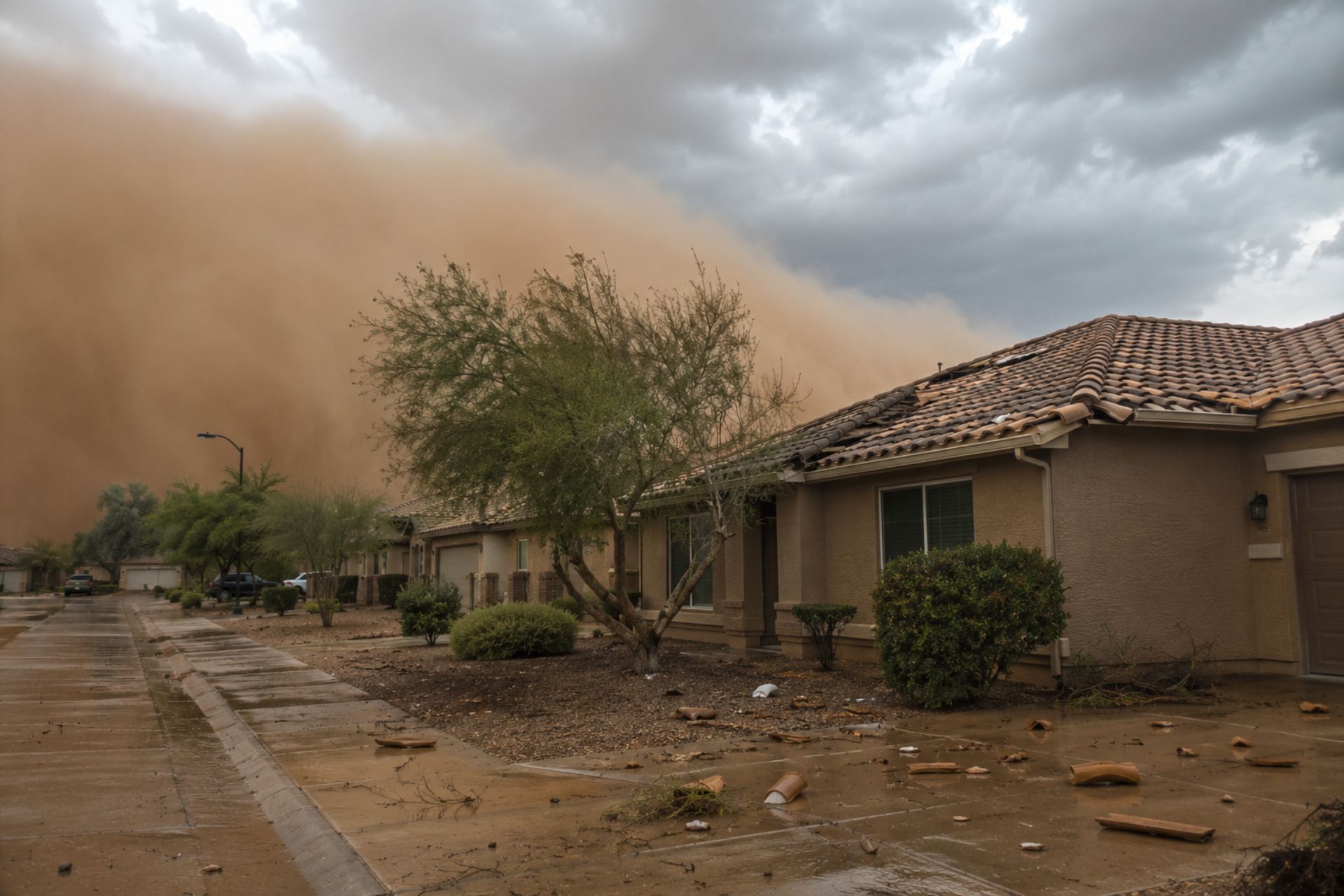
Monsoon season, which runs roughly from mid-June through September, brings a different set of problems. Microbursts can tear off roof sections. Dust storms sandblast exterior surfaces. Flash flooding fills parking lots and can push water into ground-floor spaces within minutes. If your property sits in a flood-prone area near a wash or canal, you'll want to seriously consider a separate flood policy through the NFIP or a private carrier.
Types of Property Coverage for Maricopa County Businesses
Not all commercial property policies are structured the same way. The two biggest decisions you'll make are how your losses get valued and whether you want protection for income you lose while your property is being repaired. Getting these wrong can leave you tens of thousands of dollars short after a claim.
Replacement Cost vs. Actual Cash Value
Replacement cost coverage pays to repair or replace your damaged property with materials of similar kind and quality, without deducting for depreciation. Actual cash value (ACV) coverage, on the other hand, factors in depreciation, meaning you'll receive less money for older items.
Here's what that looks like in practice: if a five-year-old commercial HVAC unit is destroyed in a fire, replacement cost coverage pays for a new unit of comparable quality. ACV coverage deducts five years of depreciation, potentially leaving you covering thousands out of pocket. Replacement cost policies carry higher premiums, but for most Phoenix businesses, the difference in premium is small compared to the gap you'd face at claim time. If your building or equipment isn't brand new, replacement cost coverage is almost always the smarter choice.
Business Interruption and Extra Expense Coverage
A fire or monsoon doesn't just damage your building; it shuts down your revenue stream. Business interruption coverage replaces the income you would have earned during the period your property is unusable. Extra expense coverage picks up costs like renting temporary space, expediting repairs, or relocating equipment.
These coverages are often bundled into a commercial property policy or available as endorsements. The key detail to watch is the waiting period (usually 72 hours) and the coverage period limit, which might be 12 months or longer. I've seen business owners with solid property coverage but no interruption protection, and after a major monsoon claim, they ended up burning through savings to cover three months of lost revenue. Don't make that mistake.
Comparison: Basic vs. Special Form Coverage
The "form" of your policy determines which perils are covered. This is one of the most consequential choices in your policy, and it's often overlooked during the quoting process.
Basic form (sometimes called "named perils") only covers losses from a specific list of causes. Special form (sometimes called "open perils" or "all-risk") covers everything except what's explicitly excluded. The difference matters more than most business owners realize.
Side-by-Side Perils Comparison Table
| Feature | Basic Form (Named Perils) | Special Form (Open Perils) |
|---|---|---|
| Fire & Lightning | Covered | Covered |
| Windstorm & Hail | Covered | Covered |
| Vandalism | Covered | Covered |
| Water Damage (non-flood) | Limited or excluded | Covered unless excluded |
| Falling Objects | Not covered | Covered |
| Weight of Ice/Snow | Not covered | Covered |
| Accidental Discharge of Water | Not covered | Covered |
| Collapse | Not covered | Covered (with conditions) |
| Burden of Proof | You prove the cause is listed | Insurer must prove exclusion applies |
| Typical Premium | Lower | 15-25% higher |
| Best For | Low-risk, budget-conscious owners | Most commercial properties |
The burden of proof difference is huge. With basic form, if your claim falls into a gray area, you're the one who has to prove it's covered. With special form, the insurer has to prove it's excluded. For a few hundred dollars more per year, special form gives you significantly broader protection and a stronger position if a claim gets disputed.
Factors Influencing Insurance Rates in Phoenix
Your premium isn't random. Carriers use a specific set of variables to calculate your rate, and understanding them gives you the ability to lower your costs or at least avoid surprises at renewal. The broader insurance market is softening in 2026, but your individual rate still depends heavily on your property's specific characteristics.
Building Construction Type and Age
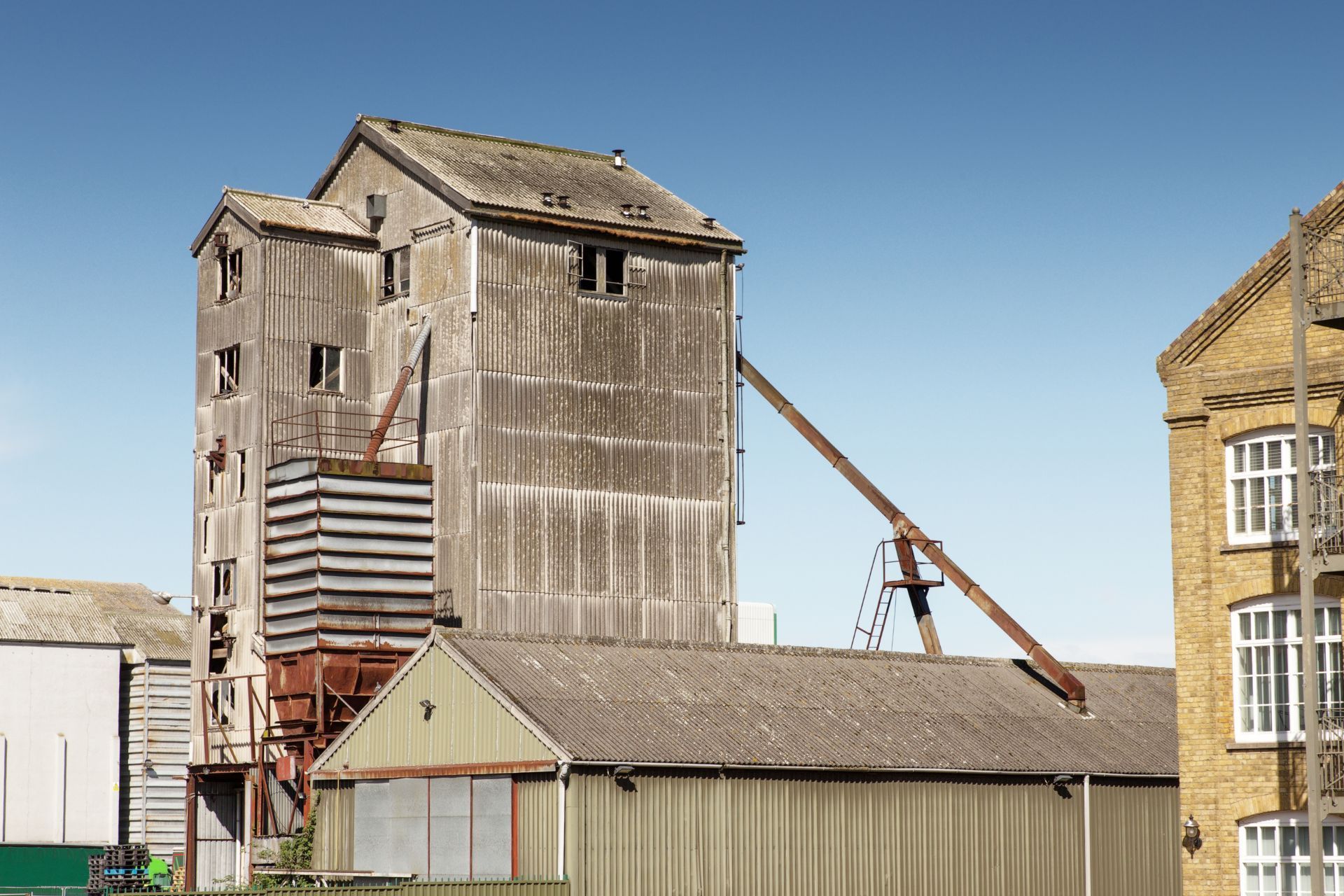
Carriers classify buildings into construction types: frame, joisted masonry, non-combustible, masonry non-combustible, modified fire resistive, and fire resistive. A tilt-up concrete warehouse rates very differently from a wood-frame retail building. Fire resistive construction gets the lowest rates because it's least likely to suffer total loss.
Age matters too. Older buildings often have outdated electrical wiring, aging plumbing, and roofs that are closer to the end of their useful life. If your building was constructed before 1990 and hasn't been significantly updated, expect carriers to ask detailed questions about its systems. Upgrading your roof, electrical panel, or plumbing can sometimes reduce your premium enough to justify the investment within a few years.
Fire Protection and Security Systems
Your proximity to a fire station and the availability of fire hydrants directly affect your rate. Properties within five miles of a fire station and 1,000 feet of a hydrant get the best classifications. If your commercial property sits in a more rural part of Maricopa County, you may face higher premiums simply because of response time.
Security systems, fire alarms, and
automatic sprinklers also earn discounts. A monitored burglar alarm can reduce your premium by 5-15%, and a full sprinkler system can cut it by 10-20% or more. These aren't just theoretical savings: insurers are increasingly tying property valuations to risk mitigation investments, so the money you spend on protection systems pays dividends beyond just the insurance discount.
Frequently Asked Questions About Phoenix Commercial Insurance
Common Questions on Policy Limits and Deductibles
How do I know if my policy limit is high enough? Your policy limit should reflect the full replacement cost of your building and its contents. Get an updated appraisal or use a replacement cost estimator: don't rely on your purchase price or tax assessment, as both typically understate replacement cost.
What's a typical deductible for commercial property in Phoenix? Most policies carry deductibles between $1,000 and $10,000, though some larger properties go higher. Choosing a higher deductible lowers your premium, but make sure you can actually afford to pay it out of pocket after a loss.
Does my policy cover monsoon flooding? Almost certainly not. Standard commercial property policies exclude flood damage. You'll need a separate flood policy, either through the National Flood Insurance Program or a private flood insurer. This is one of the most common coverage gaps in the Phoenix market.
Am I covered if a dust storm damages my exterior? Wind-driven dust damage is generally covered under windstorm provisions, but cosmetic damage to exterior surfaces may be subject to limitations. Check your policy's windstorm sub-limits and any cosmetic damage exclusions.
Can I bundle property insurance with liability coverage? Yes. A Business Owner's Policy (BOP) combines commercial property and general liability coverage into a single policy, often at a lower total cost than buying them separately. BOPs work well for small to mid-size businesses with straightforward property and liability needs.
How often should I review my commercial property policy?
At least annually, and anytime you make significant changes: adding equipment, renovating, expanding square footage, or changing your operations. Property values in the Phoenix metro have shifted considerably, and a policy written two years ago may leave you underinsured today.
Making the Right Choice for Your Business
Getting commercial property insurance right in Phoenix means more than picking the cheapest quote. It means matching your coverage to the actual risks your property faces: extreme heat, monsoon damage, aging building systems, and the rising cost of materials and labor for repairs. The Arizona commercial real estate market continues to evolve, and your insurance should keep pace.
Start by confirming your policy limits reflect current replacement costs, not what you paid for the building or what it was worth three years ago. Make sure you carry special form coverage unless you have a compelling reason not to. Add business interruption protection if your revenue depends on being open and operational. And don't skip flood coverage if your property is anywhere near a wash, canal, or low-lying area.
With premiums trending downward for the first time in years, 2026 is a strong year to reassess your coverage. Talk to an independent agent who works with multiple carriers and understands the Phoenix market specifically. The right policy won't just protect your building: it'll protect the business you've built inside it.
About The Author:
Taylor Whatcott
As President of Wilde Wealth Insurance Services, I’m committed to providing trusted protection for both families and businesses across Arizona. Our independent team works with top-rated carriers to deliver tailored, comprehensive coverage—making insurance simple, accessible, and hassle-free.
Contact Us
Commercial Coverage Solutions
Protect Your Business with the Right Insurance
We offer customized insurance solutions to safeguard your business from financial risks. Our policies provide protection for property, employees, and liability concerns.
Commercial Property Insurance
Safeguards buildings, equipment, and inventory from damage or loss.
Professional Liability Insurance
Covers claims of negligence, errors, or omissions in services.
Cyber Liability Insurance
Protects against data breaches, cyberattacks, and online threats.
Who We Protect
Insurance Solutions for Your Industry
We specialize in providing tailored coverage for businesses in key industries. Our policies are designed to meet industry-specific risks and ensure complete protection.




Protection for Your Home & Assets
Reliable Coverage for Life’s Unexpected Moments
We provide personal insurance solutions designed to safeguard your home, vehicle, and financial well-being. Our policies ensure you and your loved ones are protected.






What Our Clients Say
Real Feedback. Real Confidence.
FAQs
Answers to Common Insurance Questions
How do I know which insurance coverage is right for me?
Choosing the right insurance depends on your personal or business needs. Our team evaluates your risks and recommends tailored coverage to protect what matters most.
We work with multiple carriers to provide different policy options. This allows you to compare benefits, limits, and pricing to make an informed choice.
If you’re unsure, we’ll walk you through the options step by step, ensuring you understand your coverage and feel confident in your decision.
Why should I choose an independent insurance agency like Wilde Wealth?
As an independent agency, we are not tied to a single insurance provider. This means we can compare multiple policies to find the best coverage at the best price.
Our goal is to advocate for you, ensuring you receive personalized service and expert advice tailored to your situation.
Unlike direct insurers, we offer ongoing support, helping you with claims, policy changes, and future coverage needs.
Can I bundle multiple insurance policies to save money?
Yes! Bundling policies like home and auto can lead to significant savings. Many carriers offer discounts for combining multiple coverages.
Bundling also simplifies policy management, with a single point of contact and streamlined renewals.
We help you explore bundling options to ensure you get the best value while maintaining the protection you need.
What factors affect my insurance rates?
Insurance rates are influenced by factors such as coverage limits, location, claims history, and risk exposure. Personal insurance may consider credit scores, driving history, and home value.
For businesses, factors like industry type, employee count, and annual revenue can impact pricing. Each carrier evaluates risk differently.
We shop multiple providers to find the best balance of coverage and cost, ensuring you don’t overpay while staying fully protected.
How does Wilde Wealth Insurance Services help business owners?
We provide customized business insurance solutions to protect against liability, property damage, employee-related risks, and cyber threats.
Our team works with a range of industries, including contractors, restaurants, and real estate professionals, to offer tailored policies.
From small startups to established enterprises, we help business owners minimize risks and keep operations running smoothly.
What happens if I need to file a claim?
Filing a claim is simple with our support. Contact us first, and we’ll guide you through the process, ensuring all necessary information is submitted correctly.
We work directly with your insurance carrier to expedite the claim, keeping you informed at every step.
Our team is here to advocate for you, making sure you receive a fair and timely resolution.
Latest Articles & Insights
Stay Informed with Expert Insurance Advice
We provide valuable insights to help you make informed insurance decisions. Explore our latest articles on coverage options, industry trends, and risk management tips.


Contact Us