
Arizona Agricultural Electrician Insurance
See How We're Different:
or Call Us:(480) 526-3222

When a center pivot stops mid-rotation during peak irrigation or a cold storage panel trips on a harvest night, the electrician who wired and maintains that system often becomes the first call. On Arizona farms and agribusiness facilities, electrical work is tightly tied to crop quality, food safety, and worker safety. A single arc, miswired panel, or equipment fire can quickly turn a profitable season into a stack of repair bills and liability claims.
Arizona agriculture has grown into a major economic engine, with agriculture and agribusiness contributing $30.9 billion to the state economy in 2024, a jump of 32 percent from 2017. That kind of growth has driven demand for specialized trades that can keep irrigation systems, packing houses, cold storage, and greenhouse operations running safely. Electricians are part of that backbone, and the local trade itself is expanding, with one industry report projecting Arizona’s electricians industry to reach $5.5 billion in revenue by 2025, with 5,209 businesses employing 28,157 workers.
Most of those electricians do not work in downtown high rises. They drive dusty farm roads, climb grain legs, troubleshoot remote pump stations, and install complex control systems in produce warehouses. Their job sites are wetter, hotter, and often more remote than typical commercial projects. That reality changes the way risk shows up and the way insurance should be structured.
This guide walks through what agricultural electricians in Arizona should know about insurance. It explains where losses usually come from on farms and agribusiness facilities, which policies respond to those losses, and how weather, wildfire, and an increasingly tight insurance market affect both pricing and availability. The goal is to help
Arizona electrical contractors who serve agriculture build a coverage plan that actually fits how they work in the field.
Why Arizona agricultural electricians face unique risks
Agricultural electrical work in Arizona rarely happens in climate controlled rooms. It happens in irrigation pump houses, dairies, feedlots, hoop houses, pack sheds, and loading docks. These environments are tough on equipment and people, and they create loss patterns that look different from standard commercial or residential work. An insurance program that ignores those differences can leave dangerous gaps.
On top of jobsite conditions, Arizona’s broader risk landscape is shifting. Heat, wildfire, and insurance market stress are all changing how carriers view property and liability in the state. Agricultural electricians feel those changes twice, once as contractors buying their own coverage and again indirectly through their farm clients’ coverage requirements.
Heat, equipment stress, and property risk
Heat is not just uncomfortable for crews. It affects transformers, breakers, variable frequency drives, control panels, and any plastic or rubber components in the system. In Phoenix, for example, one report noted that the city experienced 113 consecutive days over 100 degrees in 2024, and that kind of extreme heat contributed to gaps and challenges in commercial property insurance coverage. Even if an agricultural electrician does not work inside city limits, the same thermal stress hits rural equipment, which raises the chance of short circuits, insulation breakdown, and electrical fires.
On a farm, those failures do more than damage a panel. If a breaker fails and an irrigation pump shuts down, crops can be stressed or lost. If a refrigeration unit drops out overnight, perishable produce can spoil. Electricians who design and maintain these systems often get pulled into any claim discussion when equipment failure is suspected. Well structured property coverage for the contractor, paired with clear contracts that define responsibility, becomes critical.
Wildfire exposure around rural projects
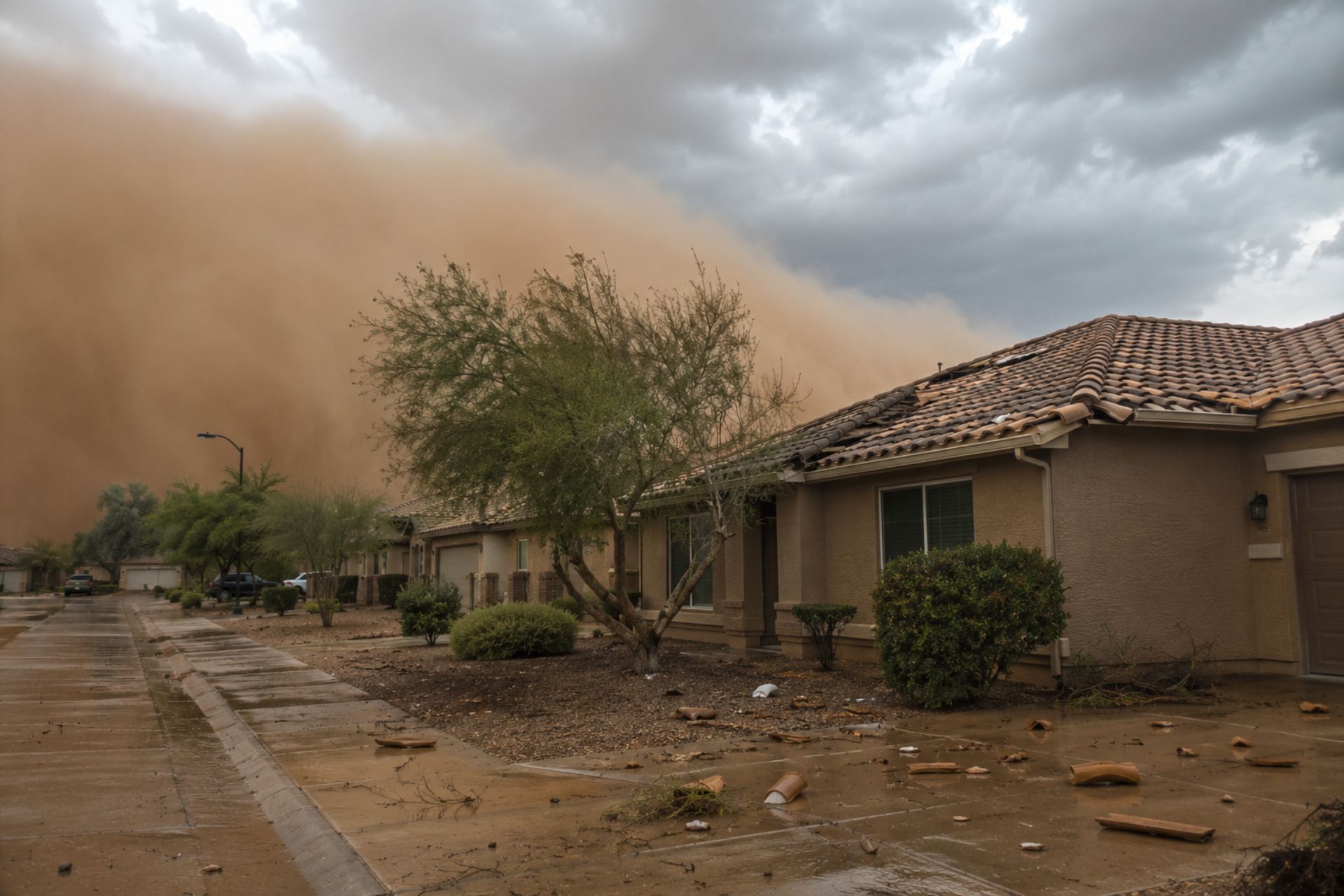
Rural Arizona has seen more frequent and severe wildfire seasons. Dry vegetation around pump stations, barns, or control houses can turn a small electrical arc into a fast moving fire, especially on windy days. The insurance industry is already reacting. A 2025 study from the University of Arizona Cooperative Extension found a strong correlation between increased wildfire activity and homeowners insurance non renewals in the state. That research focused on homeowners, yet it signals how sensitive carriers have become to fire exposure in Arizona as a whole.
For agricultural electricians, this plays out in two ways. First, job sites themselves may be in higher fire risk areas, which can trigger special safety requirements and sometimes surcharge pricing for
contractor general liability and commercial auto. Second, farm and ranch clients in those areas are more likely to face coverage restrictions or higher deductibles on their own property policies. When an electrical incident even partially overlaps with a fire loss, everyone involved will be under sharper scrutiny.
Core insurance coverages agricultural electricians should consider
An agricultural electrician might start out with a basic contractor package, but once work expands into large farms, dairies, cold storage, or packing operations, that starter package often falls short. The mix of livestock, confined spaces, flammable dust, temperature sensitive inventory, and heavy mobile equipment calls for deliberate choices about limits, endorsements, and exclusions. The policies below make up the backbone for most Arizona electrical contractors who focus on agriculture.
Since every operation is different, the ideal approach is to treat these as building blocks. A small owner operator wiring irrigation timers on hobby farms needs a different balance of coverage than a multi crew contractor installing medium voltage systems in large produce warehouses.
General liability for premises and operations
Commercial general liability is the foundation. It responds when third parties claim bodily injury or property damage caused by the electrician’s work. On agricultural sites, typical scenarios include a worker tripping over conduit, livestock getting shocked because of a grounding issue, or a fire starting in a panel that was recently serviced. These are not hypothetical risks. They come up in claim files year after year, often with multiple parties involved, from the farm owner to the equipment manufacturer and installer.
For agricultural electricians, the wording around completed operations is especially important. A lot of farm related claims arise days, weeks, or even months after work is finished, when wiring or components fail under load or environmental stress. Coverage needs to follow the work after the job wrap up, not just while crews are on site. It also pays to look closely at exclusions for design or professional services, since many agricultural electricians effectively design control layouts and system integration, even if they do not call themselves engineers.
Property, tools, and inland marine coverage
Tools and equipment are constantly in motion on farm projects. Lifts and trenchers may be rented, while benders, testers, welders, and generators travel from job to job. Standard commercial property policies only protect gear at a scheduled location, usually the shop. Inland marine or contractor equipment coverage fills the gap for mobile tools and machinery. For agricultural work, that often includes long stretches on dirt roads, temporary storage in barns or conex boxes, and overnight parking at remote pump sites.
Job materials can be just as exposed. Spools of wire or racks of panels stored at a dairy or packing shed can be damaged by livestock, theft, weather, or even overspray from cleaning chemicals. Scheduling higher value items and making sure limits reflect the cost of modern tools is key, especially since Karen Collins of the American Property Casualty Insurance Association has tied rate pressures in Arizona directly to rising construction and housing costs along with natural disasters, according to one regional insurance report. Replacement costs for electrical tools and materials have climbed with those same inflation trends.
Commercial auto and trucks used on farm roads
Most agricultural electricians rely heavily on trucks, vans, and sometimes trailers to reach rural sites. Those vehicles carry not just tools, but also ladders, pipe, and energized components. Regular commercial auto coverage remains the base requirement, yet farm focused operations benefit from paying attention to a few extra details. For instance, how the policy treats loading and unloading, coverage for permanently attached equipment like cranes or booms, and any radius of operation limitations.
Many losses on farm roads are low speed but high severity, involving collisions with expensive irrigation infrastructure, produce trailers, or livestock. Even a minor fender impact can escalate into a six figure property claim if it topples a mainline or damages refrigeration trailers loaded with product. Tightening auto liability limits and making sure any hired or non owned units are included can prevent a vehicle incident from threatening the business itself.
Workers compensation for field crews
Working as an electrician in a clean warehouse is one thing. Working around livestock, chemicals, high moisture areas, and uneven ground is another. Agricultural electrical work often requires long hours outdoors, frequent ladder and man lift use, and awkward body positions in cramped pump houses or over pits. Those conditions raise the risk of sprains, falls, heat related illness, and sometimes animal related injuries.
Workers compensation is mandatory once payroll and staffing hit state thresholds, but the focus should not stop at compliance. Experience rating, return to work planning, and good documentation of safety training all influence long term costs. Underwriters will look closely at loss runs and safety practices, especially in a state where other property and casualty lines have seen significant pricing pressure tied to environmental risks and rebuilding costs, as highlighted in that same
Arizona insurance market discussion.
Weather, wildfire, and power reliability - shaping coverage around real exposures
Arizona’s weather profile magnifies both electrical failure risk and the consequences of that failure on farms. Extreme heat, sudden monsoon storms, lightning, and wildfire all converge on systems that must keep water, ventilation, and refrigeration running reliably. Agricultural electricians sit right at that intersection. Thoughtful insurance planning starts with those realities instead of a generic contractor checklist.
On the heat side, long stretches of triple digit temperatures stress every component. The report that tracked Phoenix’s 113 consecutive days over 100 degrees in 2024 highlighted how insurers are revisiting assumptions about building envelopes, mechanical systems, and maintenance. Agricultural facilities with wide open doorways, washdown areas, and dust laden air can be even tougher environments. Electricians who work in those spaces should talk with brokers about endorsements that address power surge, equipment breakdown, and spoilage or temperature change losses where available.
Wildfire zones, non renewals, and project planning
When a project falls inside or near a mapped wildfire risk zone, several ripple effects show up. Farm clients may have higher deductibles on structures, exclusions for brush or debris related ignition, or even pending non renewal notices. The University of Arizona Cooperative Extension study on wildfire and homeowners insurance non renewals shows a clear pattern of insurers stepping back where fire risk is elevated. That same cautious posture often carries over to commercial and farm property underwriting, even though the policy forms are different.
Electrical contractors can protect themselves by confirming client coverage status before major projects, documenting recommendations about vegetation clearance or fire resistant equipment placement, and maintaining their own liability and property limits at levels that reflect the potential size of a fire related loss. When an ignition source is even partially linked to electrical work, clear records and adequate insurance are critical defenses.

Serving cross border agribusiness and large produce operations
Southern Arizona’s produce and greenhouse corridor has close ties to Mexican agriculture. Many electricians in the region work in facilities that depend on cross border trade. The University of Arizona’s Cooperative Extension has highlighted how increased agricultural trade with Mexico has supported employment in Southern Arizona, particularly around Nogales, and that insight was featured alongside the finding that agriculture and agribusiness contribute $30.9 billion to the state economy. For contractors, that means more work in cold storage, inspection, repacking, and logistics facilities that operate almost nonstop during peak seasons.
These operations often come with sophisticated client contracts. Indemnity clauses, additional insured requirements, primary and non contributory wording, and waivers of subrogation may all appear. Agricultural electricians who sign these agreements without checking their policies risk promising more than their insurance will support. Specialty coverages such as equipment breakdown, cyber, or inland marine for control systems may also become relevant when facilities rely heavily on automation and remote monitoring.
Multi party projects and shared liability
Large agribusiness projects usually involve multiple contractors and vendors. Refrigeration specialists, mechanics, automation integrators, and electricians may all touch the same system. When something fails, investigations rarely point to a single party. Insurers for several companies may get involved, each looking to shift as much responsibility as possible away from their own policyholder.
Strong contractual risk transfer, good certificates of insurance from subs, and careful documentation of who did what and when help agricultural electricians hold their ground in these disputes. Professional liability or errors and omissions coverage can be worth discussing, especially if the electrician plays a design or consulting role on large system layouts, spec selections, or control sequencing.
Cost drivers, underwriting, and keeping coverage affordable
Insurance for agricultural electricians in Arizona does not exist in a vacuum. It is priced and underwritten inside a property and casualty market that has been under stress from natural disasters, rebuilding costs, and changing risk models. One consumer advocacy report noted that Arizona homeowners insurance rates increased 48 percent between 2021 and 2024, the third highest rate in the nation. Although that statistic applies to homeowners coverage, it signals the pressure carriers face in this state and helps explain why commercial and contractor policies can be harder to place or more expensive than in years past.
In the same discussion, Karen Collins of the American Property Casualty Insurance Association pointed to natural disasters combined with inflation in construction and housing costs as major drivers of those increases, reinforcing the idea that Arizona insurers are recalibrating risk at a broad level, not just in a few niche pockets. Agricultural electricians who understand how underwriters look at their operations can do more to improve their profile and control long term premium trends.
| Coverage type | What it protects | Farm focused example |
|---|---|---|
| General liability | Third party bodily injury and property damage from your work | A fire starts in a control panel you installed at a packing house and damages the structure |
| Contractor equipment / inland marine | Tools and mobile equipment away from your main shop | Copper wire and tools are stolen overnight from a remote pump station jobsite |
| Commercial property | Your building, inventory, and fixed equipment | A storm damages your shop roof and water ruins stored panels and breakers |
| Commercial auto | Liability and physical damage for business vehicles | Your service truck collides with a loaded produce trailer on a farm road |
| Workers compensation | Medical and wage benefits for injured employees | A technician falls from a ladder while wiring lights in a dairy barn |
What underwriters look for in agricultural electrical operations
Underwriters try to predict where losses are likely to come from. For agricultural electricians, they pay close attention to the mix of work by type of facility, the safety culture, and the claims history. Time spent in confined livestock areas, grain handling facilities, or combustible dust environments often draws more scrutiny than work in open fields or modern clean warehouses.
Documented lockout tagout procedures, hot work permitting, equipment inspection logs, and driver safety programs help paint a picture of a contractor who takes risk seriously. That picture can translate into better pricing or more options, especially when the broader Arizona insurance market is already grappling with higher loss costs linked to weather and construction inflation, as reflected in that
statewide analysis of insurance trends.
Frequently asked questions about Arizona agricultural electrician insurance
Every agricultural electrical business is unique, but certain questions come up repeatedly when contractors in Arizona start to fine tune their coverage. The answers below give a starting point that can then be tailored with help from a knowledgeable broker who understands both contracting and agribusiness.
Think of this section as a quick reference. It is not legal or tax advice, but it should help frame the conversations to have before the next busy season hits and crews are too stretched to revisit insurance details.
Do agricultural electricians really need different coverage than other electricians?
Often, yes. The basic policy names may be the same, but the risks are not. Work in dairies, feedlots, irrigation systems, and produce warehouses adds exposure to livestock, food products, and specialized equipment that standard main street contractor policies do not always contemplate well.
How does Arizona’s wildfire risk affect my insurance as an electrician?
Wildfire risk can influence both your own coverage and your clients’ property insurance. The University of Arizona Cooperative Extension study on wildfire and non renewals shows that carriers are cautious in higher risk areas, which can translate into more underwriting questions, stricter conditions, or higher deductibles for contractors who work in those zones.
Does the growth of Arizona agriculture change how I should think about insurance?
Yes. As agriculture and agribusiness account for a larger share of the state economy and add more complex facilities, the scale of potential claims grows with them. The finding that agriculture contributes $30.9 billion to Arizona’s economy underscores how much value depends on safe, reliable electrical systems that contractors design and maintain.
Are rising homeowners insurance rates a sign my business policies will keep going up too?
Not always, but they do point to broader pressures in the Arizona insurance market. When one report shows homeowners rates rising sharply in part due to natural disasters and construction inflation, it suggests that commercial and contractor lines may face similar cost drivers, even though each line has its own rating structure.
What can I do to make my business more attractive to insurers?
Focus on safety, documentation, and clarity around what type of agricultural work you do. Written procedures, regular training, clean claims history, and up to date contracts with clients and subs all help underwriters feel more comfortable offering competitive terms, even in a challenging state market.
Is it worth working with a broker who specializes in agribusiness or contractors?
For most agricultural electricians, the answer is yes. A specialist is more likely to understand the specific mix of farm exposures you face, the carrier appetites for rural and agricultural risks, and the contract wording that large agribusiness clients will expect on certificates of insurance.
Key points to remember before you go
Arizona’s farms, dairies, ranches, and produce facilities run on electricity, and the tradespeople who design and maintain those systems carry a level of responsibility that goes well beyond a finished panel that looks tidy. The economic stakes are high, with agriculture and agribusiness contributing tens of billions of dollars to the state economy in recent research, and the risk environment is getting tougher as heat, wildfire, and market pressures reshape insurance across Arizona.
An agricultural electrician who treats insurance as a once a year chore will always be playing catch up. The contractors who fare best over time are the ones who match their coverage to the actual jobs they take, build strong safety and documentation habits, and stay plugged into how insurers are responding to weather and loss trends in the state. With that approach, insurance shifts from being a begrudged expense to a practical tool that helps the business keep working, even when something goes wrong on a farm road or in a noisy packing shed at peak harvest.
About The Author:
Taylor Whatcott
As President of Wilde Wealth Insurance Services, I’m committed to providing trusted protection for both families and businesses across Arizona. Our independent team works with top-rated carriers to deliver tailored, comprehensive coverage—making insurance simple, accessible, and hassle-free.
Contact Us
Commercial Coverage Solutions
Protect Your Business with the Right Insurance
We offer customized insurance solutions to safeguard your business from financial risks. Our policies provide protection for property, employees, and liability concerns.
Commercial Property Insurance
Safeguards buildings, equipment, and inventory from damage or loss.
Professional Liability Insurance
Covers claims of negligence, errors, or omissions in services.
Cyber Liability Insurance
Protects against data breaches, cyberattacks, and online threats.
Who We Protect
Insurance Solutions for Your Industry
We specialize in providing tailored coverage for businesses in key industries. Our policies are designed to meet industry-specific risks and ensure complete protection.



Protection for Your Home & Assets
Reliable Coverage for Life’s Unexpected Moments
We provide personal insurance solutions designed to safeguard your home, vehicle, and financial well-being. Our policies ensure you and your loved ones are protected.







What Our Clients Say
Real Feedback. Real Confidence.
FAQs
Answers to Common Insurance Questions
How do I know which insurance coverage is right for me?
Choosing the right insurance depends on your personal or business needs. Our team evaluates your risks and recommends tailored coverage to protect what matters most.
We work with multiple carriers to provide different policy options. This allows you to compare benefits, limits, and pricing to make an informed choice.
If you’re unsure, we’ll walk you through the options step by step, ensuring you understand your coverage and feel confident in your decision.
Why should I choose an independent insurance agency like Wilde Wealth?
As an independent agency, we are not tied to a single insurance provider. This means we can compare multiple policies to find the best coverage at the best price.
Our goal is to advocate for you, ensuring you receive personalized service and expert advice tailored to your situation.
Unlike direct insurers, we offer ongoing support, helping you with claims, policy changes, and future coverage needs.
Can I bundle multiple insurance policies to save money?
Yes! Bundling policies like home and auto can lead to significant savings. Many carriers offer discounts for combining multiple coverages.
Bundling also simplifies policy management, with a single point of contact and streamlined renewals.
We help you explore bundling options to ensure you get the best value while maintaining the protection you need.
What factors affect my insurance rates?
Insurance rates are influenced by factors such as coverage limits, location, claims history, and risk exposure. Personal insurance may consider credit scores, driving history, and home value.
For businesses, factors like industry type, employee count, and annual revenue can impact pricing. Each carrier evaluates risk differently.
We shop multiple providers to find the best balance of coverage and cost, ensuring you don’t overpay while staying fully protected.
How does Wilde Wealth Insurance Services help business owners?
We provide customized business insurance solutions to protect against liability, property damage, employee-related risks, and cyber threats.
Our team works with a range of industries, including contractors, restaurants, and real estate professionals, to offer tailored policies.
From small startups to established enterprises, we help business owners minimize risks and keep operations running smoothly.
What happens if I need to file a claim?
Filing a claim is simple with our support. Contact us first, and we’ll guide you through the process, ensuring all necessary information is submitted correctly.
We work directly with your insurance carrier to expedite the claim, keeping you informed at every step.
Our team is here to advocate for you, making sure you receive a fair and timely resolution.
Latest Articles & Insights
Stay Informed with Expert Insurance Advice
We provide valuable insights to help you make informed insurance decisions. Explore our latest articles on coverage options, industry trends, and risk management tips.

Contact Us