
Phoenix has become one of the fastest-growing metro areas in the country, and with that growth comes opportunity and risk in equal measure. Whether you're running a landscaping crew in Tempe, managing a tech startup in Scottsdale, or operating a restaurant near downtown, your business faces threats that range from customer injuries to data breaches to monsoon damage. Getting the right business insurance in Phoenix means understanding which policies apply to your specific operation, what Arizona law requires, and how much you should expect to pay. The desert climate, rapid construction, and a workforce that's expanding year over year all create conditions that make proper coverage more than a formality: it's a financial lifeline. Too many local business owners carry policies that leave critical gaps, often because they bought the cheapest option or didn't fully understand what they were purchasing. This guide breaks down the major coverage types, what drives your premiums in Maricopa County, and how to avoid the most common mistakes Phoenix businesses make when buying policies.
The Phoenix Business Environment: Why Coverage Matters
Phoenix's economy is diversified in ways that many Sun Belt cities aren't. You've got semiconductor manufacturing expanding in the northwest valley, a booming hospitality sector, healthcare systems hiring at record pace, and a construction industry that hasn't slowed since 2022. Each of these sectors carries distinct insurance exposures.
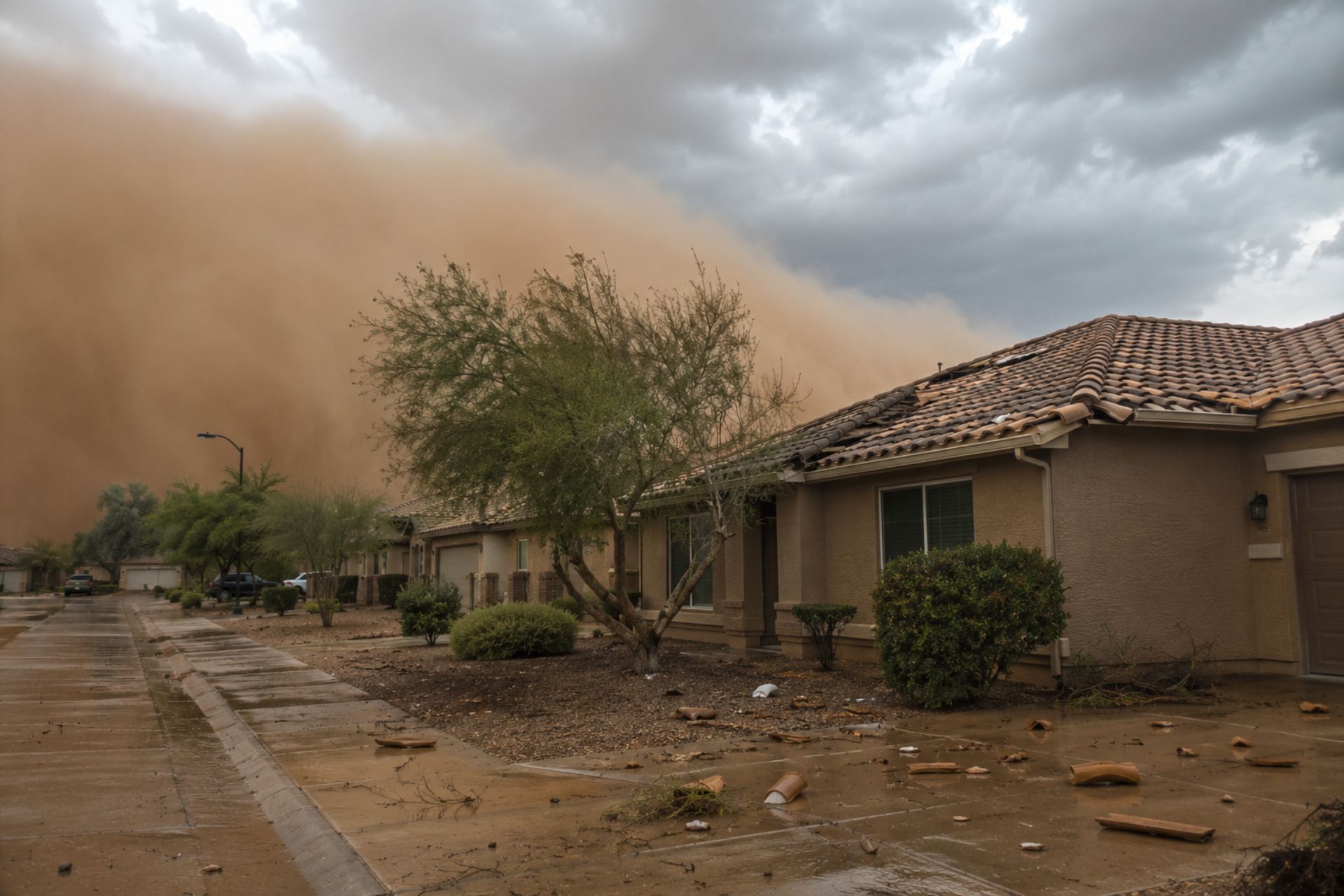
The climate itself creates risk. Monsoon season from June through September brings flash flooding, dust storms, and wind damage that can destroy signage, flood ground-floor offices, and damage parked vehicles. A 2025 storm in the East Valley caused over $40 million in commercial property claims across Maricopa County alone. If your business doesn't carry adequate property coverage, a single haboob or microburst can set you back months.
Arizona's regulatory environment also plays a role. The state requires workers' compensation for most employers but doesn't mandate general liability, which means plenty of small business owners skip it until a claim forces them to pay out of pocket. The combination of extreme weather, a litigious business culture, and rapid growth makes Phoenix a market where underinsurance is both common and costly.
Core Insurance Policies for Phoenix Small Businesses
General Liability and Commercial Property
General liability insurance is the foundation of most business insurance programs in Phoenix. It covers third-party bodily injury, property damage, and advertising injury claims. If a customer slips on a wet floor in your Chandler retail shop or a subcontractor damages a client's home during a remodel in Mesa, your GL policy responds.
Typical GL limits for small businesses start at $1 million per occurrence and $2 million aggregate. Most commercial landlords in the Valley require tenants to carry at least these minimums before signing a lease. One thing to keep in mind: GL doesn't cover your own property. That's where commercial property insurance comes in.
Commercial property covers your building (if you own it), equipment, inventory, furniture, and sometimes lost income if a covered event forces you to close temporarily. For Phoenix businesses, this means protection against fire, theft, vandalism, and certain weather events. Standard policies typically exclude flood damage, which matters if you're in a low-lying area near the Salt River or in a flood-prone zone south of the I-10. You'll need a separate flood policy through the NFIP or a private carrier if your location sits in a FEMA-designated flood zone.
Arizona Workers' Compensation Requirements
Arizona law requires nearly every employer to carry workers' compensation insurance, even if you have just one employee. The only exceptions are sole proprietors with no employees and certain independent contractors. Penalties for non-compliance are steep: the Industrial Commission of Arizona can shut down your business and impose fines of up to $1,000 per day of non-compliance.
Workers' comp covers medical expenses, lost wages, and rehabilitation costs for employees injured on the job. In Phoenix, the most common claims come from construction sites, warehouse operations, and restaurant kitchens. Heat-related illness claims have also spiked in recent years, with OSHA increasing enforcement of heat safety standards across Arizona in 2025 and 2026.
Your premium is based on your industry classification code, total payroll, and claims history. A roofing company will pay dramatically more per $100 of payroll than an accounting firm. Keeping accurate payroll records and maintaining a strong safety program can reduce your experience modification rate, which directly lowers your premium at renewal.
Commercial Auto and Cyber Liability Essentials
If your business owns, leases, or regularly uses vehicles, commercial auto insurance is non-negotiable. Personal auto policies exclude business use, so if one of your employees causes an accident while making deliveries or driving to a job site, your personal carrier will likely deny the claim. Commercial auto covers liability, collision, comprehensive damage, and uninsured motorist protection for business-owned vehicles.
Phoenix's traffic volume has grown significantly alongside its population. The I-10, Loop 101, and Loop 202 corridors consistently rank among the most accident-prone stretches in Arizona. Businesses with fleets or frequent drivers should also consider hired and non-owned auto coverage, which protects you when employees use their personal vehicles for work tasks.
Cyber liability insurance has shifted from a nice-to-have to a necessity for most businesses. Even a small medical practice or retail shop in Phoenix stores customer data that's vulnerable to breaches. A cyber policy covers notification costs, credit monitoring for affected customers, legal defense, regulatory fines, and sometimes ransomware payments. Arizona's data breach notification law requires businesses to notify affected individuals within 45 days, and the costs of compliance alone can exceed $50,000 for a mid-sized company.
Comparison Table: Coverage Types and Protection Gaps
| Coverage Type | What It Covers | Common Gap to Watch | Typical Annual Cost (Small Biz) |
|---|---|---|---|
| General Liability | Third-party injury, property damage, advertising injury | Doesn't cover your own property or employee injuries | $500 - $2,500 |
| Commercial Property | Building, equipment, inventory, business interruption | Standard policies exclude flood and earthquake | $750 - $3,500 |
| Workers' Compensation | Employee medical bills, lost wages, rehab | Doesn't cover independent contractors | $1,200 - $10,000+ |
| Commercial Auto | Business vehicle accidents, theft, vandalism | Personal auto policies won't cover business use | $1,200 - $4,000 per vehicle |
| Cyber Liability | Data breaches, ransomware, regulatory fines | Social engineering fraud often excluded unless added | $500 - $3,000 |
| Business Owner's Policy (BOP) | Bundles GL + property + business interruption | Lower limits than standalone policies | $600 - $3,000 |
This table reflects 2026 averages for small businesses in the Phoenix metro with fewer than 25 employees. Your actual premiums will vary based on revenue, claims history, and industry.
Factors Influencing Business Insurance Costs in Maricopa County
Industry Risk and Payroll Size
Your industry is the single biggest factor in what you'll pay. A general contractor with a $500,000 annual payroll will pay five to ten times more for workers' comp than a marketing agency with the same payroll. Insurers assign classification codes based on your primary business activity, and each code carries a base rate that reflects historical claim frequency and severity.
Payroll size matters too, especially for workers' comp and general liability. These policies are typically rated per $100 of payroll or per $1,000 of revenue. As your business grows, your premiums scale accordingly. That said, larger businesses often qualify for volume discounts or can access better rates through group programs or industry associations.
Claims history is the third major driver. If you've filed multiple claims in the past three to five years, your experience modification factor will push your premiums higher. A clean claims record, on the other hand, can earn you credits that reduce costs by 10% to 25%.
Location-Specific Factors in the Valley
Where your business sits within the Phoenix metro affects your rates in ways you might not expect. Properties in older parts of central Phoenix or south Phoenix may face higher property insurance premiums due to aging infrastructure, higher crime rates, and proximity to flood-prone washes. A business in north Scottsdale or Ahwatukee might pay less for property coverage but more for commercial auto due to longer employee commutes and highway exposure.
The desert heat itself is a cost factor. Roofing contractors, landscapers, and outdoor event companies face elevated workers' comp rates because heat-related injuries are more frequent and more severe in Maricopa County than almost anywhere else in the nation. Carriers underwriting these classes in Phoenix price that risk into every policy.
Arizona's insurance market is competitive, which works in your favor. Multiple national and regional carriers actively write business insurance in the Phoenix area, and independent agents can typically shop your coverage across a dozen or more companies to find the best combination of price and coverage.
Frequently Asked Questions About Phoenix Business Insurance
Does Arizona require general liability insurance for small businesses? No. Arizona doesn't mandate GL coverage by law. However, most commercial landlords, general contractors, and clients will require proof of GL before working with you. Going without it is a significant financial risk.
How much does a business owner's policy cost in Phoenix? A BOP for a small Phoenix business typically runs between $600 and $3,000 per year. It bundles general liability and property coverage into a single policy, often at a lower combined cost than buying each separately.
Can I buy workers' comp insurance through the state of Arizona? Arizona dissolved its state compensation fund years ago. You'll need to purchase workers' comp through a private insurance carrier or, if your business qualifies, through a self-insurance program approved by the Industrial Commission.
Do I need cyber insurance if I only accept credit cards? Yes, you should strongly consider it. Any business that processes, stores, or transmits customer payment data is a potential target. A single breach involving credit card numbers can trigger notification requirements, fines from payment card networks, and lawsuits.
What's the difference between hired and non-owned auto coverage and a commercial auto policy? A commercial auto policy covers vehicles your business owns or leases. Hired and non-owned auto coverage protects you when employees drive rental cars or their personal vehicles for business purposes. Many businesses need both.
Are home-based businesses covered under homeowners insurance?
Usually not. Most homeowners policies exclude or severely limit business-related claims. If you run a business from your Phoenix home, you'll need a separate business policy or an endorsement on your homeowners policy.
Making the Right Choice for Your Local Business
Picking the right coverage for your Phoenix business isn't about buying the cheapest policy or checking a box on a lease application. It's about matching your actual risk profile to the right combination of policies and limits. A food truck operator in Tempe faces completely different exposures than a cybersecurity consultant working from a home office in Gilbert, and their insurance programs should reflect that.
Start by identifying your non-negotiables: workers' comp if you have employees, commercial auto if you use vehicles, and GL if you interact with the public or work on client property. From there, evaluate whether a BOP makes sense or whether standalone policies give you better coverage at each layer.
Work with an independent agent who knows the Arizona market. They can compare quotes from multiple carriers and flag coverage gaps that a direct-buy platform might miss. Ask specifically about monsoon and flood exclusions, heat-related claim trends, and any endorsements that address risks unique to the Valley.
The cost of being underinsured almost always exceeds the cost of proper coverage. One uninsured workers' comp claim or a single data breach can wipe out years of profit. Take the time to build a program that actually protects what you've built, and review it annually as your business grows and your risks change.
About The Author:
Taylor Whatcott
As President of Wilde Wealth Insurance Services, I’m committed to providing trusted protection for both families and businesses across Arizona. Our independent team works with top-rated carriers to deliver tailored, comprehensive coverage—making insurance simple, accessible, and hassle-free.
Contact Us
Commercial Coverage Solutions
Protect Your Business with the Right Insurance
We offer customized insurance solutions to safeguard your business from financial risks. Our policies provide protection for property, employees, and liability concerns.
Commercial Property Insurance
Safeguards buildings, equipment, and inventory from damage or loss.
Professional Liability Insurance
Covers claims of negligence, errors, or omissions in services.
Cyber Liability Insurance
Protects against data breaches, cyberattacks, and online threats.
Who We Protect
Insurance Solutions for Your Industry
We specialize in providing tailored coverage for businesses in key industries. Our policies are designed to meet industry-specific risks and ensure complete protection.




Protection for Your Home & Assets
Reliable Coverage for Life’s Unexpected Moments
We provide personal insurance solutions designed to safeguard your home, vehicle, and financial well-being. Our policies ensure you and your loved ones are protected.







What Our Clients Say
Real Feedback. Real Confidence.
FAQs
Answers to Common Insurance Questions
How do I know which insurance coverage is right for me?
Choosing the right insurance depends on your personal or business needs. Our team evaluates your risks and recommends tailored coverage to protect what matters most.
We work with multiple carriers to provide different policy options. This allows you to compare benefits, limits, and pricing to make an informed choice.
If you’re unsure, we’ll walk you through the options step by step, ensuring you understand your coverage and feel confident in your decision.
Why should I choose an independent insurance agency like Wilde Wealth?
As an independent agency, we are not tied to a single insurance provider. This means we can compare multiple policies to find the best coverage at the best price.
Our goal is to advocate for you, ensuring you receive personalized service and expert advice tailored to your situation.
Unlike direct insurers, we offer ongoing support, helping you with claims, policy changes, and future coverage needs.
Can I bundle multiple insurance policies to save money?
Yes! Bundling policies like home and auto can lead to significant savings. Many carriers offer discounts for combining multiple coverages.
Bundling also simplifies policy management, with a single point of contact and streamlined renewals.
We help you explore bundling options to ensure you get the best value while maintaining the protection you need.
What factors affect my insurance rates?
Insurance rates are influenced by factors such as coverage limits, location, claims history, and risk exposure. Personal insurance may consider credit scores, driving history, and home value.
For businesses, factors like industry type, employee count, and annual revenue can impact pricing. Each carrier evaluates risk differently.
We shop multiple providers to find the best balance of coverage and cost, ensuring you don’t overpay while staying fully protected.
How does Wilde Wealth Insurance Services help business owners?
We provide customized business insurance solutions to protect against liability, property damage, employee-related risks, and cyber threats.
Our team works with a range of industries, including contractors, restaurants, and real estate professionals, to offer tailored policies.
From small startups to established enterprises, we help business owners minimize risks and keep operations running smoothly.
What happens if I need to file a claim?
Filing a claim is simple with our support. Contact us first, and we’ll guide you through the process, ensuring all necessary information is submitted correctly.
We work directly with your insurance carrier to expedite the claim, keeping you informed at every step.
Our team is here to advocate for you, making sure you receive a fair and timely resolution.
Latest Articles & Insights
Stay Informed with Expert Insurance Advice
We provide valuable insights to help you make informed insurance decisions. Explore our latest articles on coverage options, industry trends, and risk management tips.


Contact Us