
Arizona Glass and Glazing Contractor Insurance
See How We're Different:
or Call Us:(480) 526-3222
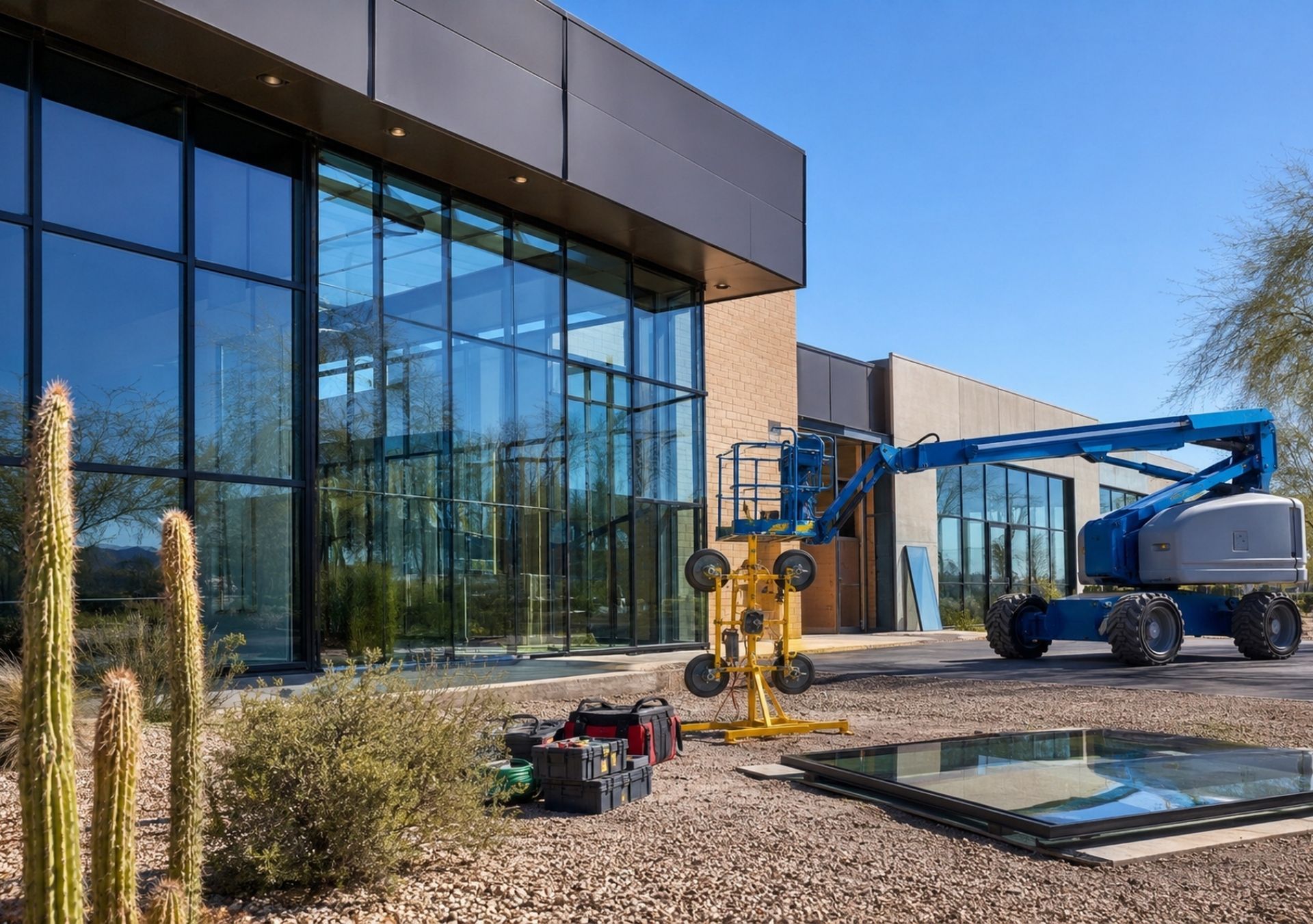
Arizona's glass and glazing industry isn't slowing down. With commercial construction booming across the Phoenix metro, Tucson, and fast-growing communities like Buckeye and Queen Creek, contractors who cut, install, and repair glass face a unique set of risks every single day. A single dropped tempered glass panel on a job site can trigger a claim worth tens of thousands of dollars. Cracked storefronts, shattered curtain walls, and injuries from falling shards are real possibilities, not hypotheticals. The Arizona glass and glazing market is
projected to reach $619.4 million in 2026, supported by roughly 704 licensed businesses across the state. That kind of growth means more competition, more projects, and more exposure to liability. Whether you're a one-truck mobile repair operation or a crew tackling high-rise curtain wall installations, the right insurance program isn't optional: it's the foundation your business stands on. This guide to insurance for Arizona glass and glazing contractors breaks down the policies you need, the state requirements you must meet, and the risks that are specific to your trade.
Essential Insurance Coverage for Arizona Glaziers
Every glazing contractor needs a core set of policies before taking on any job. General contractors and property managers will ask for proof of coverage before you set foot on their site. Choosing the wrong limits or skipping a policy altogether can leave you personally liable for six-figure claims.
Your insurance package should be built around three pillars: general liability, professional liability, and commercial auto. Each one covers a different category of risk, and gaps between them are where contractors get burned. The table below gives you a quick comparison.
| Coverage Type | What It Protects | Typical Limits | Common Claim Example |
|---|---|---|---|
| General Liability | Third-party injuries, property damage | $1M per occurrence / $2M aggregate | Glass panel falls, injures a pedestrian |
| Professional Liability | Design errors, faulty specifications | $500K - $2M | Incorrect glass type causes energy loss |
| Commercial Auto | Vehicles, cargo, third-party auto damage | $1M combined single limit | Repair van rear-ends a car with glass onboard |
General Liability for Property Damage and Bodily Injury
General liability (GL) is the policy you'll use most often to satisfy contract requirements. It responds when your work causes property damage or bodily injury to someone who isn't on your payroll. Think of a scenario where your crew is replacing a storefront window and a shard of glass cuts a passerby. Your GL policy covers the medical bills and any resulting lawsuit.
Most Arizona general contractors require subcontractors to carry at least $1 million per occurrence and $2 million in aggregate coverage. Some large commercial projects demand higher limits, which you can reach through an umbrella policy. One thing to keep in mind: your GL policy typically won't cover damage to your own work. If you install a window incorrectly and it cracks, the cost to redo it usually falls on you unless you carry a specific installation warranty.
Professional Liability for Design and Installation Errors
If your company provides design-build services or specifies glass types for architects, professional liability (also called errors and omissions) is critical. This policy covers claims arising from mistakes in your professional recommendations. For example, if you spec a non-impact-rated glass for a project that required impact resistance, and a storm causes failure, the building owner's claim against you would fall under professional liability, not general liability.
Many smaller glazing shops skip this coverage because they think it's only for engineers or architects. That's a costly assumption. Any time you advise a client on glass thickness, coating, or structural capacity, you're providing a professional service. A $500,000 professional liability policy typically costs between $1,200 and $3,500 per year for a small to mid-size glazing operation in Arizona.
Commercial Auto for Mobile Glass Repair Units
Your trucks carry expensive inventory and specialized equipment. A standard personal auto policy won't cover a vehicle used for business, and it definitely won't cover the $8,000 worth of custom-cut glass sitting in your rack. Commercial auto insurance covers your vehicles, your cargo, and liability for accidents involving your fleet.
Arizona requires minimum auto liability limits of $25,000/$50,000 for bodily injury and $15,000 for property damage. Those minimums are dangerously low for a commercial operation. Most insurance advisors recommend a combined single limit of at least $1 million. If you have employees driving company vehicles, you'll also need hired and non-owned auto coverage to protect against claims when they're using their personal cars for work errands.
Arizona State Licensing and Bond Requirements
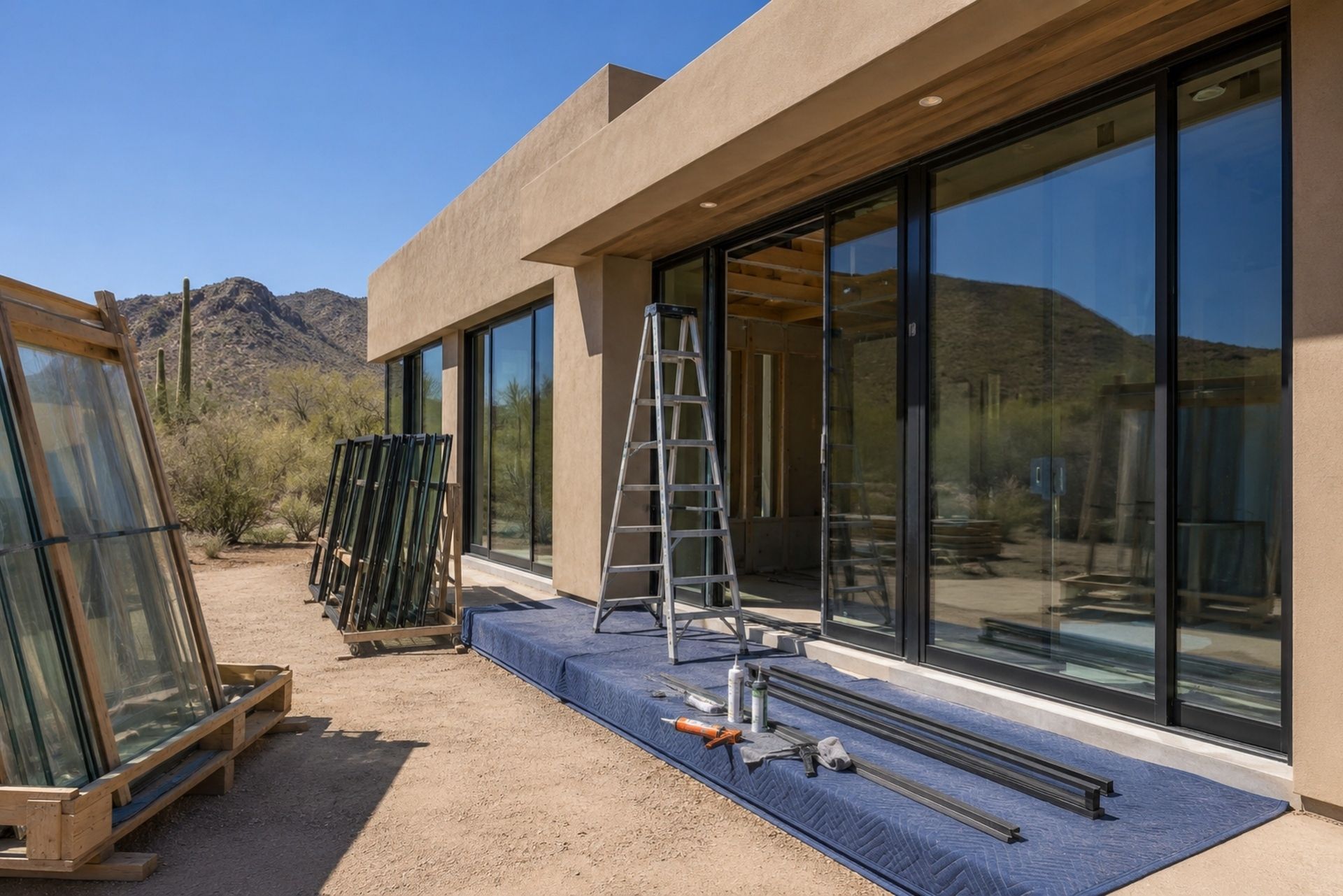
Arizona regulates glazing contractors through the Registrar of Contractors (ROC). You can't legally perform glass installation or repair work over a certain dollar threshold without a valid license and bond. The state takes enforcement seriously: unlicensed contracting can result in fines up to $2,500 per violation and even criminal charges.
Registrar of Contractors (ROC) Bond Mandates
Every licensed contractor in Arizona must maintain a surety bond with the ROC. For residential contractors, the bond amount is typically $10,000, while commercial (dual) licenses require a $5,000 commercial bond in addition to the residential bond. The bond protects consumers: if you fail to complete a project or violate your contract, a homeowner can file a claim against your bond.
The bond itself isn't insurance. It's a guarantee backed by a surety company, and if a claim is paid out, you're responsible for reimbursing the surety. Your bond premium depends on your credit score and financial history. Contractors with good credit often pay 1% to 3% of the bond amount annually. Those with poor credit or prior claims may pay 10% or more. Keeping your bond active is a condition of your license, so a lapse can shut down your business overnight.
Workers' Compensation Compliance for Glass Crews
Arizona law requires workers' compensation insurance for every employer, with very few exceptions. If you have even one employee, you need a workers' comp policy. The penalties for non-compliance are severe: the state can issue stop-work orders, and you could face personal liability for an injured worker's medical bills and lost wages.
Glass work carries above-average injury risk. Lacerations, falls from ladders, and repetitive strain injuries are common claims. Workers' comp classification codes for glazing contractors (NCCI code 5462) reflect this risk, and your premiums will be influenced by your experience modification rate (EMR). A clean safety record drives your EMR below 1.0 and lowers your premiums. A string of claims pushes it higher. Investing in proper safety training and personal protective equipment pays for itself through lower insurance costs over time.
Protecting Assets with Inland Marine and Tool Coverage
Standard commercial property policies cover your shop and its contents. But glass contractors spend most of their time away from the shop, transporting fragile, high-value materials to job sites. That's where inland marine insurance fills the gap.
Transit Insurance for High-Value Glass Sheets
A single sheet of architectural low-E glass can cost $2,000 or more. A load of custom-cut panels for a commercial project might be worth $50,000. If your truck is involved in an accident or a sudden stop sends your glass crashing, your commercial auto policy covers the vehicle, but it won't cover the cargo. Transit insurance, a type of inland marine coverage, protects materials while they're being transported from your warehouse to the job site.
Premiums for transit coverage depend on the maximum value of goods you transport at any given time. A policy covering up to $100,000 in transit might cost $800 to $2,000 annually. Given that a single loss could wipe out your profit margin for an entire quarter, this coverage is one of the best investments a glazing contractor can make.
Installation Floaters for On-Site Materials
Once your glass arrives at the job site, transit coverage ends. An installation floater picks up where transit leaves off. It covers materials, fixtures, and equipment that you've delivered to a project site but haven't yet installed. This includes glass panels staged on scaffolding, aluminum frames awaiting assembly, and sealants stored on site.
Here's what that means for you: without an installation floater, a windstorm that destroys $30,000 in staged glass panels becomes your problem. The general contractor's builder's risk policy might cover it, but relying on someone else's insurance is a gamble. Your own installation floater gives you direct control over the claim process and ensures there's no coverage dispute holding up your payment.
Industry-Specific Risks and Mitigation Strategies
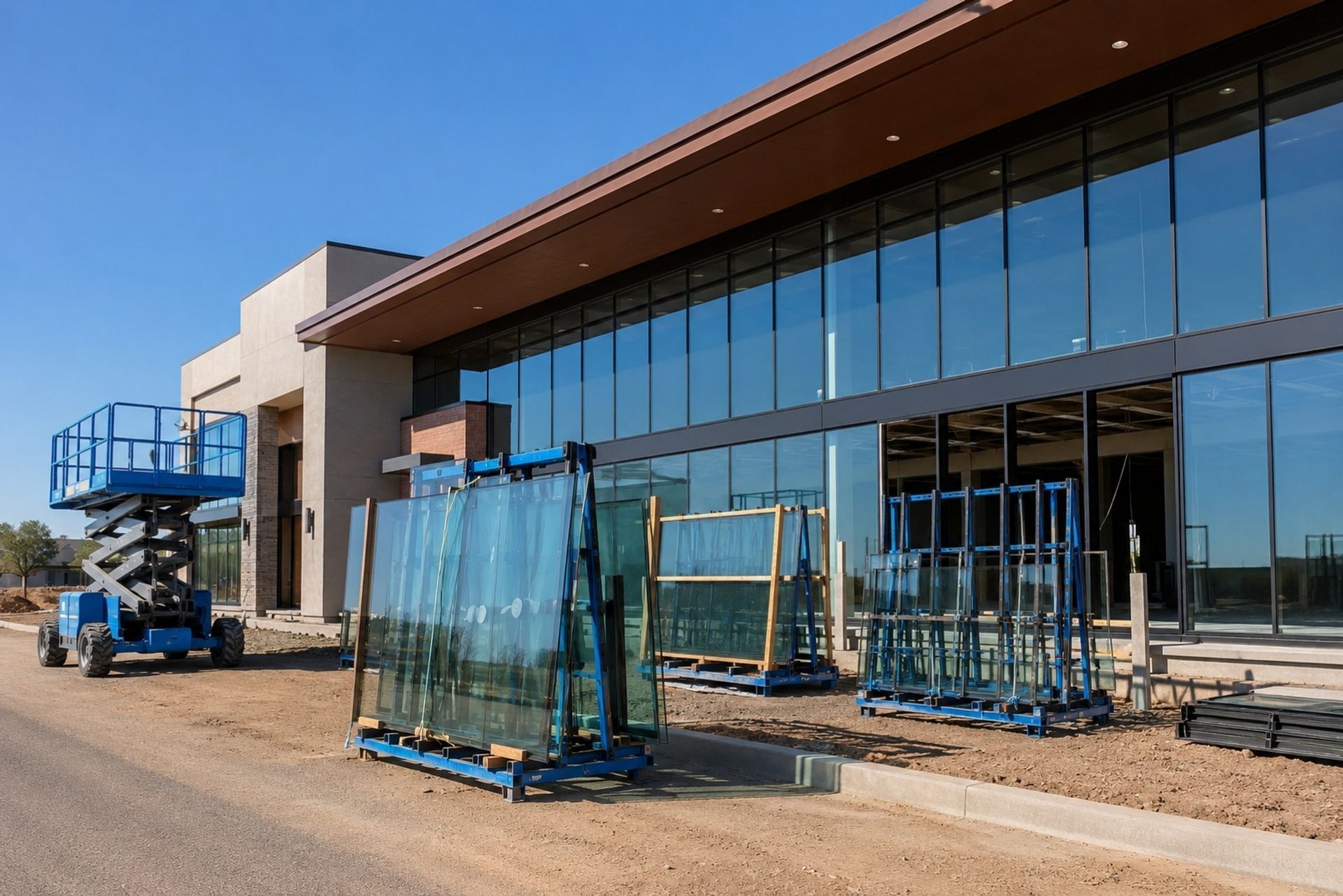
Glass and glazing work involves hazards that most trades don't face. Understanding these risks helps you choose the right coverage and implement safety practices that keep claims low.
Handling Scaffolding and High-Rise Glazing Hazards
Falls are the leading cause of death in construction, and glaziers working on scaffolding or swing stages face this risk daily. OSHA requires fall protection for any work performed at six feet or above, and Arizona's heat adds another layer of danger. Dehydration and heat exhaustion impair judgment and coordination, increasing the likelihood of accidents during summer months when temperatures regularly exceed 110°F.
Your workers' comp policy covers these injuries, but prevention is far cheaper than claims. Require harness use, conduct daily toolbox talks, and schedule high-exposure tasks for early morning hours. Some insurers offer premium discounts of 5% to 15% for contractors who implement formal safety programs and maintain OSHA 30-hour certifications for their supervisors.
Addressing Thermal Stress and Spontaneous Breakage Claims
Tempered glass can fracture spontaneously due to nickel sulfide inclusions or thermal stress, particularly in Arizona's extreme heat. When a panel you installed six months ago suddenly shatters, the building owner will likely hold you responsible. These claims can be difficult to defend because the cause isn't always visible.
Carrying completed operations coverage within your GL policy protects you against claims that arise after you've finished a project. Most standard GL policies include completed operations, but check your policy's exclusions carefully. Some policies exclude glass breakage or limit coverage for materials you didn't manufacture. Heat-soak testing before installation can reduce spontaneous breakage risk by up to 95%, and documenting that you performed this step strengthens your defense if a claim does arise.
Several factors determine what you'll pay for coverage in Arizona. Your annual revenue is the starting point: a $500,000-revenue shop will pay significantly less than a $3 million operation. Your claims history matters enormously. Insurers look at your loss runs from the past three to five years, and even one or two large claims can increase premiums by 20% to 40%.
The type of work you perform also affects pricing. A contractor focused on residential window replacements faces lower risk than one doing high-rise curtain wall installations. Your geographic territory plays a role too: contractors working in downtown Phoenix or Scottsdale high-rises will generally pay more than those serving suburban residential markets. Bundling multiple policies with a single carrier often yields discounts of 10% to 20%, and maintaining a strong safety record is the single most effective way to control costs over time.
Securing the Right Policy for Your Glazing Business
Getting the right insurance for your Arizona glazing company requires more than grabbing the cheapest quote online. Work with an agent or broker who understands construction trades and, ideally, has experience with glass contractors specifically. They'll know which carriers write favorable terms for glaziers and which exclusions to watch for.
Start by assessing your actual exposure. How much glass do you transport at once? Do you work above three stories? Do you provide design services? Your answers shape the policies you need. Request quotes from at least three carriers, and compare not just premiums but deductibles, exclusions, and the carrier's claims-handling reputation. A comprehensive Arizona glass and glazing contractor insurance program should include GL, professional liability, commercial auto, workers' comp, inland marine, and an umbrella policy to tie it all together.
Frequently Asked Questions
How much does general liability insurance cost for a small glazing contractor in Arizona? Most small operations with under $500,000 in annual revenue pay between $1,500 and $4,000 per year for a $1M/$2M GL policy. Your claims history and the type of work you do are the biggest pricing factors.
Do I need insurance if I'm a sole proprietor with no employees? You still need general liability and commercial auto at minimum. You're exempt from workers' comp if you have no employees, but many general contractors won't hire you without it.
What's the difference between an installation floater and builder's risk? Builder's risk is typically purchased by the project owner or GC and covers the entire structure under construction. An installation floater specifically covers your materials and equipment at the job site before installation is complete.
Can I use my personal auto insurance for my glass repair truck? No. Personal auto policies exclude vehicles used for commercial purposes. If you're caught using one for business, your claim will be denied.
How often should I review my insurance program?
At least once a year, or whenever you add employees, expand into new types of work, or take on significantly larger projects. Your coverage should grow with your business.
About The Author:
Taylor Whatcott
As President of Wilde Wealth Insurance Services, I’m committed to providing trusted protection for both families and businesses across Arizona. Our independent team works with top-rated carriers to deliver tailored, comprehensive coverage—making insurance simple, accessible, and hassle-free.
Contact Us
Commercial Coverage Solutions
Protect Your Business with the Right Insurance
We offer customized insurance solutions to safeguard your business from financial risks. Our policies provide protection for property, employees, and liability concerns.
Commercial Property Insurance
Safeguards buildings, equipment, and inventory from damage or loss.
Professional Liability Insurance
Covers claims of negligence, errors, or omissions in services.
Cyber Liability Insurance
Protects against data breaches, cyberattacks, and online threats.
Who We Protect
Insurance Solutions for Your Industry
We specialize in providing tailored coverage for businesses in key industries. Our policies are designed to meet industry-specific risks and ensure complete protection.



Protection for Your Home & Assets
Reliable Coverage for Life’s Unexpected Moments
We provide personal insurance solutions designed to safeguard your home, vehicle, and financial well-being. Our policies ensure you and your loved ones are protected.







What Our Clients Say
Real Feedback. Real Confidence.
FAQs
Answers to Common Insurance Questions
How do I know which insurance coverage is right for me?
Choosing the right insurance depends on your personal or business needs. Our team evaluates your risks and recommends tailored coverage to protect what matters most.
We work with multiple carriers to provide different policy options. This allows you to compare benefits, limits, and pricing to make an informed choice.
If you’re unsure, we’ll walk you through the options step by step, ensuring you understand your coverage and feel confident in your decision.
Why should I choose an independent insurance agency like Wilde Wealth?
As an independent agency, we are not tied to a single insurance provider. This means we can compare multiple policies to find the best coverage at the best price.
Our goal is to advocate for you, ensuring you receive personalized service and expert advice tailored to your situation.
Unlike direct insurers, we offer ongoing support, helping you with claims, policy changes, and future coverage needs.
Can I bundle multiple insurance policies to save money?
Yes! Bundling policies like home and auto can lead to significant savings. Many carriers offer discounts for combining multiple coverages.
Bundling also simplifies policy management, with a single point of contact and streamlined renewals.
We help you explore bundling options to ensure you get the best value while maintaining the protection you need.
What factors affect my insurance rates?
Insurance rates are influenced by factors such as coverage limits, location, claims history, and risk exposure. Personal insurance may consider credit scores, driving history, and home value.
For businesses, factors like industry type, employee count, and annual revenue can impact pricing. Each carrier evaluates risk differently.
We shop multiple providers to find the best balance of coverage and cost, ensuring you don’t overpay while staying fully protected.
How does Wilde Wealth Insurance Services help business owners?
We provide customized business insurance solutions to protect against liability, property damage, employee-related risks, and cyber threats.
Our team works with a range of industries, including contractors, restaurants, and real estate professionals, to offer tailored policies.
From small startups to established enterprises, we help business owners minimize risks and keep operations running smoothly.
What happens if I need to file a claim?
Filing a claim is simple with our support. Contact us first, and we’ll guide you through the process, ensuring all necessary information is submitted correctly.
We work directly with your insurance carrier to expedite the claim, keeping you informed at every step.
Our team is here to advocate for you, making sure you receive a fair and timely resolution.
Latest Articles & Insights
Stay Informed with Expert Insurance Advice
We provide valuable insights to help you make informed insurance decisions. Explore our latest articles on coverage options, industry trends, and risk management tips.


Contact Us