
Arizona Data & Networking Electrician Insurance
See How We're Different:
or Call Us:(480) 526-3222
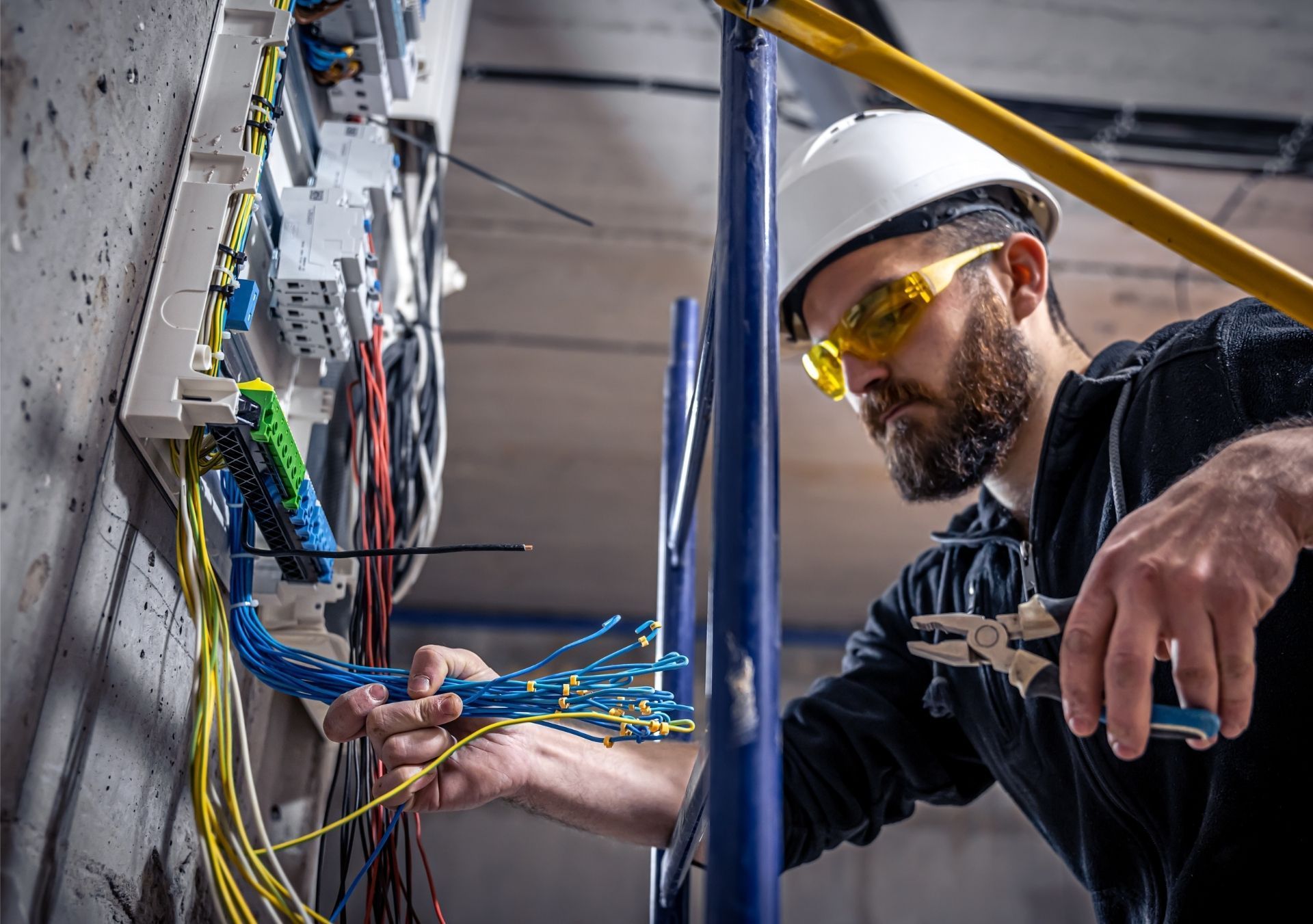
A single miswired patch panel can take down a client’s phones, internet and payment systems in the same afternoon. For Arizona data and networking electricians, that is not just a technical headache. It is a potential six-figure liability dispute, a reputation hit and a serious cash flow problem if insurance is not structured correctly.
The stakes keep climbing as the trade grows across the state. The Electricians industry in Arizona is projected to reach a market size of 5.5 billion dollars by 2025, with an annual growth rate of 1.9 percent from 2020 to 2025 according to IBISWorld. More projects mean more contracts to manage, more connected equipment in the field and more chances for something to go wrong on a job site or inside a server room.
This guide walks through how insurance coverage actually works for data and networking electricians in Arizona, how different policies fit together, and what to look for when tailoring protection to low-voltage and IT-heavy work. The goal is to help Arizona contractors talk to brokers with clear priorities instead of generic questions.
Why Arizona data & networking electricians face unique risks
Traditional electrical work already carries plenty of risk, but data and networking contractors sit in a different risk lane. The jobs often happen in live offices, healthcare facilities, financial institutions and industrial plants. There is client hardware everywhere, sensitive information on the network and large groups of employees who cannot work if a system goes down.
On top of that, data and networking electricians are now installing more connected and smart systems than ever. The adoption of Internet of Things technologies in electrical installations is growing at a compound annual rate of 12 percent through 2027, which introduces new vulnerabilities like cybersecurity threats and complex system failures as reported by ContractorInsPro. Each sensor, access point or controller that goes online becomes both a useful tool and a potential entry point for attackers or malfunction.
There is also a digital side to the claims picture that many contractors underestimate. Cyber incidents cost the construction and trades sector an average of 5 million dollars per breach
according to PrimeRisk Insurance Solutions. Even if a data and networking electrician is not the direct target of an attack, clients may still argue that a configuration error, poor password practice or unsecured remote access left them exposed.

Core insurance coverages for Arizona data & networking electricians
No single policy covers every risk a data and networking contractor faces. Most Arizona electrical businesses end up with a package that combines several core policies. How those policies are structured, and which limits are chosen, makes the difference between a quick claim resolution and a serious financial setback.
General liability insurance
General liability sits at the center of most contractor insurance programs. It is designed to respond if a third party claims bodily injury, property damage or certain types of personal and advertising injury caused by the contractor’s work or operations.
For a data and networking electrician, that might look like accidentally knocking over a server rack while pulling cable, cracking a client’s tile floor while moving ladders through an office, or causing minor smoke damage when a piece of equipment overheats during testing. Even if the client’s property insurer initially pays for the damage, they may subrogate against the contractor, which is when general liability responds.
Professional liability / errors & omissions
Low-voltage and networking contractors often provide design, advice and configuration, not just hands-on installation. That is where professional liability, also called errors and omissions (E&O), becomes critical. This coverage addresses financial losses stemming from alleged mistakes in professional services, such as a flawed network design or misconfigured access control system.
Imagine completing a cabling project for a medical office where intermittent outages start after go-live. An investigation traces the problem to a configuration choice that reduced network redundancy. The client claims lost revenue and additional IT consulting costs. Those losses may not involve physical damage, so general liability might not respond. E&O is designed for this type of purely economic claim.
Workers compensation for Arizona crews
Any Arizona data and networking electrician with employees needs to think seriously about workers compensation. Technicians climb ladders and lifts, work above ceilings, kneel in tight spaces and sometimes operate around energized equipment. Injuries can happen even in a clean data center.
The reality of workplace injuries in the state is not theoretical. Arizona’s private industry reported 69,500 nonfatal workplace injuries and illnesses in 2022, resulting in a total recordable cases incidence rate of 3.1 per 100 full-time equivalent workers according to the U.S. Bureau of Labor Statistics. While that covers every sector, it underlines how common job-related injuries are and why regulators require workers compensation once payroll crosses certain thresholds.
Steady training and experience help reduce those incidents, but they take time. The average length of electrical apprenticeship programs is 4.3 years, with some variation depending on region as reported by Gitnux. During those years, apprentices are learning safe practices while still more prone to missteps, which keeps workers compensation squarely in focus for Arizona contractors.
Commercial auto and hired/non-owned auto
Data and networking electricians live on the road. Vans and pickups haul ladders, spools of cable, test equipment and sometimes high-value hardware. Commercial auto insurance covers company-owned vehicles for liability arising from at-fault accidents, and can also include physical damage coverage for collision and comprehensive events.
Hired and non-owned auto coverage is equally important for many small firms. If employees drive personal cars to job sites or rental vehicles are used during busy periods, accidents in those vehicles can still come back to the business. Adding this coverage can close a gap that surprises many owners after a crash.
Inland marine / tools and equipment coverage
Inland marine sounds like a policy for boat owners, but it actually protects movable property. For data and networking electricians, this usually means laptops, fusion splicers, fiber testers, labelers, specialized hand tools and even racks of access points or switches that travel from the shop to client sites.
Standard property insurance often limits coverage once equipment leaves a scheduled location. Inland marine fills that gap, responding to theft from vehicles, losses in transit, or damage that occurs at a temporary job site. For contractors who routinely park overnight at hotels or leave gear on remote projects, this coverage can prevent a stolen van from turning into a full equipment replacement crisis.
Property and business interruption insurance
Whether the business operates from a rented bay, a small warehouse or a combined office and storage facility, property insurance protects the physical location and contents against covered perils such as fire, certain types of water damage or theft. For data and networking electricians, that property often includes inventory of cable, patch panels, keystones, network hardware and office electronics.
Business interruption coverage, which is usually added to a property policy, can be just as important. If a fire or other covered loss shuts down the premises, this coverage can help replace lost income and pay ongoing expenses while operations are restored. For a contractor juggling payroll, leases and vehicle payments, that income bridge can be the difference between surviving a major loss and shutting the doors.
Cyber insurance for connected electricians
Many data and networking electricians think cyber insurance is only for software companies or large corporations. In practice, anyone who touches client networks, stores credentials, uses remote access tools or handles client data has cyber exposure. That includes low-voltage contractors configuring firewalls, managing switches or integrating cloud-based control systems.
Cyber insurance can address costs related to data breaches, ransomware, business email compromise and other attacks that either hit the contractor directly or are alleged to have been enabled by their work. Policies commonly help pay for forensic investigations, notification of affected parties, credit monitoring, extortion payments where legal, and legal defense if clients allege negligence.
For Arizona contractors positioning themselves as technology partners rather than simple installers, cyber coverage has become a credibility factor. Larger clients and public entities increasingly expect vendors to carry at least a basic cyber policy as part of their risk management frameworks.
How these coverages fit together
The most effective insurance programs for data and networking electricians are built as coordinated packages, not isolated policies. General liability and workers compensation handle bodily injury and straightforward property damage. Professional liability and cyber address intangible and digital harm. Commercial auto and inland marine focus on vehicles and mobile equipment, while property and business interruption protect the home base.
Gaps usually show up at the edges, where one policy expects the other to respond. For example, some general liability policies exclude losses arising from professional advice, even if no formal designs were stamped. Some cyber policies exclude coverage for hardware damage. Working with a broker who understands low-voltage work helps align endorsements and limits to avoid expensive surprises.
| Coverage Type | What it mainly protects | Common claim examples for data & networking electricians |
|---|---|---|
| General Liability | Third-party bodily injury and property damage | Client trips over a cable and is injured, or a dropped tool cracks a server cabinet door |
| Professional liability (E&O) | Financial loss from errors in design or configuration | Network downtime traced to misconfigured switches or poorly planned cabling layout |
| Workers compensation | Employee injuries and related medical and wage costs | Technician strains a back lifting a rack, or falls from a ladder while running cable |
| Commercial auto | Company vehicle liability and physical damage | At-fault accident while driving to a site, or collision that totals a work van |
| Inland marine | Tools and equipment in transit or on job sites | Specialized tester stolen from a parked van at a hotel |
| Property & business interruption | Buildings, contents and income after covered losses | Fire at the shop that damages inventory and forces a temporary shutdownerations |
| Cyber insurance | Data breaches, cyber attacks and related liability | Compromised remote access tool used to attack a client network |
How much coverage do Arizona data & networking electricians need?
Two contractors can do similar work yet need very different coverage limits. A small firm handling basic office cabling may focus on realistic slip-and-fall and property damage scenarios. A contractor designing and maintaining networks for hospitals or financial institutions faces materially larger potential claims, especially on the professional liability and cyber side.
Start by looking at client contracts. Many commercial and public clients specify minimum limits for general liability, auto, workers compensation and sometimes professional liability. Those requirements often reflect the client’s own risk appetite and may be higher than what a contractor would buy on their own. Meeting them is usually non-negotiable, but there is still room to tailor deductibles, endorsements and optional coverages.
Next, think through worst reasonable outcomes rather than the absolute worst imaginable event. For example, what would it cost if a configuration mistake took down a client’s operations for several days, or if a van accident injured occupants of another vehicle? Working through these scenarios with an insurance professional helps translate technical risk into limits that make financial sense.
Finally, revisit limits and coverage scope regularly. The electrician industry as a whole is expected to keep growing at an annualized rate of 1.4 percent to reach 213.7 billion dollars in revenue through 2026, driven in part by technological innovation
according to ContractorInsPro. As revenue, team size and project complexity increase for individual contractors, the insurance program that felt adequate a few years ago can quickly fall behind actual exposure.

Risk management, contracts and safety practices that support lower premiums
Insurance protects the business when things go wrong, but underwriters also look closely at what a contractor is doing to keep losses from happening in the first place. Strong risk management does more than lower the chances of a claim. It can also improve the terms and pricing that carriers are willing to offer.
On the contractual side, review proposals, master service agreements and subcontracts with an eye toward indemnification and insurance requirements. Clear scopes of work, realistic timelines and well-defined responsibilities help avoid disputes when something fails. Additional insured endorsements, waiver of subrogation clauses and primary and noncontributory language should match what is promised in contracts to prevent coverage gaps.
Operationally, a focus on job site safety, driver training and data security goes a long way. Documented lockout and tagout processes, ladder and lift training, and clear rules for working near energized equipment show underwriters that safety is a priority. For cyber risk, basics like multi-factor authentication, encrypted laptops, secure password practices and vendor access controls can reduce both the chance and severity of incidents.
Data and networking electricians can also benefit from standardizing change management and documentation. Keeping detailed records of configurations, change logs and client approvals not only supports troubleshooting. It also becomes critical evidence if a client later alleges that an outage or security incident was caused by undocumented changes.
Arizona data & networking electrician insurance FAQs
Owners and managers often run into the same questions when they start building or upgrading insurance programs. These brief answers provide a starting point before deeper conversations with an insurance professional.
Is professional liability really necessary if the work is mostly installation?
Even when a contractor views their role as installation only, clients often rely on their advice about hardware selection, network layout and configuration. If a problem later traces back to that guidance, the dispute can shift into professional liability territory. Carrying at least some errors and omissions coverage helps bridge the gap between pure installation work and the reality of how clients see the contractor’s expertise.
How does insurance handle damage to a client’s data or software?
Standard general liability policies tend to focus on tangible property, not data or software. When a claim involves corrupted databases, lost records or impaired access to systems, coverage may instead fall under cyber insurance or professional liability, depending on how the loss is framed. It is important to review policy wording carefully to understand how electronic data is treated.
Does workers compensation matter if the business uses only subcontractors?
Some Arizona data and networking electricians operate with a lean in-house staff and rely heavily on subcontractors. Even in that model, workers compensation remains relevant. Misclassification disputes, uninsured or underinsured subs and contractual requirements from larger clients can all pull the primary contractor into responsibility for injuries. Verifying certificates of insurance from subs and understanding state rules helps avoid expensive surprises.
Can better safety training really affect insurance costs?
Carriers look closely at both the frequency and severity of claims. A track record of fewer injuries and smaller losses, supported by real safety programs, often leads to better pricing and more carrier options over time. According to OSHA standards, 25 percent of electrical accidents could be prevented with proper safety training as noted by Gitnux, so investment in training supports both workers and the bottom line.
Why is cyber insurance important if client networks already have security tools?
Firewalls, antivirus tools and intrusion detection systems are essential, but they do not eliminate cyber risk. Mistakes in configuration, stolen credentials or compromised third-party tools can still lead to breaches. Cyber insurance backs up those technical defenses with financial support and expert response services if an incident occurs, and it can be a key requirement for working with more risk-aware clients.
What should Arizona data & networking electricians bring to an insurance review?
Coming prepared speeds up the process and leads to better recommendations. Useful items include a list of services provided, sample contracts, revenue breakdown by service type, details on the largest clients or projects, current policy declarations, loss runs if available and an overview of safety and cybersecurity practices. The clearer the picture of operations, the easier it is to build an insurance program that matches real-world risk rather than generic assumptions.
How often should coverage be revisited?
Any major change in the business is a good trigger for an insurance review. That includes hiring additional crews, entering new verticals such as healthcare or finance, adding design or managed services, or purchasing significant new equipment. Even without big shifts, an annual check-in helps keep limits and coverage in step with how quickly technology and client expectations evolve for data and networking electricians in Arizona.
About The Author:
Taylor Whatcott
As President of Wilde Wealth Insurance Services, I’m committed to providing trusted protection for both families and businesses across Arizona. Our independent team works with top-rated carriers to deliver tailored, comprehensive coverage—making insurance simple, accessible, and hassle-free.
Contact Us
Commercial Coverage Solutions
Protect Your Business with the Right Insurance
We offer customized insurance solutions to safeguard your business from financial risks. Our policies provide protection for property, employees, and liability concerns.
Commercial Property Insurance
Safeguards buildings, equipment, and inventory from damage or loss.
Professional Liability Insurance
Covers claims of negligence, errors, or omissions in services.
Cyber Liability Insurance
Protects against data breaches, cyberattacks, and online threats.
Who We Protect
Insurance Solutions for Your Industry
We specialize in providing tailored coverage for businesses in key industries. Our policies are designed to meet industry-specific risks and ensure complete protection.




Protection for Your Home & Assets
Reliable Coverage for Life’s Unexpected Moments
We provide personal insurance solutions designed to safeguard your home, vehicle, and financial well-being. Our policies ensure you and your loved ones are protected.







What Our Clients Say
Real Feedback. Real Confidence.
FAQs
Answers to Common Insurance Questions
How do I know which insurance coverage is right for me?
Choosing the right insurance depends on your personal or business needs. Our team evaluates your risks and recommends tailored coverage to protect what matters most.
We work with multiple carriers to provide different policy options. This allows you to compare benefits, limits, and pricing to make an informed choice.
If you’re unsure, we’ll walk you through the options step by step, ensuring you understand your coverage and feel confident in your decision.
Why should I choose an independent insurance agency like Wilde Wealth?
As an independent agency, we are not tied to a single insurance provider. This means we can compare multiple policies to find the best coverage at the best price.
Our goal is to advocate for you, ensuring you receive personalized service and expert advice tailored to your situation.
Unlike direct insurers, we offer ongoing support, helping you with claims, policy changes, and future coverage needs.
Can I bundle multiple insurance policies to save money?
Yes! Bundling policies like home and auto can lead to significant savings. Many carriers offer discounts for combining multiple coverages.
Bundling also simplifies policy management, with a single point of contact and streamlined renewals.
We help you explore bundling options to ensure you get the best value while maintaining the protection you need.
What factors affect my insurance rates?
Insurance rates are influenced by factors such as coverage limits, location, claims history, and risk exposure. Personal insurance may consider credit scores, driving history, and home value.
For businesses, factors like industry type, employee count, and annual revenue can impact pricing. Each carrier evaluates risk differently.
We shop multiple providers to find the best balance of coverage and cost, ensuring you don’t overpay while staying fully protected.
How does Wilde Wealth Insurance Services help business owners?
We provide customized business insurance solutions to protect against liability, property damage, employee-related risks, and cyber threats.
Our team works with a range of industries, including contractors, restaurants, and real estate professionals, to offer tailored policies.
From small startups to established enterprises, we help business owners minimize risks and keep operations running smoothly.
What happens if I need to file a claim?
Filing a claim is simple with our support. Contact us first, and we’ll guide you through the process, ensuring all necessary information is submitted correctly.
We work directly with your insurance carrier to expedite the claim, keeping you informed at every step.
Our team is here to advocate for you, making sure you receive a fair and timely resolution.
Latest Articles & Insights
Stay Informed with Expert Insurance Advice
We provide valuable insights to help you make informed insurance decisions. Explore our latest articles on coverage options, industry trends, and risk management tips.




Contact Us