
Arizona Crane and Rigging Contractor Insurance
See How We're Different:
or Call Us:(480) 526-3222
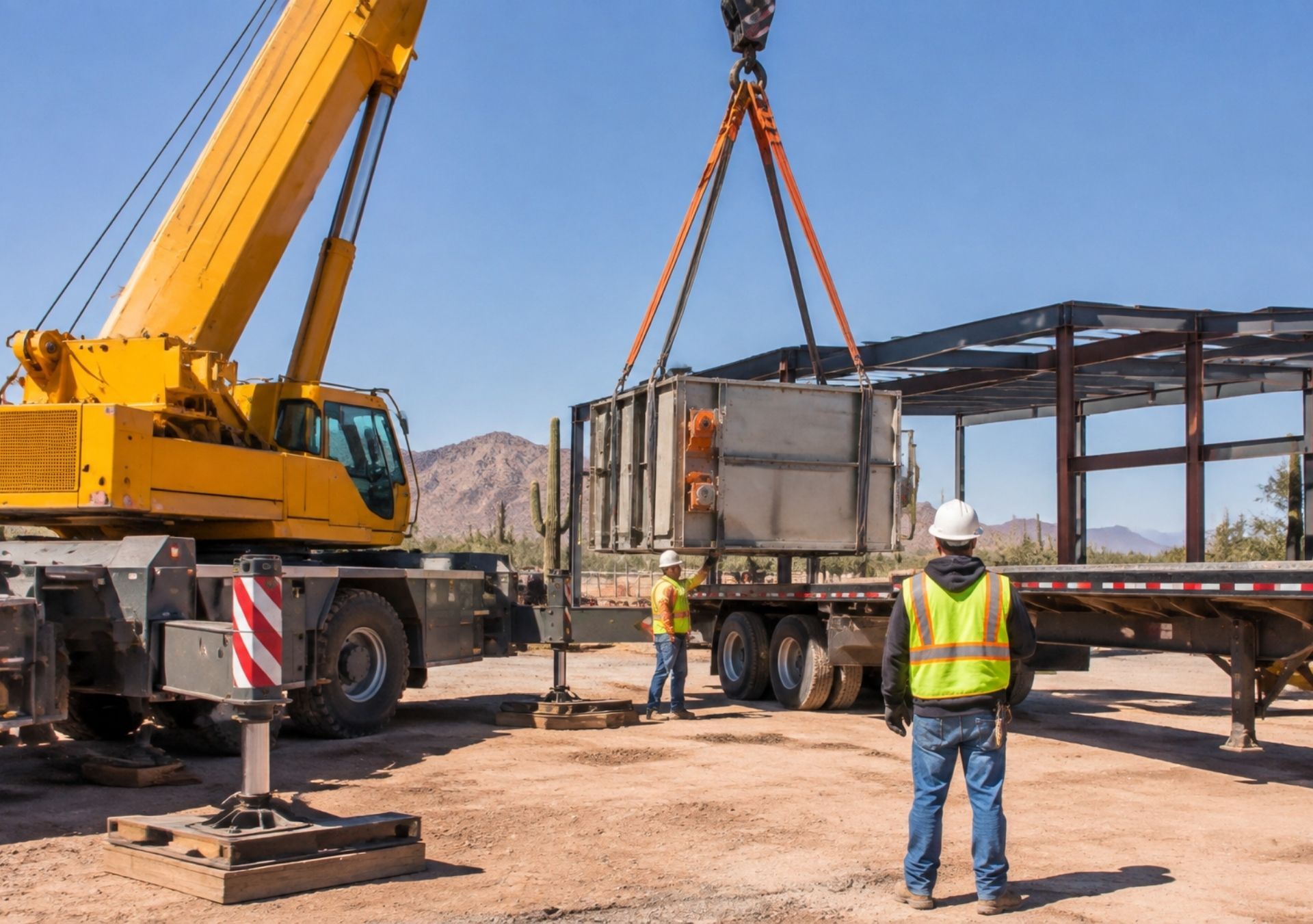
Arizona crane jobs rarely fail on paper. They fail when a sling gives out over a Phoenix parking structure or a tower crane's outrigger sinks into caliche soil after a monsoon. When that happens, the policy you bought months earlier decides whether you keep operating or spend years in litigation.
Insurance for Arizona crane and rigging contractors is not a single product. It's a stack of coverages: riggers liability, crane physical damage, general liability, commercial auto, workers' compensation, and umbrella limits. Each one answers a different question about who pays when something goes wrong. Most operators who run into trouble had coverage. The problem was that the coverage sat in the wrong place, or the limits ran out halfway through the claim.
The market isn't making this easier. Arizona's insurance sector
reached $62.9 billion in total written premiums in 2025, up 2.9% from the prior year. Crane carriers, meanwhile, are getting pickier about who they'll write. The sections below walk through each piece of a crane program and point out where the gaps tend to show up.
Arizona doesn't issue a "crane insurance" mandate as such. Your requirements come from three places: state law, the general contractor's subcontract, and your equipment lender. State law covers workers' comp and auto liability. The contracts usually demand a lot more.
A typical GC agreement on a Tempe data center or a Tucson hospital job will spell out several things:
- Minimum GL limits, often $1 million per occurrence and $2 million aggregate
- Additional insured status on a primary and noncontributory basis
- Waiver of subrogation on GL, auto, and workers' comp
- Umbrella limits scaled to project value, frequently $5 million or more
- Riggers liability when you handle owner or contractor equipment
Lenders and lessors have their own demands. They'll want physical damage coverage naming them as loss payee.
The common mistake is signing the subcontract before your agent reviews it. Some agreements require coverage your carrier won't endorse, such as a contractual liability extension that wipes out the action-over exclusion. Get the insurance exhibit to your broker before you bid, not after you mobilize.
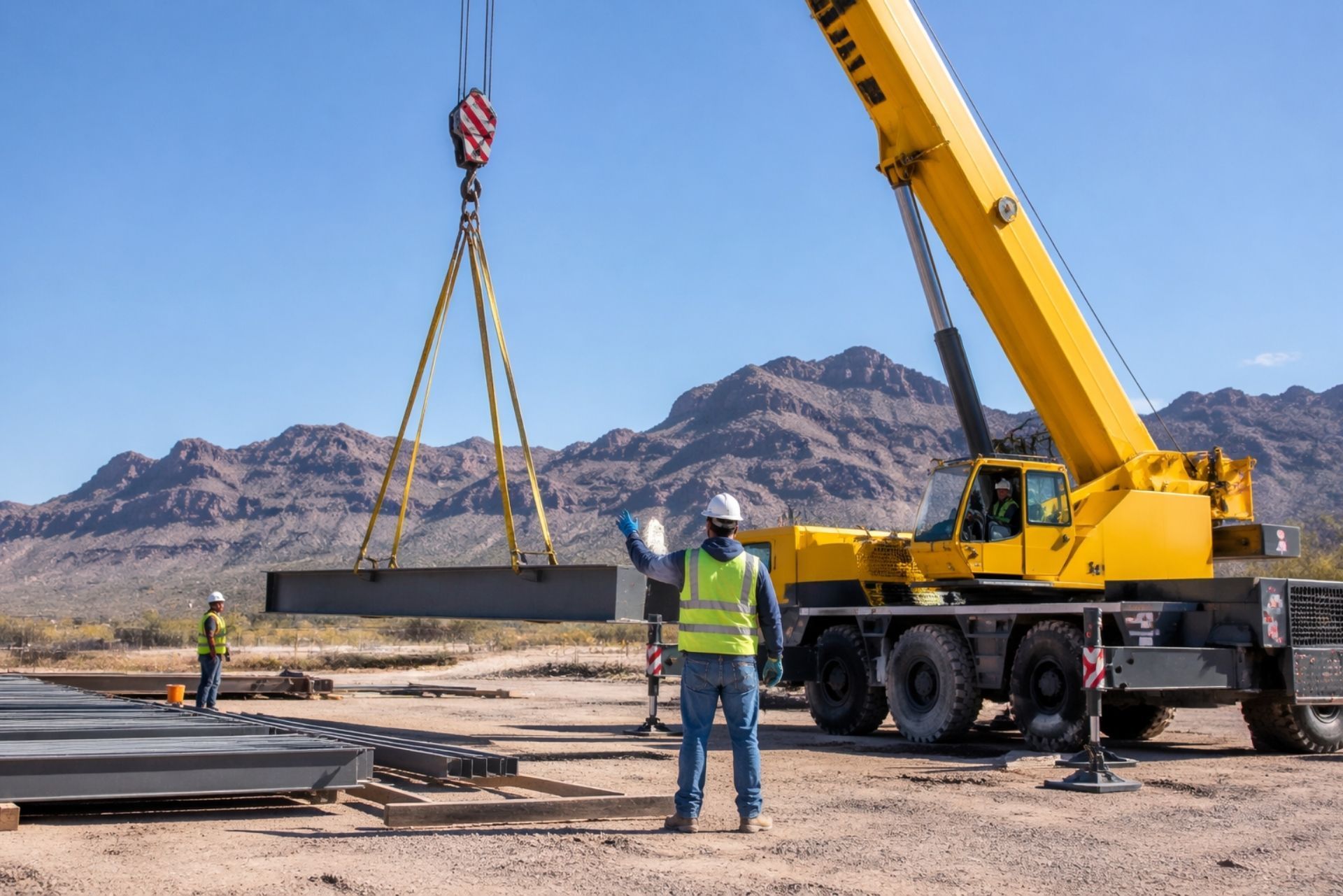
Core Liability Protections for Heavy Lifting Operations
Liability coverage is where crane programs get technical. Two policies that sound similar can respond to the same accident in completely different ways. The two subsections below explain how they split the work.
General Liability vs. Riggers Liability Coverage
General liability covers bodily injury and property damage you cause to third parties. Picture a load swinging into a passing car, or debris striking a pedestrian. The catch is the "care, custody, and control" exclusion. Once you hook onto someone else's property, standard GL generally won't pay if you drop it.
That's the job riggers liability does. Say you're setting a $400,000 rooftop chiller for an HVAC contractor in Scottsdale and a shackle fails. GL likely denies the claim because the chiller was in your care. Riggers liability is built for exactly that loss.
Pay attention to how the riggers form is written. Some policies apply only while the property is being lifted. Others extend to staging and storage at the jobsite. Watch the per-item limit too. A $250,000 riggers limit won't cover a single transformer worth twice that.
Excess Liability and Umbrella Limits for High-Value Projects
Crane accidents produce six-figure settlements quickly, and a dropped load on an occupied site can blow past seven figures. Umbrella and excess policies sit above your GL, auto, and employer's liability limits.
There's a difference between the two. A true umbrella may broaden coverage, while a follow-form excess policy only mirrors what sits beneath it. Make sure your umbrella schedules every primary policy. Also check whether it follows riggers liability, because many don't. That gap tends to surface only after a major dropped-load claim.
Protecting Your Fleet: Crane Physical Damage and Inland Marine
Your crane is probably your largest asset, and physical damage coverage protects the iron itself. Mobile and crawler cranes are typically written on an inland marine contractor's equipment form instead of an auto policy. That holds even for truck-mounted units, where the chassis may need separate handling.
The policy covers losses like these:
- Overturn and collapse, the big one for any crane operator
- Boom damage from contact with structures or power lines
- Theft of the unit or attachments from unsecured yards
- Fire and weather, including monsoon wind and hail events
Read the exclusions carefully. Many forms exclude damage caused by overloading or by operating outside the manufacturer's load chart. Some also exclude boom damage unless an overturn occurs. In Arizona, ask about heat-related mechanical breakdown, since standard forms usually treat it as wear and tear.
Valuation drives your recovery. Actual cash value on a 15-year-old crane could leave you hundreds of thousands short of replacement. Stated or agreed value costs more, but it's the safer route for older equipment you can't easily replace. Rental reimbursement is worth adding too, because downtime can hurt more than the repair bill.
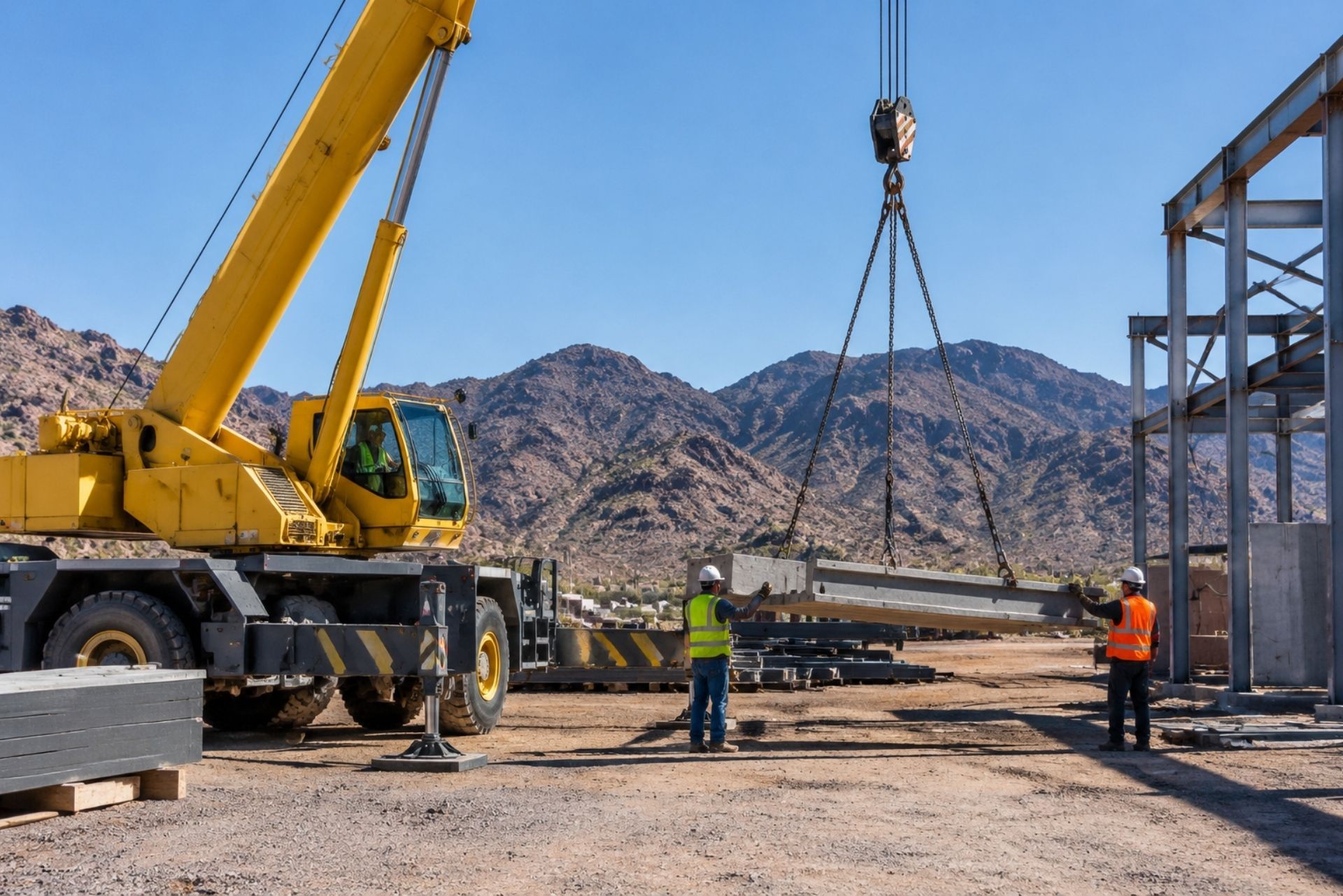
Comparison of Standard vs. Specialized Crane Coverage Features
Plenty of contractors buy a generic contractor package and assume it covers crane work. This table shows where those policies fall short.
| Coverage Feature | Standard Contractor Package | Specialized Crane Program |
|---|---|---|
| Damage to customer's lifted property | Usually excluded (care, custody, control) | Covered via riggers liability |
| Crane overturn | Often limited or excluded | Core covered peril |
| Boom damage without overturn | Commonly excluded | Available by endorsement |
| Valuation | Actual cash value | Agreed or stated value |
| Bare rental vs. operated rental | Rarely distinguished | Addressed separately |
| Umbrella follows riggers | Rarely | Can be negotiated |
| Rental reimbursement | Not included | Optional add-on |
The bare rental line causes the most disputes. If you rent a crane without an operator, your policy may not protect you when the renter's crew damages it. Specialized programs address this with lessee requirements and contractual language.
Commercial Auto and Workers' Compensation in the Grand Canyon State
These two coverages are required by law in most cases, and they also drive a large share of your premium. Both have been under real cost pressure in Arizona.
Arizona State Requirements for On-Road Equipment
Truck cranes, boom trucks, and support rigs that travel public roads need commercial auto liability. Interstate haulers also face federal financial responsibility minimums. Arizona's statutory minimums are far below what any GC will accept, so contract terms will set your actual limit.
The cost trend matters for budgeting. Commercial auto liability claim severity has risen 6.4% annually over the last decade, well ahead of 2.8% general inflation. A boom truck rear-ending a sedan on the I-10 can produce a verdict that dwarfs a $1 million auto limit. That's why your umbrella has to schedule auto.
One thing to keep in mind: mobile equipment rules are tricky. A crane that mostly works on site may fall under GL instead of auto, depending on how it's built and registered. Have your agent classify each unit individually.
Managing Risk and Premiums in High-Hazard Work Zones
Arizona employers with employees generally need workers' comp, and crane classifications sit among the costlier codes. For 2026, the Industrial Commission of Arizona set the Administrative Fund tax at 2.25% and the Special Fund assessment at 0.00%. It also raised the Average Monthly Wage statutory maximum to $6,131.00 for 2026 injuries. A higher wage cap means bigger indemnity payments on a serious claim.
There's mixed news on medical costs. Arizona medical development factors have shown notable increases in NCCI's 2027 rate filing, even as lost-time claim frequency keeps trending down.
You can still control a lot:
- Do keep NCCCO certifications current and documented
- Do run written lift plans for critical picks
- Do build heat illness protocols for summer work
- Don't misclassify riggers as clerical or drivers
- Don't
let a modest injury go unreported, because late claims cost more
Frequently Asked Questions About Arizona Rigging Insurance
How much does crane insurance cost in Arizona? Crane insurance programs in 2026 typically run 3% to 8% of annual revenue. Small operators often pay $5,000 to $15,000 a year, though your fleet, loss history, and lift types move that number a lot.
Why did my premium go up when I had no claims? Large industry losses push carriers to raise rates or pull out of the market altogether. As one industry voice put it, even a smaller operation with no claims could see premiums adversely impacted.
Does general liability cover a load I drop? Usually not, if the load belonged to your customer. That's a riggers liability claim.
Do I need workers' comp if I'm a one-person crane business? Sole proprietors can often opt out, but most GCs will require proof of coverage before you get on site. Check your contracts first.
Is my crane covered when I rent it to someone else? Only if your policy addresses bare rentals. Require renters to carry their own coverage and name you as loss payee.
Making the Right Choice for Your Rigging Business
A solid crane program is coordinated, not just assembled. Your GL, riggers liability, physical damage, auto, workers' comp, and umbrella limits need to fit together without gaps between them. The most expensive problems show up at those seams: the riggers loss your umbrella won't follow, or the leased crane nobody insured correctly.
Start with the contracts you plan to sign this year. Send them to a broker who writes crane risks regularly, and ask them to map every requirement against your current policies. Then go over your equipment schedule, valuations, and classifications line by line.
A carrier willing to write crane work in Arizona is harder to find than it used to be. Clean loss runs, documented safety programs, and well-organized submissions will get you better terms and more options. Treat your insurance review like a critical lift: plan it carefully, check every connection, and don't assume anything holds until you've tested it.
About The Author:
Taylor Whatcott
As President of Wilde Wealth Insurance Services, I’m committed to providing trusted protection for both families and businesses across Arizona. Our independent team works with top-rated carriers to deliver tailored, comprehensive coverage—making insurance simple, accessible, and hassle-free.
Contact Us
Commercial Coverage Solutions
Protect Your Business with the Right Insurance
We offer customized insurance solutions to safeguard your business from financial risks. Our policies provide protection for property, employees, and liability concerns.
Commercial Property Insurance
Safeguards buildings, equipment, and inventory from damage or loss.
Professional Liability Insurance
Covers claims of negligence, errors, or omissions in services.
Cyber Liability Insurance
Protects against data breaches, cyberattacks, and online threats.
Who We Protect
Insurance Solutions for Your Industry
We specialize in providing tailored coverage for businesses in key industries. Our policies are designed to meet industry-specific risks and ensure complete protection.



Protection for Your Home & Assets
Reliable Coverage for Life’s Unexpected Moments
We provide personal insurance solutions designed to safeguard your home, vehicle, and financial well-being. Our policies ensure you and your loved ones are protected.







What Our Clients Say
Real Feedback. Real Confidence.
FAQs
Answers to Common Insurance Questions
How do I know which insurance coverage is right for me?
Choosing the right insurance depends on your personal or business needs. Our team evaluates your risks and recommends tailored coverage to protect what matters most.
We work with multiple carriers to provide different policy options. This allows you to compare benefits, limits, and pricing to make an informed choice.
If you’re unsure, we’ll walk you through the options step by step, ensuring you understand your coverage and feel confident in your decision.
Why should I choose an independent insurance agency like Wilde Wealth?
As an independent agency, we are not tied to a single insurance provider. This means we can compare multiple policies to find the best coverage at the best price.
Our goal is to advocate for you, ensuring you receive personalized service and expert advice tailored to your situation.
Unlike direct insurers, we offer ongoing support, helping you with claims, policy changes, and future coverage needs.
Can I bundle multiple insurance policies to save money?
Yes! Bundling policies like home and auto can lead to significant savings. Many carriers offer discounts for combining multiple coverages.
Bundling also simplifies policy management, with a single point of contact and streamlined renewals.
We help you explore bundling options to ensure you get the best value while maintaining the protection you need.
What factors affect my insurance rates?
Insurance rates are influenced by factors such as coverage limits, location, claims history, and risk exposure. Personal insurance may consider credit scores, driving history, and home value.
For businesses, factors like industry type, employee count, and annual revenue can impact pricing. Each carrier evaluates risk differently.
We shop multiple providers to find the best balance of coverage and cost, ensuring you don’t overpay while staying fully protected.
How does Wilde Wealth Insurance Services help business owners?
We provide customized business insurance solutions to protect against liability, property damage, employee-related risks, and cyber threats.
Our team works with a range of industries, including contractors, restaurants, and real estate professionals, to offer tailored policies.
From small startups to established enterprises, we help business owners minimize risks and keep operations running smoothly.
What happens if I need to file a claim?
Filing a claim is simple with our support. Contact us first, and we’ll guide you through the process, ensuring all necessary information is submitted correctly.
We work directly with your insurance carrier to expedite the claim, keeping you informed at every step.
Our team is here to advocate for you, making sure you receive a fair and timely resolution.
Latest Articles & Insights
Stay Informed with Expert Insurance Advice
We provide valuable insights to help you make informed insurance decisions. Explore our latest articles on coverage options, industry trends, and risk management tips.
Contact Us