
Arizona Wrap-Up Insurance (OCIP and CCIP)
See How We're Different:
or Call Us:(480) 526-3222
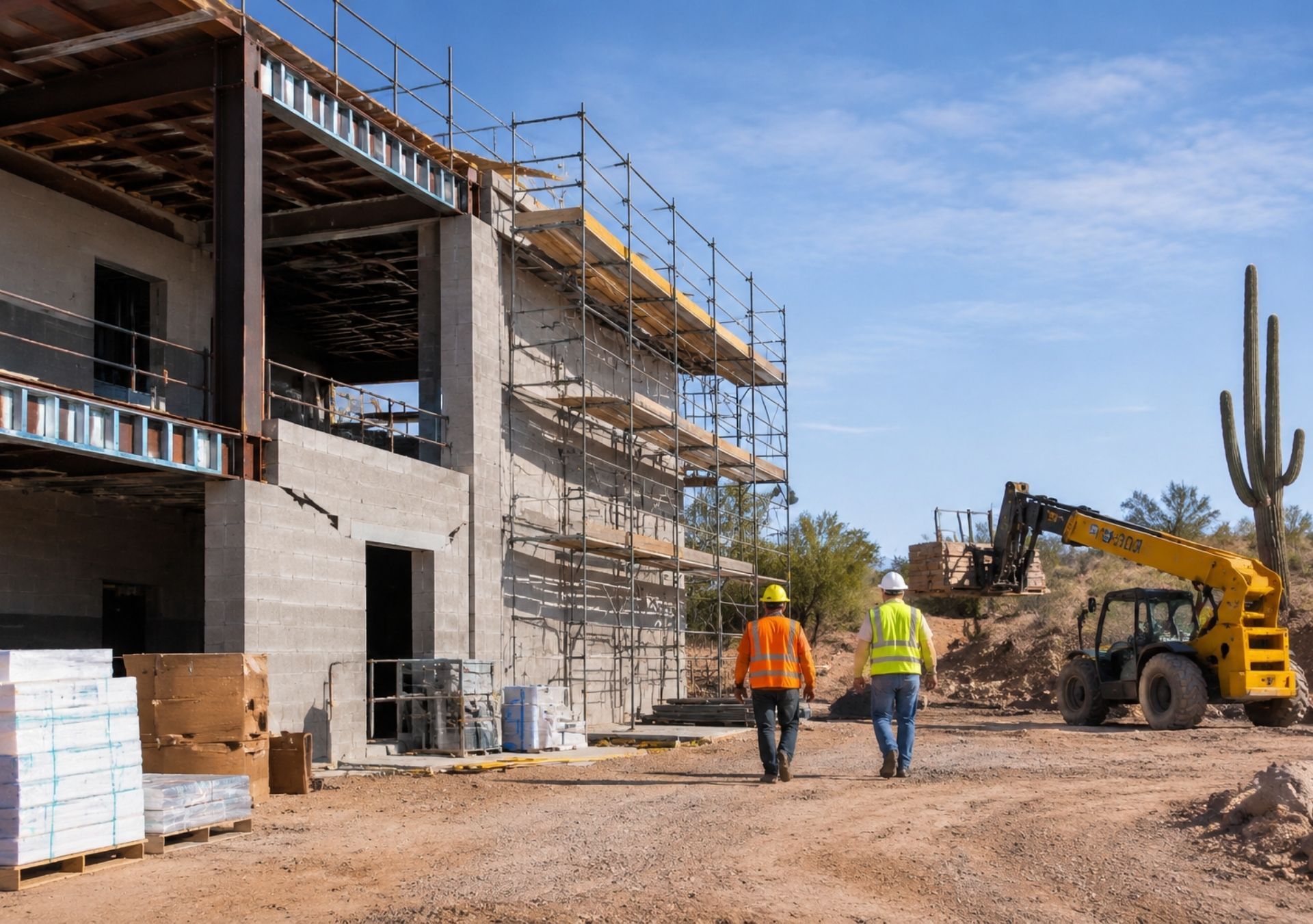
Arizona general contractors often discover the real terms of a wrap-up program after they've already submitted a bid. By then, the deductions, enrollment paperwork, and audit obligations are already locked into the contract, and nobody budgeted time for them. If you're bidding on a hospital expansion in Phoenix, a mixed-use tower in Tempe, or a large multifamily build in Tucson, you'll probably run into a consolidated insurance program sooner or later.
This guide to Arizona wrap-up insurance covers the parts that most often cost subcontractors money:
- How enrollment works and which parties are covered
- What happens to offsite work
- Why residual limits matter
- How audits are handled
- Where program costs come from
Owners and contractors sometimes describe these programs as simple. In practice, a wrap-up can either protect your margin or quietly erode it, and the difference usually comes down to details in the insurance manual that people skim. A subcontractor who misses a single enrollment deadline can be left without coverage for weeks while still paying for the program through a bid deduction. A general contractor who misreads the tail provisions can face a construction defect claim six years later with no policy in place to respond.
Understanding Wrap-Up Insurance in the Arizona Construction Market
A wrap-up replaces the patchwork of separate contractor policies with one master program. That program typically covers general liability, workers' compensation, or both, for everyone working on a single project. Arizona statute uses a formal name for these programs. Under A.R.S. § 20-2001, they're called Consolidated Insurance Programs, defined as liability or workers' compensation insurance established by an owner or contractor that requires subcontractor participation.
That definition draws a clear boundary. Arizona law explicitly excludes surety bonds and builders' risk from what counts as a CIP. Even if your project has a wrap-up, you still need to confirm who is buying the builders' risk policy and who is posting bonds. Don't assume the program handles either one.
The main appeal is consistency. When a drywall installer's crew floods a unit by accident and the plumber's work is also involved, a single carrier handles the claim. That avoids a three-way fight over which policy responds first. Owners also like the loss control: one safety program and one claims team covering the whole site.
OCIP vs. CCIP: Choosing the Right Controlled Insurance Program
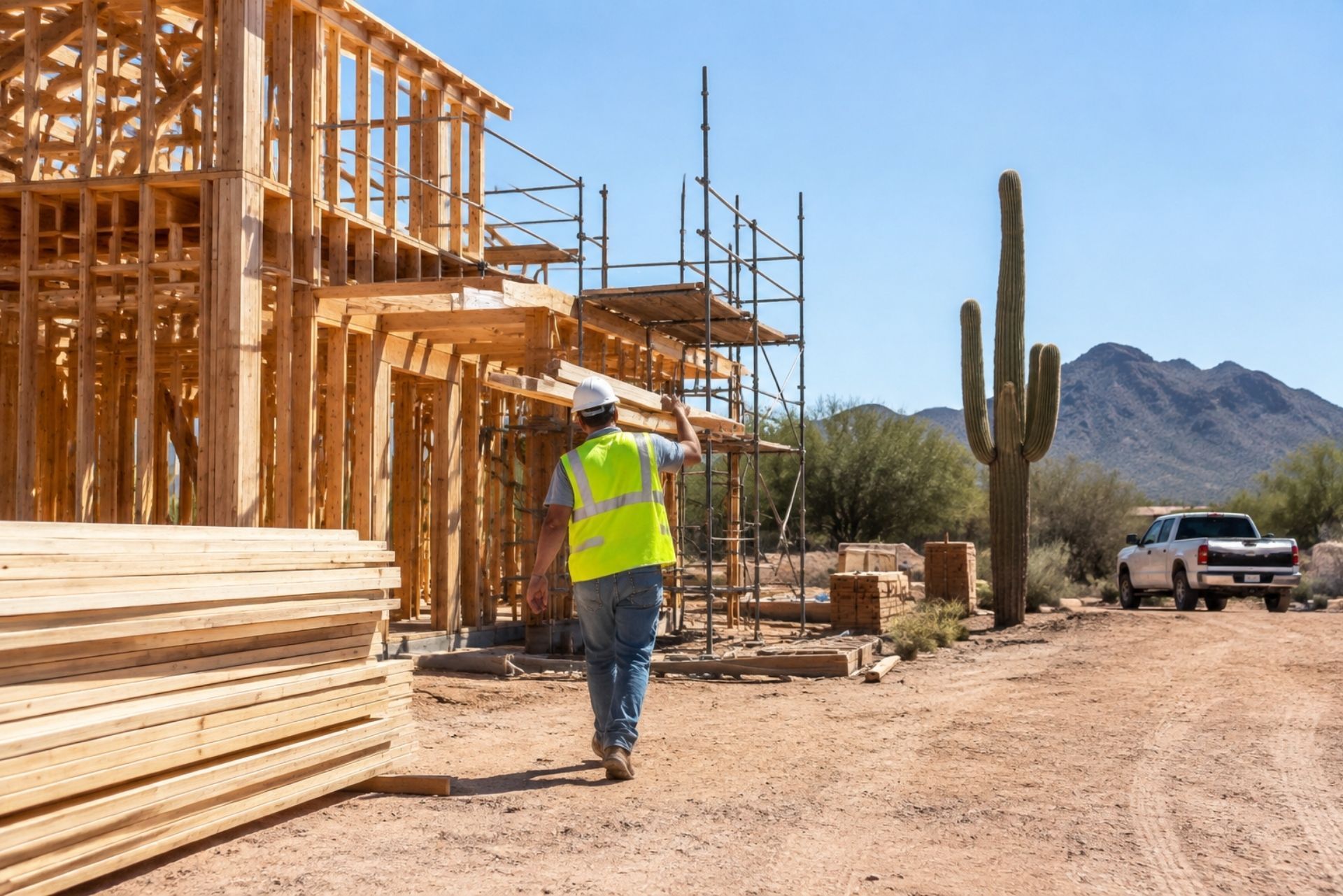
The core difference is who sponsors the program and who controls it. In an OCIP, the project owner buys the coverage. Developers, hospital systems, school districts, and public entities use this structure on large projects where they want direct control over claims and the savings. In a CCIP, the general contractor sponsors the program. GCs that build often in the Valley, and that have the safety record and balance sheet to carry the risk, tend to prefer this setup.
Sponsorship changes the incentives. In an OCIP, the owner keeps any loss-sensitive returns, so the GC has less reason to push for aggressive safety spending. In a CCIP, the GC keeps those returns but also absorbs the deductibles when claims spike.
Comparison Table: Owner-Controlled vs. Contractor-Controlled Programs
| Factor | OCIP | CCIP |
|---|---|---|
| Sponsor | Project owner | General contractor |
| Typical project | Single large project, often public | Multiple projects under one program |
| Who keeps savings | Owner | GC |
| Deductible risk | Owner | GC |
| GC's role | Participant | Administrator |
| Audit obligations | Largely the same | Largely the same |
| Best fit | Owners with risk management staff | High-volume GCs with strong safety records |
Enrollment isn't automatic. Each eligible contractor has to apply, usually through the program administrator's online portal, before mobilizing on site. You'll generally need to submit:
- Contractor information: your company details and any lower-tier subs you've hired
- Insurance cost breakdown: the cost of your insurance that you excluded from your bid
- Payroll estimates: projected payroll by workers' comp class code
- Prior policies: certificates for your existing coverage that applies to offsite work and vehicles
The covered parties are usually the sponsor, the GC, and enrolled subcontractors of every tier. The common exclusions are where contractors get caught. Haulers, suppliers who only deliver materials, hazardous materials abatement contractors, and sometimes demolition crews are often left out of the program. Design professionals such as architects and engineers are generally excluded too and need their own professional liability (E&O) coverage.
The biggest mistake we see is a second-tier sub who never enrolled. When that crew's worker gets hurt, nobody can find a policy that responds. Before anyone mobilizes, check that you hold an enrollment confirmation letter for every lower-tier contractor.
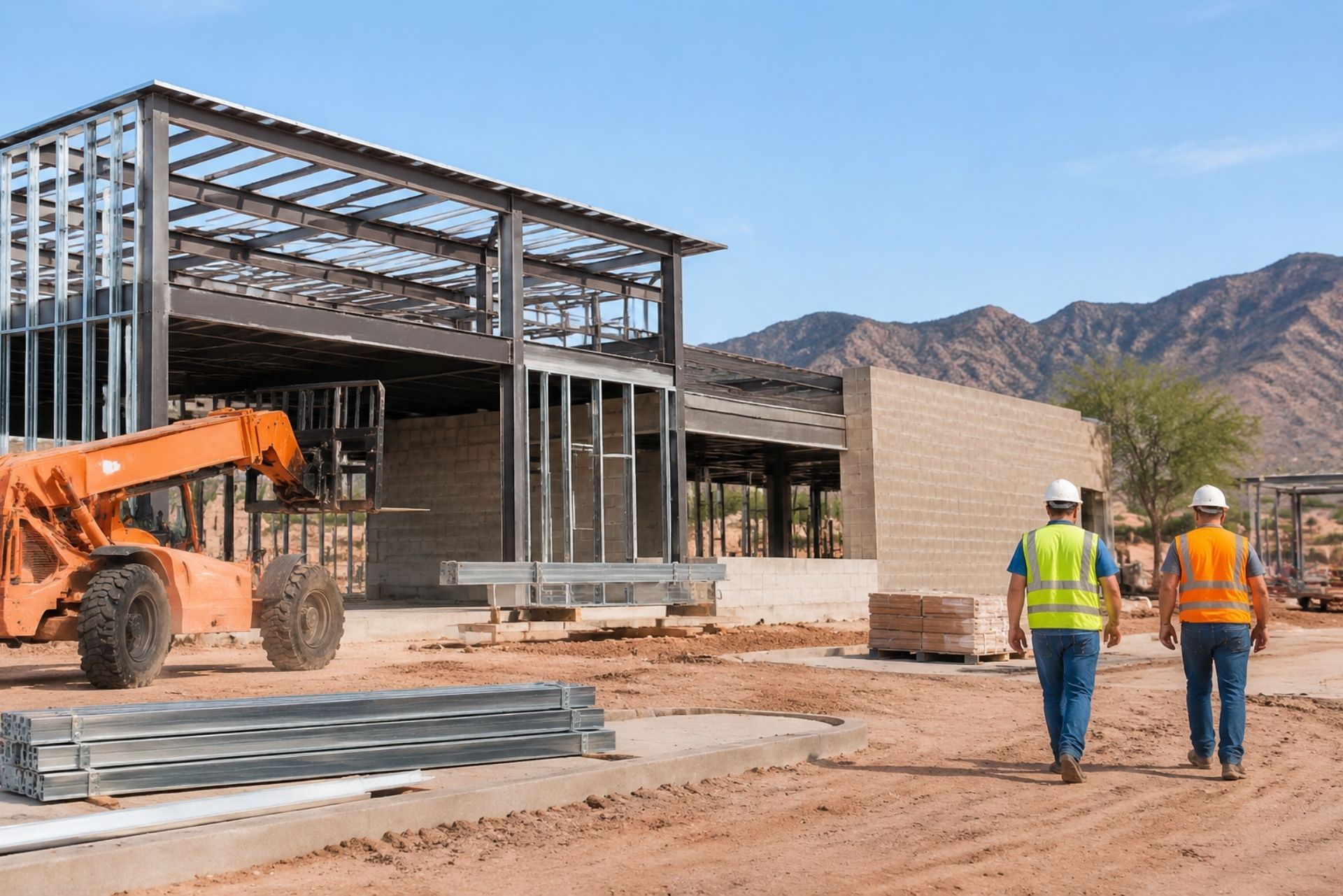
Wrap-ups cover work performed at the designated project site. They usually don't cover anything that happens away from it. Your fabrication shop in Mesa, your staging yard off the I-10, and the truck carrying steel to the job all fall outside the program. Your own corporate policies have to cover those exposures.
That's why sponsors require you to keep your own general liability, workers' comp, and commercial auto policies even when you're enrolled. Picture a sheet metal contractor building ductwork in its own shop. A shop worker's injury goes to that contractor's own workers' comp policy, not the OCIP.
Some programs do extend coverage to nearby staging areas or offsite storage locations named in the manual. When you read the manual, look for a defined "project site" description and a list of approved offsite locations. If your laydown yard isn't on that list, ask for it to be added in writing. Otherwise, you may end up paying deductibles on your own policy for a loss you assumed the wrap-up would handle.
Managing Residual Limits and Post-Project Tail Coverage
Residual limits are where a lot of wrap-ups fall short. Most programs share one aggregate limit across every contractor. A single serious claim, such as a crane collapse or a fall with a catastrophic injury, can use up a large share of it. Once that aggregate is gone, everyone enrolled is exposed, including contractors who had nothing to do with the loss.
Before you sign, ask the sponsor three questions:
- Per-project aggregate: Is the aggregate dedicated to this project, or shared across a CCIP portfolio?
- Reinstatement: Does the limit reinstate after a large loss?
- Excess coverage: Does the program include excess or umbrella layers, and what are their limits?
Tail coverage is the other half of the issue. Arizona construction defect claims fall under an 8-year statute of repose in A.R.S. § 12-552. That window is why completed operations coverage needs to last well past project closeout. A program that offers only three years of completed operations leaves a real gap if a stucco or waterproofing failure appears in year five. Push for completed operations that run for the full repose period, and check whether your own practice policy picks up anything the wrap-up excludes.
Audit Protocols and Controlling Total Program Costs
Wrap-up costs don't end when you sign the subcontract. Audits run throughout the project and after closeout, and they decide what you actually pay or get credited. Many GCs underestimate the documentation involved in their first wrap-up. Audit obligations are largely the same whether the program is an OCIP or a CCIP, so the sponsor type doesn't change the paperwork you'll need.
Arizona's 2026 regulatory environment adds pressure. Executive Order 2026-01 mandates data sharing between DIFI, the ICA, and the ROC to combat worker misclassification. If your payroll reports treat a crew as independent contractors, expect closer scrutiny.
Payroll Reporting and Premium Adjustments
Most programs require monthly payroll reports by class code for onsite work only. The final premium is based on actual payroll, so if your estimate was low, you can expect an adjustment. Track onsite and offsite hours separately from the first day. Mixing the two in one report is the fastest way to get overcharged on both your own policy and the wrap-up.
The ROC's Industry Advisory Council on Paycheck Protection was tasked with delivering recommendations on payroll certification and interagency enforcement by October 1, 2026. Watch for new certification requirements that could carry over into wrap-up payroll reporting.
Common Cost Drivers in Arizona Wrap-Up Policies
Several factors push program costs up or down:
- Trade mix: Roofing is Arizona's highest-cost classification, with workers' comp rates from $16.00 to $38.00 per $100 of payroll. A roofing-heavy project costs more to insure.
- Base rate trends: DIFI approved a 6.7% decrease in voluntary workers' comp loss costs effective January 1, 2026, the 12th consecutive yearly decline. That should lower your insurance credit, so recheck the deduction calculation.
- Deductible structure: Some programs pass deductibles of $2,500 to $10,000 back to the subcontractor responsible for a claim. The exact amount depends on the contract.
- Bid deductions: If your excluded insurance cost was overstated, you lose margin, even if the project has no claims.
Frequently Asked Questions About Arizona Wrap-Up Insurance
Do I still need my own insurance if I'm enrolled in a wrap-up? Yes. You'll need your own policies for offsite work, commercial auto, and any other projects you're working on, and most sponsors require you to provide proof of coverage.
What's the main difference between an OCIP and a CCIP? In an OCIP, the owner buys and controls the coverage. In a CCIP, the general contractor does. The day-to-day work of enrollment and audits feels about the same either way.
Are architects covered under a wrap-up? Usually not. Design professionals generally carry their own professional liability coverage.
Does a wrap-up include builders' risk? No. Arizona law excludes builders' risk and surety bonds from the definition of a consolidated insurance program.
How long should completed operations coverage last? Ideally, it should last long enough to match Arizona's 8-year statute of repose for construction defect claims.
What happens if my sub forgets to enroll? That sub may have no coverage for onsite injuries or damage, and the gap could fall back on you. Confirm enrollment before anyone shows up on site.
A wrap-up is only as good as its manual, and the details that matter most are the ones people tend to skim. Know whether the program is an OCIP or a CCIP. Confirm enrollment for every tier of sub. Keep your own policies active for offsite and auto exposures. Push for residual limits and completed operations terms that hold up over Arizona's repose period.
Plan for the audit before it arrives. Separate onsite and offsite payroll from day one, document your classifications carefully, and stay alert to Arizona's growing focus on worker misclassification. Rates are falling for a 12th straight year, which makes this a good time to revisit how you calculate bid deductions.
Read the insurance manual before you price the job, not after you've won it. A two-hour review with your broker costs far less than one uncovered claim.
About The Author:
Taylor Whatcott
As President of Wilde Wealth Insurance Services, I’m committed to providing trusted protection for both families and businesses across Arizona. Our independent team works with top-rated carriers to deliver tailored, comprehensive coverage—making insurance simple, accessible, and hassle-free.
Contact Us
Commercial Coverage Solutions
Protect Your Business with the Right Insurance
We offer customized insurance solutions to safeguard your business from financial risks. Our policies provide protection for property, employees, and liability concerns.
Commercial Property Insurance
Safeguards buildings, equipment, and inventory from damage or loss.
Professional Liability Insurance
Covers claims of negligence, errors, or omissions in services.
Cyber Liability Insurance
Protects against data breaches, cyberattacks, and online threats.
Who We Protect
Insurance Solutions for Your Industry
We specialize in providing tailored coverage for businesses in key industries. Our policies are designed to meet industry-specific risks and ensure complete protection.




Protection for Your Home & Assets
Reliable Coverage for Life’s Unexpected Moments
We provide personal insurance solutions designed to safeguard your home, vehicle, and financial well-being. Our policies ensure you and your loved ones are protected.







What Our Clients Say
Real Feedback. Real Confidence.
FAQs
Answers to Common Insurance Questions
How do I know which insurance coverage is right for me?
Choosing the right insurance depends on your personal or business needs. Our team evaluates your risks and recommends tailored coverage to protect what matters most.
We work with multiple carriers to provide different policy options. This allows you to compare benefits, limits, and pricing to make an informed choice.
If you’re unsure, we’ll walk you through the options step by step, ensuring you understand your coverage and feel confident in your decision.
Why should I choose an independent insurance agency like Wilde Wealth?
As an independent agency, we are not tied to a single insurance provider. This means we can compare multiple policies to find the best coverage at the best price.
Our goal is to advocate for you, ensuring you receive personalized service and expert advice tailored to your situation.
Unlike direct insurers, we offer ongoing support, helping you with claims, policy changes, and future coverage needs.
Can I bundle multiple insurance policies to save money?
Yes! Bundling policies like home and auto can lead to significant savings. Many carriers offer discounts for combining multiple coverages.
Bundling also simplifies policy management, with a single point of contact and streamlined renewals.
We help you explore bundling options to ensure you get the best value while maintaining the protection you need.
What factors affect my insurance rates?
Insurance rates are influenced by factors such as coverage limits, location, claims history, and risk exposure. Personal insurance may consider credit scores, driving history, and home value.
For businesses, factors like industry type, employee count, and annual revenue can impact pricing. Each carrier evaluates risk differently.
We shop multiple providers to find the best balance of coverage and cost, ensuring you don’t overpay while staying fully protected.
How does Wilde Wealth Insurance Services help business owners?
We provide customized business insurance solutions to protect against liability, property damage, employee-related risks, and cyber threats.
Our team works with a range of industries, including contractors, restaurants, and real estate professionals, to offer tailored policies.
From small startups to established enterprises, we help business owners minimize risks and keep operations running smoothly.
What happens if I need to file a claim?
Filing a claim is simple with our support. Contact us first, and we’ll guide you through the process, ensuring all necessary information is submitted correctly.
We work directly with your insurance carrier to expedite the claim, keeping you informed at every step.
Our team is here to advocate for you, making sure you receive a fair and timely resolution.
Latest Articles & Insights
Stay Informed with Expert Insurance Advice
We provide valuable insights to help you make informed insurance decisions. Explore our latest articles on coverage options, industry trends, and risk management tips.


Contact Us