
Arizona Sign Installation Contractor Insurance
See How We're Different:
or Call Us:(480) 526-3222
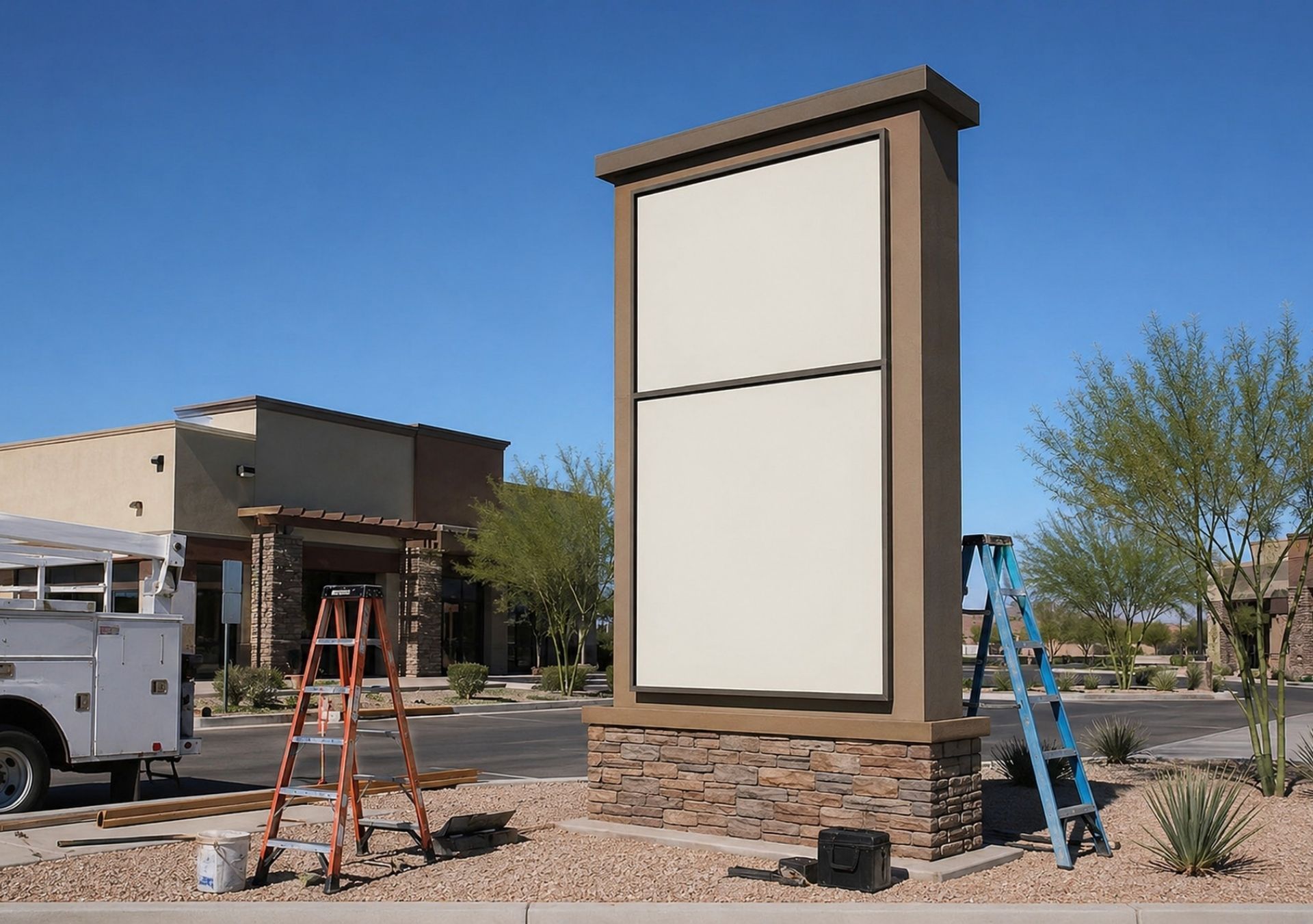
Running a sign installation business in Arizona means working at heights, hauling heavy materials across the state, and mounting structures that the public walks under every day. A single accident - whether it's a crane mishap on a Phoenix boulevard or a channel letter falling off a storefront in Tucson - can generate claims that threaten your entire operation. The right insurance portfolio doesn't just check a compliance box; it keeps your company solvent when things go wrong.
This
insurance guide for Arizona sign installation contractors breaks down the specific policies you need, the state requirements you must meet, and the specialized risks unique to your trade. Whether you're a one-truck operation or running a fleet of boom lifts across Maricopa County, the coverage decisions you make now will determine how well your business survives the unexpected. Arizona's regulatory environment, combined with the physical dangers of sign work, creates a distinct insurance profile that generic contractor policies often miss. Getting this right matters more than most contractors realize until they're facing a six-figure claim.
Essential Insurance Coverage for Arizona Sign Contractors
Sign contractors face a combination of property risk, bodily injury exposure, and professional errors that few other trades match. You're working above ground, near electrical systems, and often in public spaces where pedestrians and vehicles pass constantly. Your insurance program needs to reflect that reality, not just satisfy a general contractor's minimum requirements.
The three foundational policies below form the backbone of any sign installation contractor's insurance program in Arizona. Each one addresses a different category of risk, and gaps between them are where most costly claims fall through.
General Liability for Third-Party Property Damage
Your commercial general liability (CGL) policy is the first line of defense when your work causes damage to someone else's property or injures a bystander. Picture this: your crew is installing a monument sign at a shopping center, and a piece of aluminum cladding drops onto a parked car. That's a general liability claim. Or a customer trips over your equipment staging area and breaks a wrist - same policy responds.
Most Arizona sign contractors carry $1 million per occurrence and $2 million aggregate limits as a baseline. Larger commercial projects often require $5 million or more through umbrella policies. One thing to keep in mind: your CGL policy covers completed operations too. If a sign you installed three years ago detaches and injures someone, your completed operations coverage responds. Make sure your policy doesn't sunset this coverage too early.
Professional Liability and Errors & Omissions
General liability covers physical damage, but what happens when your design is wrong? If you engineer a sign structure that doesn't meet wind load requirements, or you specify the wrong electrical components and the sign fails, that's a professional liability claim. These policies cover financial losses your client suffers because of your professional mistakes.
Many sign contractors skip this coverage, assuming their CGL handles everything. It doesn't. A design error that causes a sign to underperform - say, LED modules that overheat because of incorrect specifications - might not involve any physical damage at all. The client's loss is purely financial: lost advertising value, replacement costs, business interruption. That's an errors and omissions claim, and without the right policy, you're paying out of pocket.
Commercial Auto and Fleet Coverage
Your vehicles are probably your most visible assets on the road. Boom trucks, crane trucks, flatbeds hauling sign cabinets - these aren't standard commercial vehicles. Arizona requires minimum auto liability limits of $25,000/$50,000 for bodily injury and $15,000 for property damage, but those minimums are dangerously low for a sign contractor.
A single accident involving a loaded boom truck could easily generate claims exceeding $500,000. Most carriers recommend $1 million combined single limit policies for sign installation fleets. Don't forget hired and non-owned auto coverage if employees ever use personal vehicles for company errands. That gap catches more contractors than you'd expect.
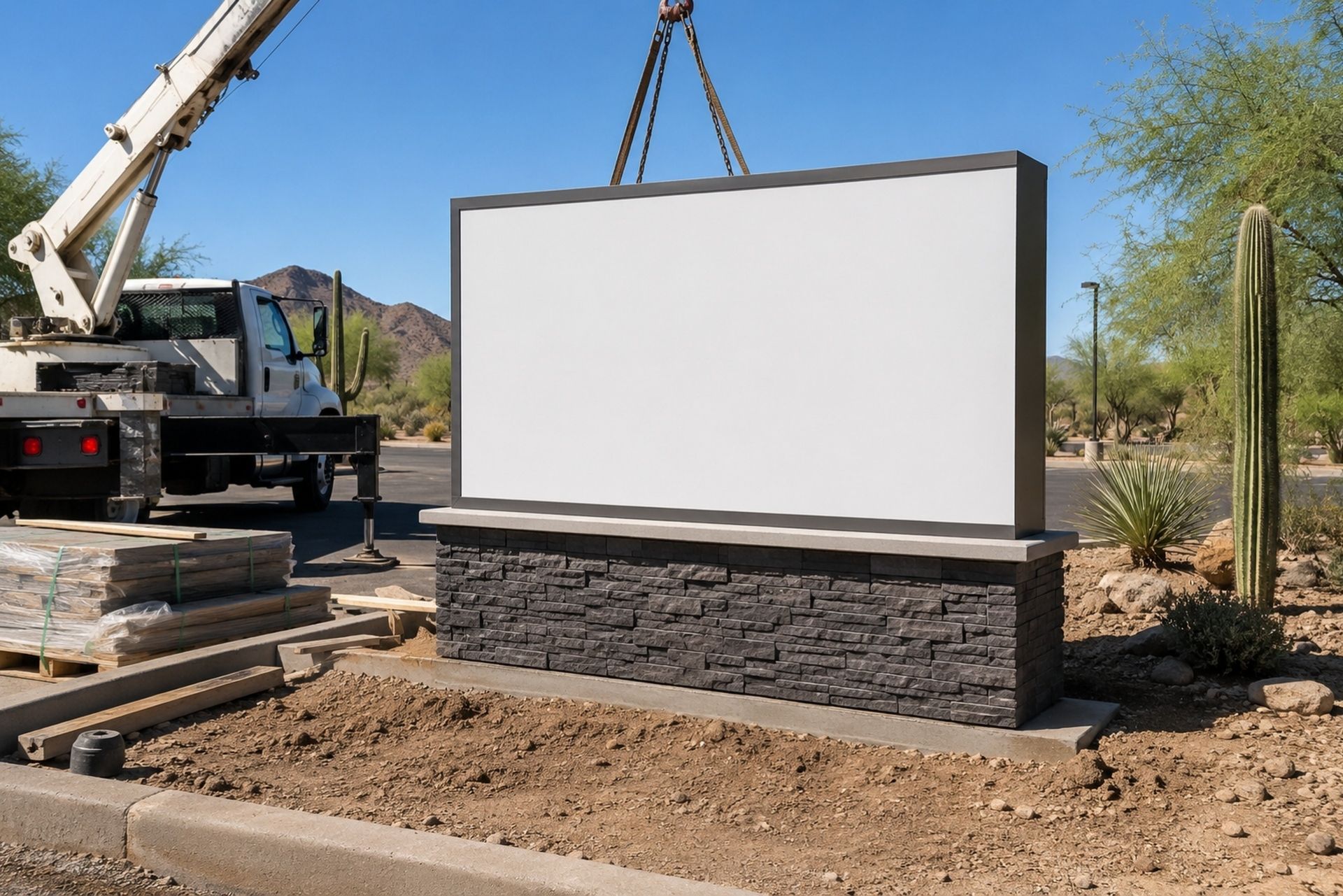
Arizona State Requirements and Compliance
Arizona has specific insurance and bonding requirements that vary by contractor classification and project size. Missing a requirement doesn't just risk fines - it can void your license entirely.
Workers' Compensation Laws for Contractors
Arizona law requires workers' compensation insurance for every employer, with no minimum employee threshold. Even if you have one part-time helper, you need a policy. The penalties for non-compliance include criminal charges: it's a Class 6 felony in Arizona.
The good news for 2026 is that Arizona specialty contractors are seeing a 6.7% reduction in workers' compensation voluntary loss costs, marking the 12th consecutive year of decreasing rates. That trend reflects improved safety records across the industry, and it means your premiums should be dropping. Sign installation carries relatively high experience modification rates due to the fall and electrical exposure inherent in the work, so maintaining a clean safety record directly impacts your bottom line. Invest in fall protection training and document everything.
Surety Bonds and Licensing Requirements
Arizona's Registrar of Contractors requires a surety bond for all licensed contractors. The bond amount depends on your license classification and the dollar value of projects you take on. For most sign contractors operating under a specialty contractor license, the bond requirement starts at $2,500 for residential work and scales up for commercial projects.
Your bond isn't insurance - it's a guarantee to the state and your customers that you'll perform work according to code and contract. If a valid claim is made against your bond, the surety pays the claimant, but you owe the surety company that money back. Keep your bond current and your license active. Lapsed bonds trigger automatic license suspension.
Specialized Risks in the Sign Industry
Standard contractor policies leave significant gaps for sign-specific exposures. The two policies below address risks that are unique to companies transporting and installing signage.
Inland Marine: Protecting Equipment and Signage in Transit
Your sign cabinets, LED modules, transformers, and custom fabrications spend a lot of time on trucks and trailers between your shop and job sites. Standard property insurance typically covers items at your listed business location, not in transit. That's where inland marine coverage fills the gap.
An inland marine policy protects your tools, equipment, and materials while they're being transported or stored temporarily at a job site. For sign contractors, this is critical. A single channel letter set for a national retailer might be worth $30,000 or more. If your trailer gets rear-ended on I-10 and the signs are destroyed, your inland marine policy covers the replacement cost. Without it, you're absorbing that loss entirely.
Installation Floater for On-Site Assembly
An installation floater picks up where inland marine leaves off. Once your signs arrive at the job site and you begin assembly, an equipment floater policy covers the materials during the installation process until the owner accepts the finished work.
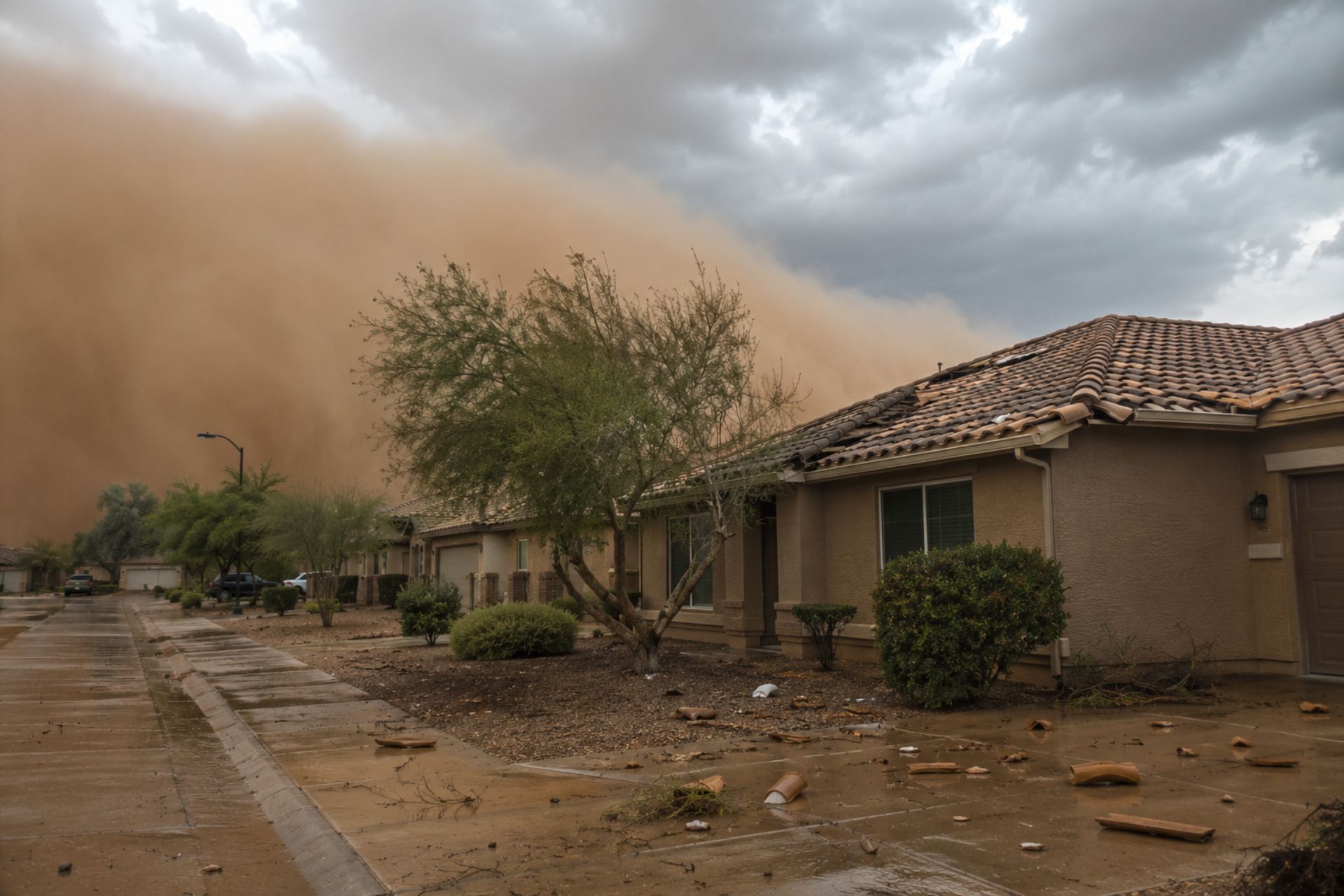
This matters because the installation phase is when signs are most vulnerable. They're partially assembled, exposed to weather, and being moved by cranes and lifts. A sudden monsoon storm - common in Arizona from June through September - can destroy partially installed signage in minutes. Your installation floater covers that exposure. Most policies also cover theft of materials from the job site, which is an increasing concern on commercial projects where sign components sit overnight.
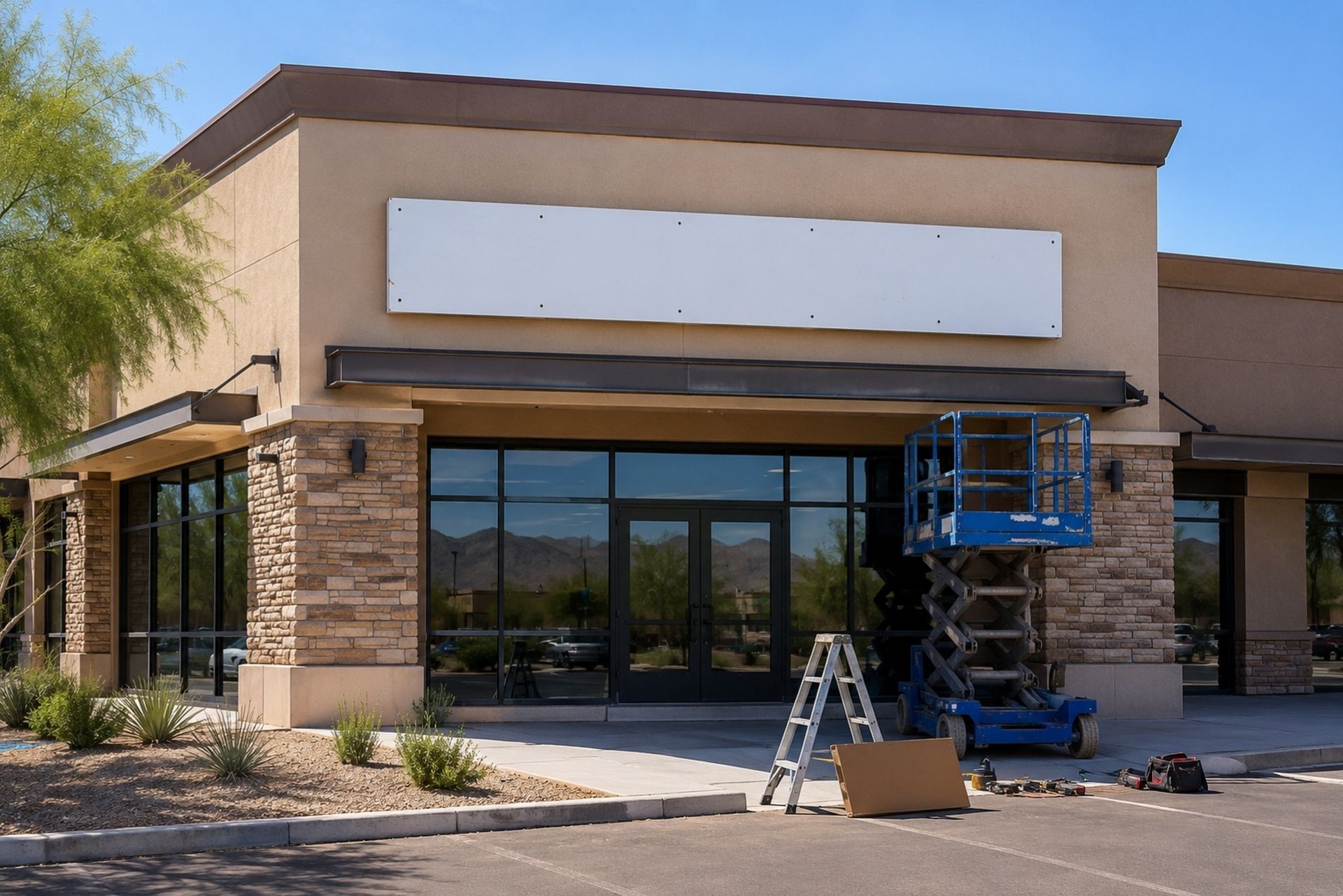
Understanding the distinction between your two primary liability policies prevents costly gaps and duplicate coverage.
Comparison Table: General Liability vs. Professional Liability
| Feature | General Liability (CGL) | Professional Liability (E&O) |
|---|---|---|
| What it covers | Bodily injury, property damage to third parties | Financial losses from professional errors or omissions |
| Typical claim example | Falling sign injures a pedestrian | Incorrect wind load calculation leads to sign failure |
| Trigger | Physical harm or property damage occurs | Client suffers financial loss from your mistake |
| Required by Arizona? | Often required by project owners, not state law | Not required by law, but essential for design-build firms |
| Typical limits | $1M per occurrence / $2M aggregate | $500K to $2M per claim |
| Coverage basis | Occurrence-based (covers events during policy period) | Claims-made (covers claims filed during policy period) |
| Completed operations | Yes, covers past work | Yes, with extended reporting options |
The key difference: if someone gets hurt, it's a CGL claim. If someone loses money because of your professional error, it's an E&O claim. Many sign contractors need both, especially those offering design services alongside installation.
Common Questions About Sign Installation Insurance
How much does general liability insurance cost for an Arizona sign contractor? Expect to pay between $2,500 and $7,000 annually for a $1M/$2M policy, depending on your revenue, claims history, and the types of signs you install. High-rise work and electrical sign installation push premiums higher.
Do I need separate insurance for crane and boom lift operations? Your commercial auto policy covers the vehicle, but the crane or lift attachment often needs a separate inland marine or equipment floater endorsement. Verify with your carrier that the lifting apparatus is specifically scheduled on your policy.
Can I use a personal auto policy for my work truck? No. Personal auto policies exclude commercial use. If you're hauling signs or equipment, you need a commercial auto policy. Using a personal policy for business purposes gives your insurer grounds to deny any claim.
What happens if my workers' comp policy lapses? Arizona treats this seriously. You face a Class 6 felony charge, and the Industrial Commission can shut down your job sites. Even a short lapse creates an uninsured window where a single injury could bankrupt your company.
Does my general liability cover signs after I install them? Yes, through completed operations coverage. Most CGL policies cover claims arising from your finished work for the duration of the policy period. Check your policy for any completed operations exclusions or sunset clauses.
Are digital and LED signs creating new insurance concerns in 2026? Yes. The
growing complexity of digital signage technology means more electrical and software-related exposures. Professional liability becomes especially important when you're programming content management systems or specifying LED drivers that could fail.
Protecting Your Business Assets Long-Term
Building the right insurance program isn't a one-time decision. Your coverage needs to evolve as your business grows, as you take on larger projects, and as Arizona's regulatory environment shifts. Review your policies annually, especially before bidding on projects that exceed your current coverage limits.
The smartest sign contractors treat insurance as a competitive advantage. When you can show a general contractor or property owner that you carry proper CGL, professional liability, workers' comp, and inland marine coverage, you win bids that underinsured competitors can't touch. Arizona's employer insurance market continues to shift, and staying ahead of those changes keeps your costs predictable.
Start by auditing your current policies against the coverages outlined in this guide. Identify gaps, get quotes for missing policies, and talk to a broker who understands sign contractor risks specifically. Generic business insurance won't protect you from the unique exposures your crews face every day on Arizona job sites. The cost of proper coverage is always less than the cost of being uninsured when a claim hits.
About The Author:
Taylor Whatcott
As President of Wilde Wealth Insurance Services, I’m committed to providing trusted protection for both families and businesses across Arizona. Our independent team works with top-rated carriers to deliver tailored, comprehensive coverage—making insurance simple, accessible, and hassle-free.
Contact Us
Commercial Coverage Solutions
Protect Your Business with the Right Insurance
We offer customized insurance solutions to safeguard your business from financial risks. Our policies provide protection for property, employees, and liability concerns.
Commercial Property Insurance
Safeguards buildings, equipment, and inventory from damage or loss.
Professional Liability Insurance
Covers claims of negligence, errors, or omissions in services.
Cyber Liability Insurance
Protects against data breaches, cyberattacks, and online threats.
Who We Protect
Insurance Solutions for Your Industry
We specialize in providing tailored coverage for businesses in key industries. Our policies are designed to meet industry-specific risks and ensure complete protection.



Protection for Your Home & Assets
Reliable Coverage for Life’s Unexpected Moments
We provide personal insurance solutions designed to safeguard your home, vehicle, and financial well-being. Our policies ensure you and your loved ones are protected.







What Our Clients Say
Real Feedback. Real Confidence.
FAQs
Answers to Common Insurance Questions
How do I know which insurance coverage is right for me?
Choosing the right insurance depends on your personal or business needs. Our team evaluates your risks and recommends tailored coverage to protect what matters most.
We work with multiple carriers to provide different policy options. This allows you to compare benefits, limits, and pricing to make an informed choice.
If you’re unsure, we’ll walk you through the options step by step, ensuring you understand your coverage and feel confident in your decision.
Why should I choose an independent insurance agency like Wilde Wealth?
As an independent agency, we are not tied to a single insurance provider. This means we can compare multiple policies to find the best coverage at the best price.
Our goal is to advocate for you, ensuring you receive personalized service and expert advice tailored to your situation.
Unlike direct insurers, we offer ongoing support, helping you with claims, policy changes, and future coverage needs.
Can I bundle multiple insurance policies to save money?
Yes! Bundling policies like home and auto can lead to significant savings. Many carriers offer discounts for combining multiple coverages.
Bundling also simplifies policy management, with a single point of contact and streamlined renewals.
We help you explore bundling options to ensure you get the best value while maintaining the protection you need.
What factors affect my insurance rates?
Insurance rates are influenced by factors such as coverage limits, location, claims history, and risk exposure. Personal insurance may consider credit scores, driving history, and home value.
For businesses, factors like industry type, employee count, and annual revenue can impact pricing. Each carrier evaluates risk differently.
We shop multiple providers to find the best balance of coverage and cost, ensuring you don’t overpay while staying fully protected.
How does Wilde Wealth Insurance Services help business owners?
We provide customized business insurance solutions to protect against liability, property damage, employee-related risks, and cyber threats.
Our team works with a range of industries, including contractors, restaurants, and real estate professionals, to offer tailored policies.
From small startups to established enterprises, we help business owners minimize risks and keep operations running smoothly.
What happens if I need to file a claim?
Filing a claim is simple with our support. Contact us first, and we’ll guide you through the process, ensuring all necessary information is submitted correctly.
We work directly with your insurance carrier to expedite the claim, keeping you informed at every step.
Our team is here to advocate for you, making sure you receive a fair and timely resolution.
Latest Articles & Insights
Stay Informed with Expert Insurance Advice
We provide valuable insights to help you make informed insurance decisions. Explore our latest articles on coverage options, industry trends, and risk management tips.


Contact Us